The Fundamental Difference in One Sentence
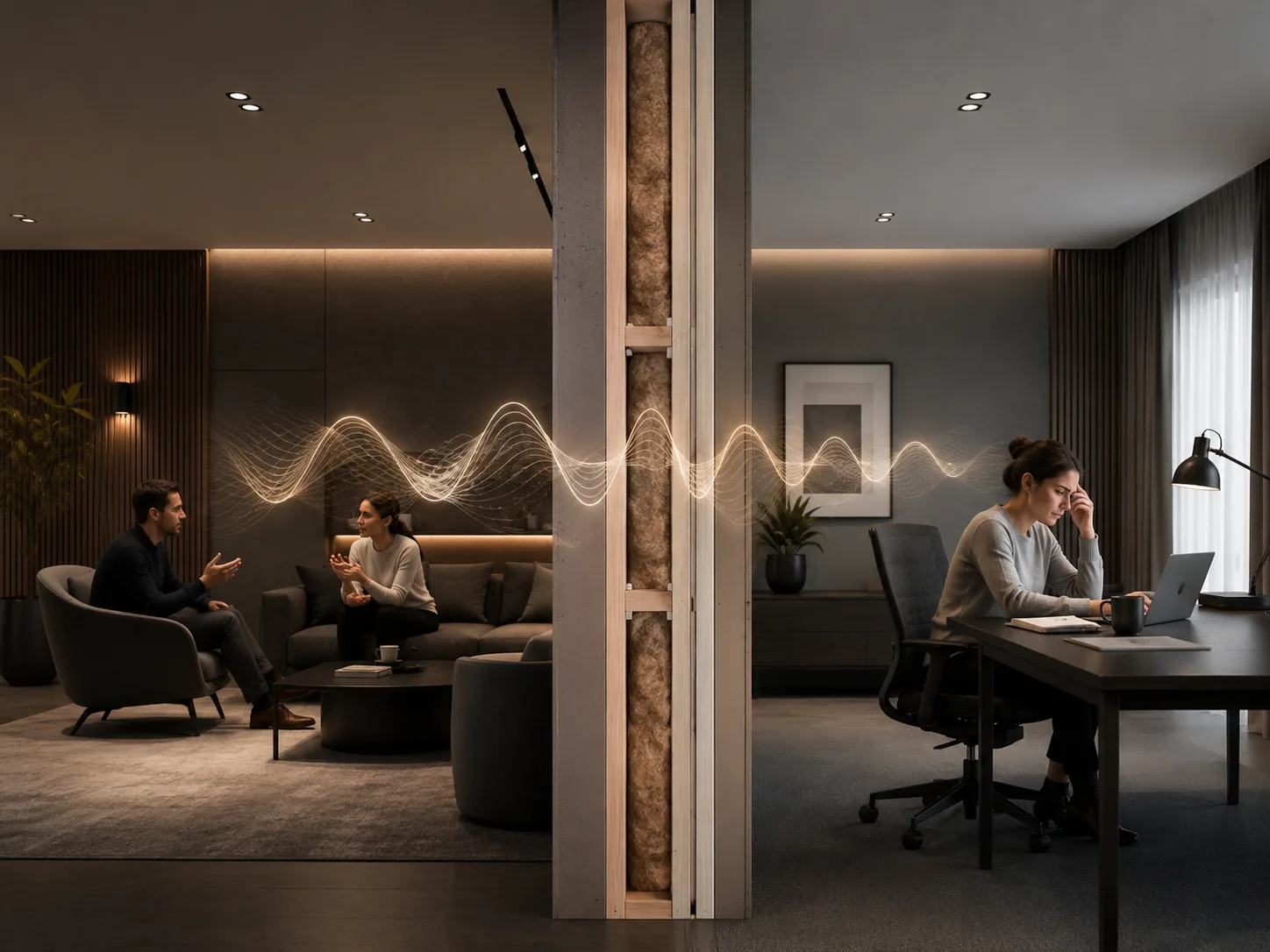
Sound absorption controls what happens to sound inside a room; sound insulation controls how much sound passes between rooms. They solve different problems, use different metrics, and are addressed by different materials and systems. Most projects need a clear understanding of both to choose correctly.
Sound Absorption — What Happens Inside the Room
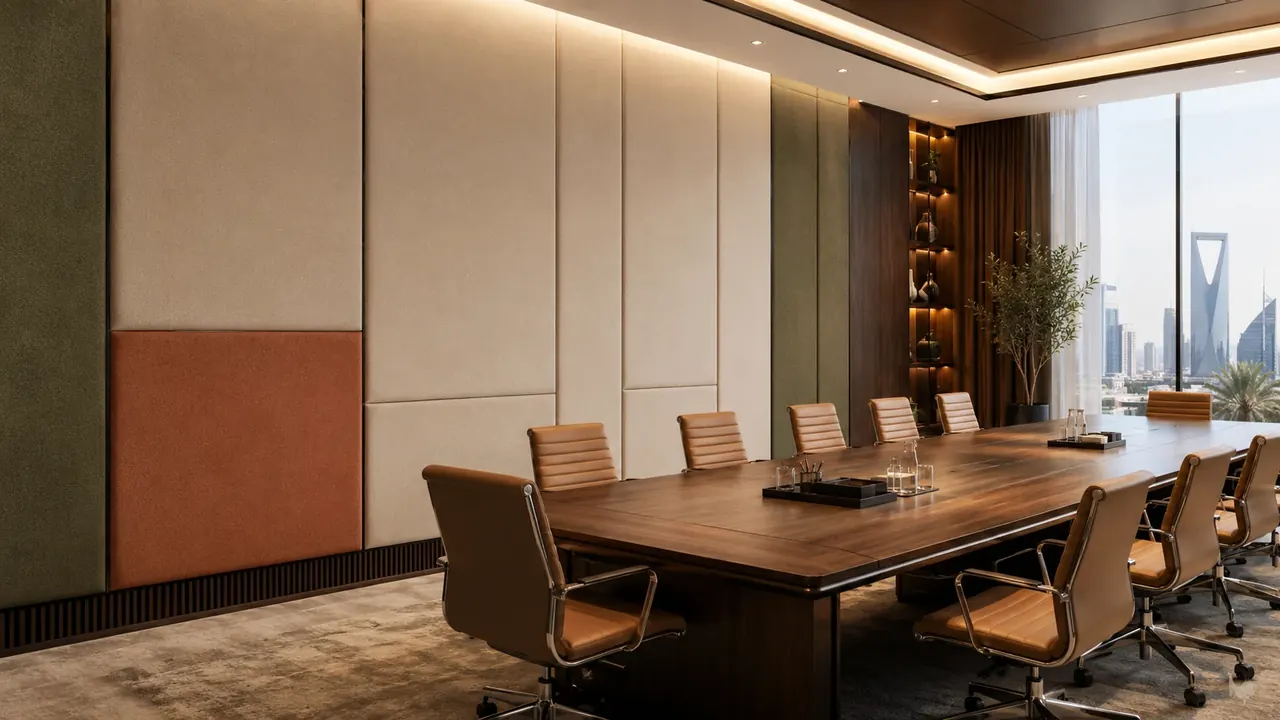
Sound absorption reduces echo and reverberation inside a space. When sound strikes an absorbing surface, part of its energy is converted to heat instead of reflecting back. The result is a quieter, clearer room — better speech intelligibility and less noise build-up.
Absorption is described by:
- NRC — the single-number rating of a material's absorption (What Is NRC?).
- SAA and αw — related single-number absorption ratings (explained in the NRC article).
- RT60 — the room's reverberation time, which absorption shortens (What Is RT60?).
Sound Insulation — What Happens Between Rooms
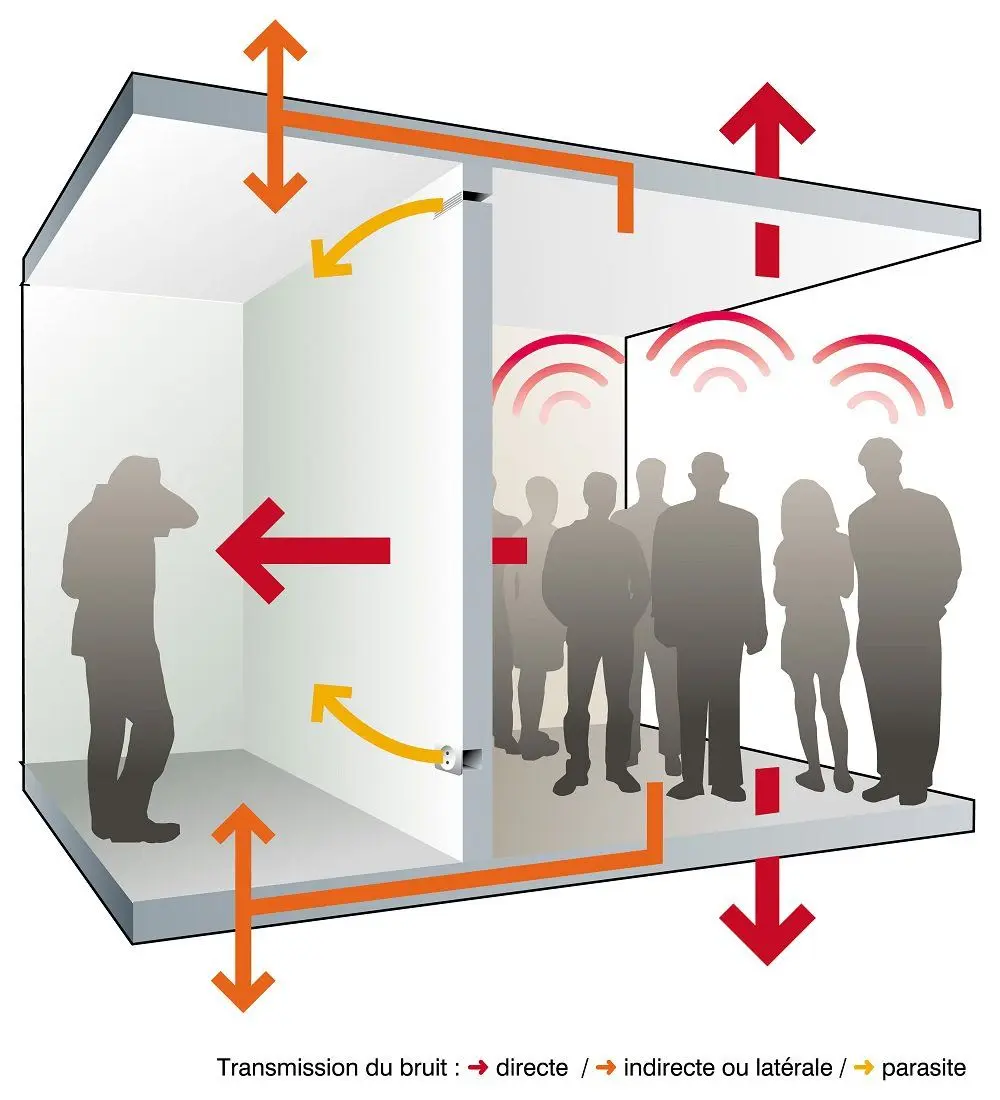
Sound insulation reduces the sound that passes through a building element — a wall, floor, ceiling, door or window. The goal is to stop a conversation, a television or street noise from being heard on the other side.
Insulation is described by:
- Rw — the ISO single-number rating of airborne sound insulation (What Is Rw?).
- STC — the ASTM single-number rating of airborne sound insulation (What Is STC?).
- Transmission Loss and Flanking Transmission — the underlying frequency-dependent measure and the real-world paths that reduce on-site performance (explained in the Rw and STC articles).
Master Comparison Table
| Concept | Measures | Applies To | Typical Metric | Main Standards |
|---|---|---|---|---|
| NRC | Sound absorption | Material (panel, foam) | Unitless (0.00–1.00) | ASTM C423, ISO 354, ISO 11654 |
| RT60 | Reverberation (sound decay) | Room | Seconds (s) | ISO 3382-1 / 3382-2 |
| Rw | Airborne insulation (ISO) | Building element/system | dB | ISO 10140, 717-1, 16283 |
| STC | Airborne insulation (ASTM) | Building element/system | Rating (unitless) | ASTM E90, E413, E336 |
Decision Framework
Use this simple guide to identify which problem you are solving (it is a starting point, not a final engineering diagnosis):
- Echo / reverberation inside the room → Room acoustic treatment → NRC / RT60.
- Noise passing between rooms → Sound insulation → Rw / STC.
- Poor speech intelligibility → Room acoustics → RT60 + absorption (plus other factors).
- Mechanical / HVAC noise → a separate acoustic assessment (source, path and structure must all be evaluated).
Common Questions, Answered Directly
"Do I need acoustic treatment or soundproofing?" If the problem is echo inside the room, you need treatment (absorption). If the problem is sound leaking to or from another room, you need insulation. Many spaces need both.
"Does a PET panel insulate against sound?" A PET panel is primarily an absorption product. It reduces echo inside a room but does not, by itself, provide sound insulation between rooms. Insulation requires a complete tested wall or ceiling assembly.
"Does NRC measure soundproofing?" No. NRC measures absorption. Soundproofing (insulation) is measured by Rw or STC.
"Are Rw and STC the same thing?" They are the ISO and ASTM counterparts of airborne insulation, but they use different rating procedures and are not automatically equal.
Related Products — Absorption
For echo and reverberation control inside a room (sound absorption):
Related Products — Insulation
For blocking sound between rooms (sound insulation — performance applies to a complete, tested assembly):
Read More — The Acoustic Fundamentals Series
What Is NRC? · What Is RT60? · What Is Rw? · What Is STC?
For help choosing the right solution for your project, contact us for a free acoustic consultation.
Frequently Asked Questions
Can one product do both absorption and insulation? Generally not. Absorption materials (panels, foam, baffles) control echo inside a room; insulation is achieved by complete wall/ceiling assemblies. Some assemblies combine both functions, but they are still designed as systems, not single materials.
Do I always need both? Not always. A room with a hard, echoey surface needs absorption; a noisy neighbour or street needs insulation. Assess which problem you actually have.
Is NRC more important than STC? Neither is "more important" — they answer different questions. You need the metric that matches your problem.
Verified Sources
- ASTM C423 / ISO 354 / ISO 11654 — sound absorption.
- ISO 3382-1 / 3382-2 — reverberation time.
- ISO 10140 / ISO 717-1 / ISO 16283 — airborne sound insulation (ISO).
- ASTM E90 / ASTM E413 / ASTM E336 — airborne sound insulation (ASTM).
الفرق الجوهري في جملة واحدة
امتصاص الصوت يتحكم فيما يحدث للصوت داخل الغرفة؛ وعزل الصوت يتحكم في مقدار الصوت الذي يعبر بين الغرف. كلاهما يحلان مشكلتين مختلفتين، ويستخدمان مقاييس مختلفة، وتُعالَجان بمواد وأنظمة مختلفة. أغلب المشاريع تحتاج فهماً واضحاً للاثنين للاختيار الصحيح.
امتصاص الصوت — ما يحدث داخل الغرفة
يقلل امتصاص الصوت من الصدى والارتداد داخل الفراغ. عندما يصطدم الصوت بسطح ماصّ، يتحول جزء من طاقته إلى حرارة بدل الانعكاس. والنتيجة غرفة أهدأ وأوضح — وضوح كلام أفضل وتراكم ضوضاء أقل.
يوصف الامتصاص بـ:
- NRC — التصنيف الأحادي لامتصاص المادة (ما هو NRC؟).
- SAA و αw — تصنيفات امتصاص أحادية مرتبطة (مشروحة في مقال NRC).
- RT60 — زمن ارتداد الغرفة، الذي يقصّره الامتصاص (ما هو RT60؟).
عزل الصوت — ما يحدث بين الغرف
يقلل عزل الصوت من الصوت الذي يعبر عبر عنصر بناء — جدار أو أرضية أو سقف أو باب أو نافذة. الهدف منع محادثة أو تلفاز أو ضوضاء شارع من أن تُسمع في الجهة الأخرى.
يوصف العزل بـ:
- Rw — التصنيف الأحادي ISO للعزل الصوتي المحمول جواً (ما هو Rw؟).
- STC — التصنيف الأحادي ASTM للعزل الصوتي المحمول جواً (ما هو STC؟).
- فقد الانتقال (Transmission Loss) والانتقال الجانبي (Flanking) — المقياس الترددي الأساسي والمسارات الواقعية التي تقلل الأداء الموقعي (مشروحة في مقالي Rw وSTC).
جدول المقارنة الرئيسي
| المفهوم | يقيس | ينطبق على | المقياس النموذجي | المعايير الرئيسية |
|---|---|---|---|---|
| NRC | امتصاص الصوت | مادة (لوح، فوم) | بلا وحدة (0.00–1.00) | ASTM C423, ISO 354, ISO 11654 |
| RT60 | الارتداد (اضمحلال الصوت) | غرفة | ثوانٍ (s) | ISO 3382-1 / 3382-2 |
| Rw | عزل محمول جواً (ISO) | عنصر/نظام بناء | dB | ISO 10140, 717-1, 16283 |
| STC | عزل محمول جواً (ASTM) | عنصر/نظام بناء | تصنيف (بلا وحدة) | ASTM E90, E413, E336 |
إطار القرار
استخدم هذا الدليل البسيط لتحديد المشكلة التي تحلها (وهو نقطة بداية، وليس تشخيصاً هندسياً نهائياً):
- صدى / ارتداد داخل الغرفة → معالجة صوتية للغرفة → NRC / RT60.
- ضوضاء تعبر بين الغرف → عزل صوتي → Rw / STC.
- وضوح كلام ضعيف → صوتيات الغرفة → RT60 + امتصاص (بالإضافة لعوامل أخرى).
- ضوضاء ميكانيكية / تكييف → تقييم صوتي منفصل (يجب تقييم المصدر والمسار والبنية معاً).
أسئلة شائعة بإجابات مباشرة
"هل أحتاج معالجة صوتية أم عزل صوت؟" إذا كانت المشكلة صدى داخل الغرفة، تحتاج معالجة (امتصاص). وإذا كانت المشكلة تسرب الصوت من أو إلى غرفة أخرى، تحتاج عزلاً. كثير من الفراغات تحتاج الاثنين.
"هل لوح PET يعزل الصوت؟" لوح PET منتج امتصاص بالدرجة الأولى. يقلل الصدى داخل الغرفة لكنه لا يوفر بحد ذاته عزلاً صوتياً بين الغرف. العزل يتطلب تجميعة جدار أو سقف مختبَرة كاملة.
"هل NRC يقيس عزل الصوت؟" لا. NRC يقيس الامتصاص. عزل الصوت يُقاس بـ Rw أو STC.
"هل Rw وSTC نفس الشيء؟" هما النظيران ISO وASTM للعزل المحمول جواً، لكنهما يستخدمان إجراءات تقييم مختلفة وليسا متساويين تلقائياً.
منتجات ذات صلة — الامتصاص
للتحكم في الصدى والارتداد داخل الغرفة (امتصاص الصوت):
منتجات ذات صلة — العزل
لمنع الصوت بين الغرف (عزل الصوت — الأداء ينطبق على تجميعة مختبَرة كاملة):
اقرأ أيضاً — سلسلة أساسيات الصوتيات
ما هو NRC؟ · ما هو RT60؟ · ما هو Rw؟ · ما هو STC؟
للمساعدة في اختيار الحل المناسب لمشروعك، تواصل معنا لاستشارة صوتية مجانية.
الأسئلة الشائعة
هل يمكن لمنتج واحد أن يقوم بالامتصاص والعزل معاً؟ عموماً لا. مواد الامتصاص (ألواح، فوم، بافلز) تتحكم في الصدى داخل الغرفة؛ والعزل يتحقق بتجميعات جدران/أسقف كاملة. بعض التجميعات تجمع الوظيفتين، لكنها ما تزال مصممة كأنظمة وليست مواد منفردة.
هل أحتاج الاثنين دائماً؟ ليس دائماً. غرفة بأسطح صلبة صداوية تحتاج امتصاصاً؛ وجار أو شارع مزعج يحتاج عزلاً. قيّم أي مشكلة تواجهك فعلاً.
هل NRC أهم من STC؟ لا أحد "أهم" — إنهما يجيبان على سؤالين مختلفين. تحتاج المقياس الذي يطابق مشكلتك.
المصادر الموثوقة
- ASTM C423 / ISO 354 / ISO 11654 — امتصاص الصوت.
- ISO 3382-1 / 3382-2 — زمن الارتداد.
- ISO 10140 / ISO 717-1 / ISO 16283 — العزل الصوتي المحمول جواً (ISO).
- ASTM E90 / ASTM E413 / ASTM E336 — العزل الصوتي المحمول جواً (ASTM).