×
1 / 1
·
150+
Projects Completed
10 yrs
Manufacturer Warranty
ISO 354
Tested Standards
1,200 m²
Fabrication Facility
+966
Saudi Arabia HQ
TESTED TO INTERNATIONAL STANDARDS
BS 5852 · FIRE PASS
EN ISO 354
EN ISO 11654 · CLASS B
EN 1936 · DENSITY
CE
ISO 9001
HOW ACOUSTIC FOAM WORKS
Studio-Grade Sound Absorption
🔊
Open-Cell Helmholtz absorption
Interconnected open cells let sound enter the foam where air friction inside the porous matrix converts acoustic energy into a tiny amount of heat.
🎚️
αw 0.80 · NRC up to 0.85
At 50 mm thickness — tested per ISO 354 in reverberation room. Class B sound absorber per EN ISO 11654. Ideal across speech and music frequencies.
🔥
BS 5852 · fire-pass
Polyurethane matrix with flame-retardant additive — passes BS 5852 furniture flammability test. Safe for interior surface mounting in studios and offices.
⚖️
30 kg/m³ density
Verified per EN 1936. Light enough for adhesive mount on plasterboard or paint, dense enough to give the sound-absorption performance.
LAB-MEASURED PERFORMANCE
Absorption Curve by Thickness
Sound absorption coefficient α measured per ISO 354 in a reverberation room — scaled by selected thickness.
α curve · 125-4000 Hz
CLASS B @ 50 mm
25 mm
50 mm (standard)
100 mm
αw @ 50 mm0.80
NRC MAX0.85
ClassB
Test methodISO 354
Rated toEN ISO 11654
Frequency range125 – 4000 Hz
AVAILABLE THICKNESSES
Pick the Thickness for Your Room
25 mm
Mid + High Frequencies
Best for mid and high-frequency control — small podcast booths, gaming rooms, supplementary panels on existing treated walls.
500×500 mm · 4 tiles/m²
Most Popular
50 mm
Standard · αw 0.80
The standard thickness — covers full speech and music range (125-4000 Hz) and achieves Class B rating. The right choice for most studios.
500×500 mm · 4 tiles/m²
100 mm
Extra Low-Frequency
For low-frequency-heavy spaces — music studios and home cinemas where bass energy dominates. Improved absorption at 125 and 250 Hz.
500×500 mm · 4 tiles/m²
MOUNTING METHODS
Mount in Minutes — No Tools
💧
Spray Adhesive
Apply spray-on adhesive to the back of the panel and press onto a clean, dry, dust-free wall. Fastest method — permanent.
🟦
Double-Sided Foam Tape
Stick double-sided foam tape on the four corners and centre of the panel. Removable later if needed — good for delicate finishes.
⬛
Mounting Squares
Self-adhesive mounting squares — best for rental units, temporary spaces, or when you want to relocate panels later.
APPLICATION EXAMPLES
From Vocal Booths to Home Cinemas
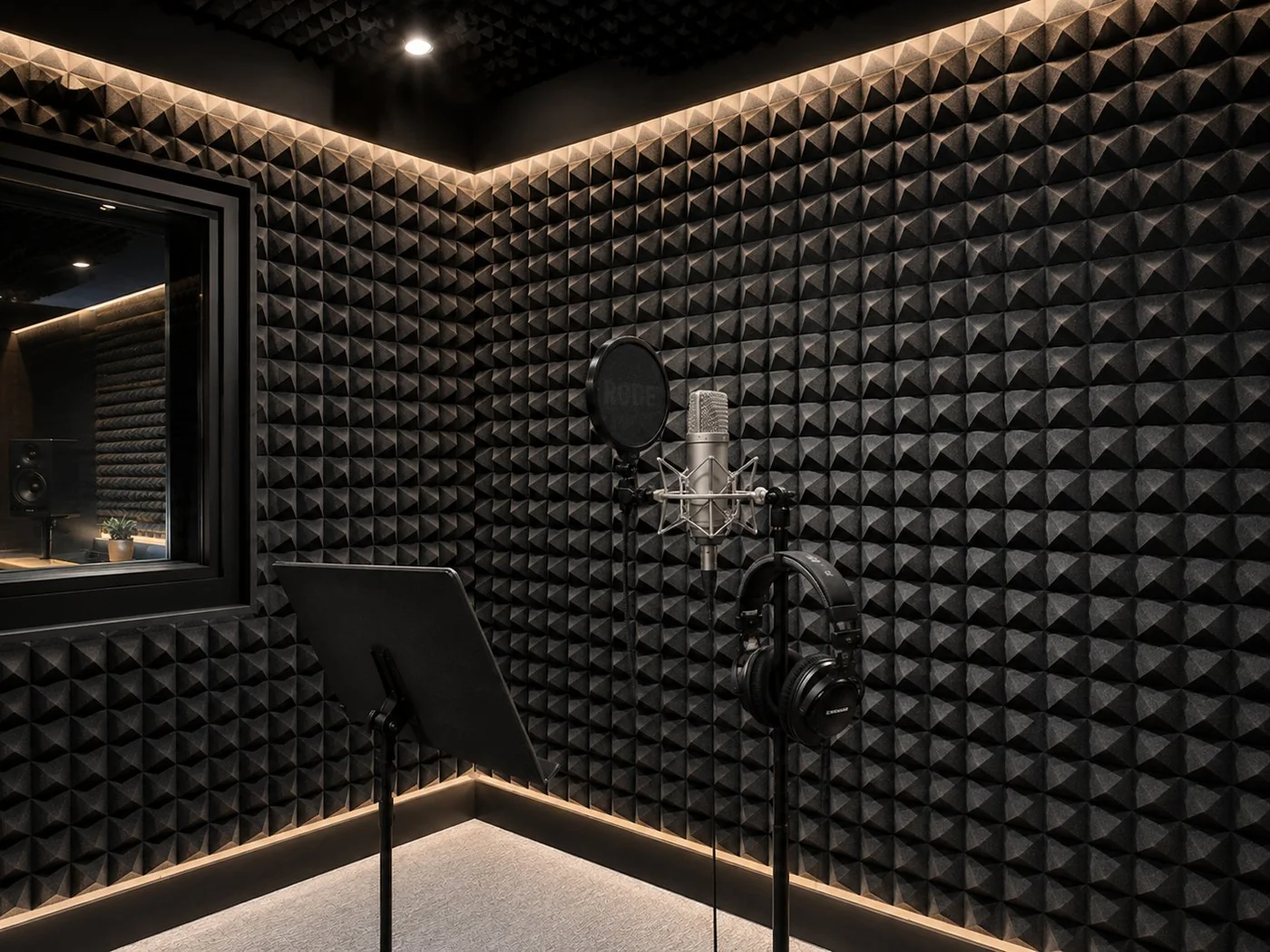
Vocal Recording Booth
RECORDING · WALL+CEILING
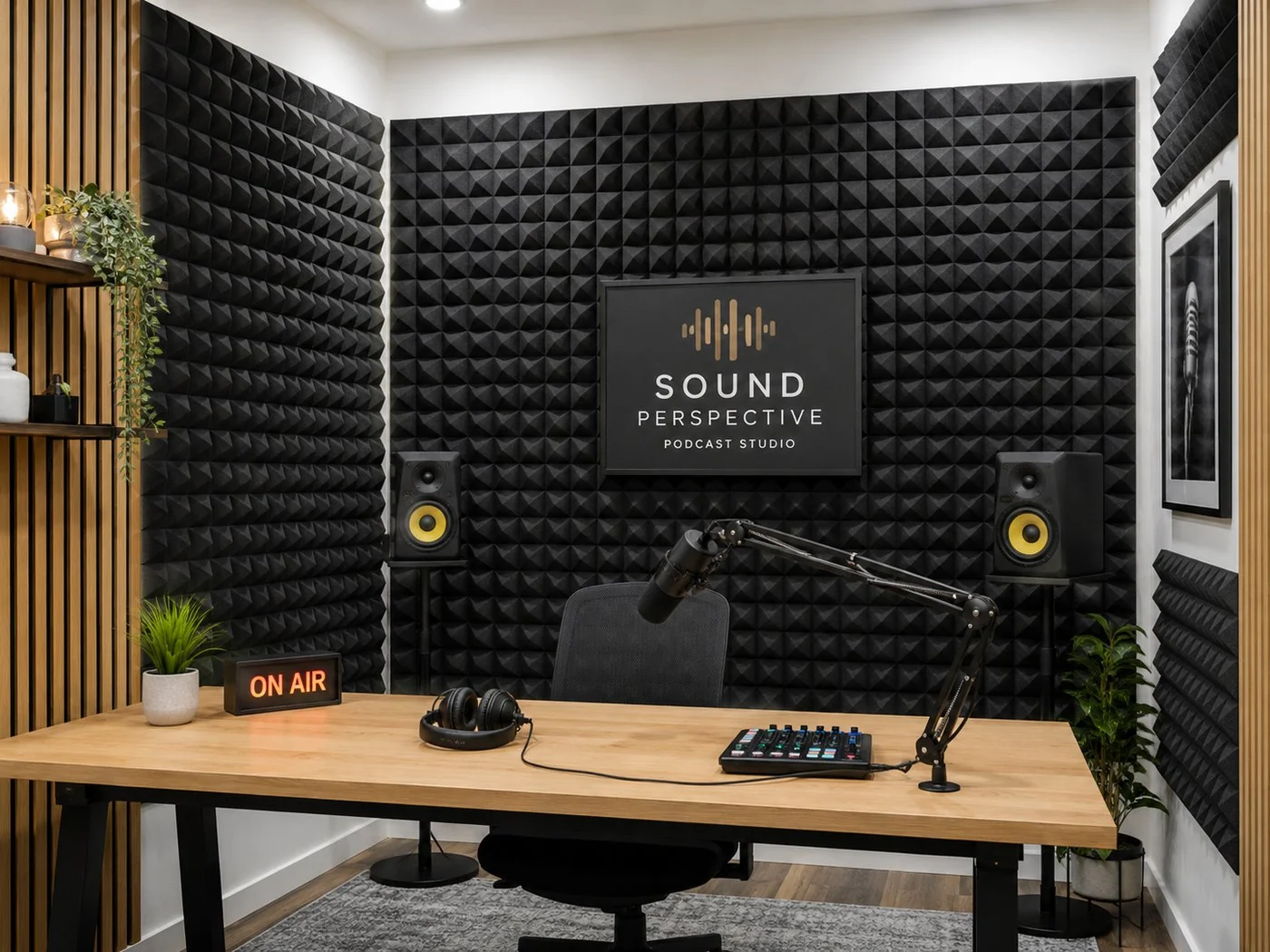
Podcast Studio
PODCAST · WALL
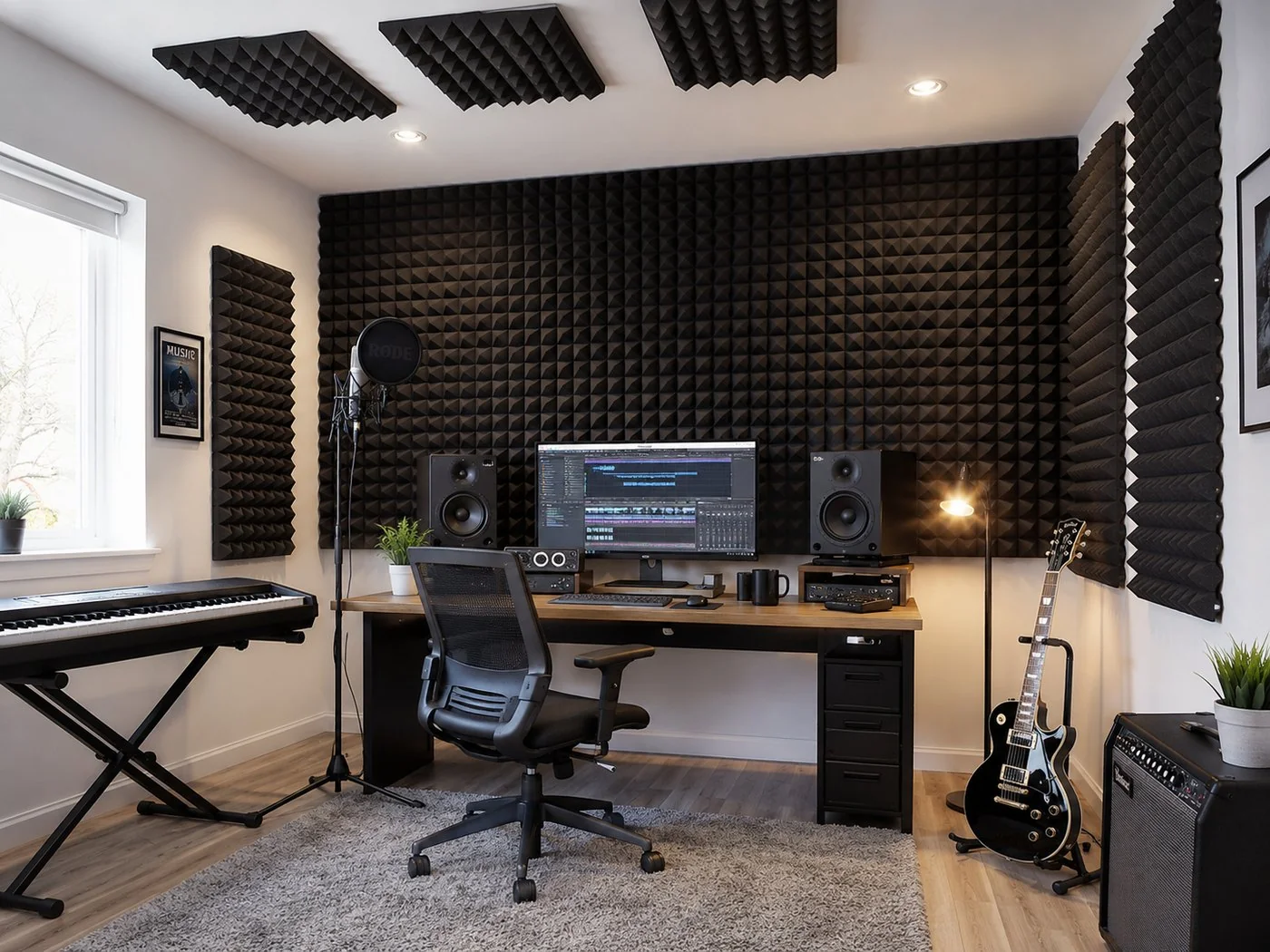
Music Production Studio
MUSIC · WALL+CEILING
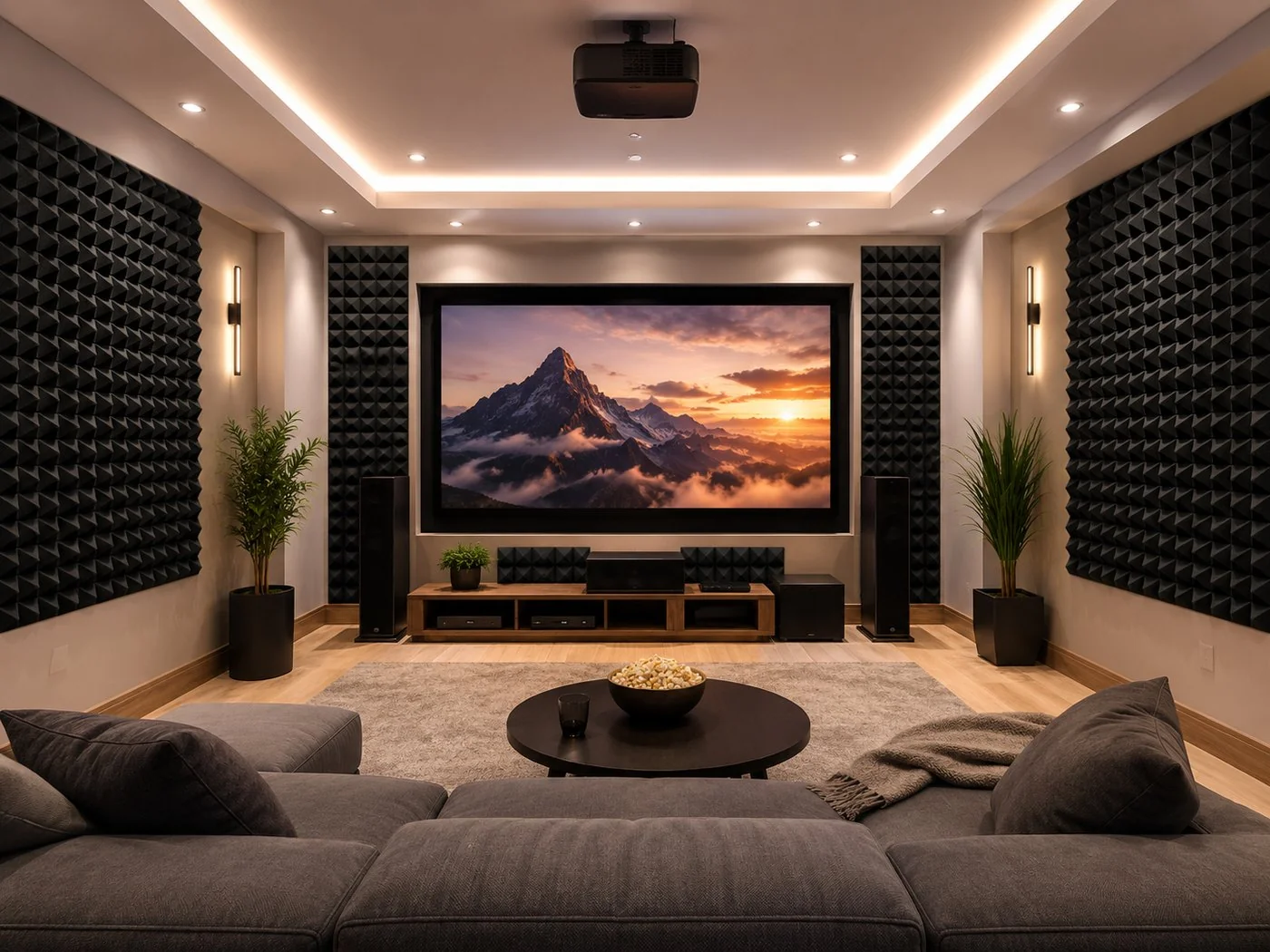
Home Theater Cinema
HOME THEATER · WALL
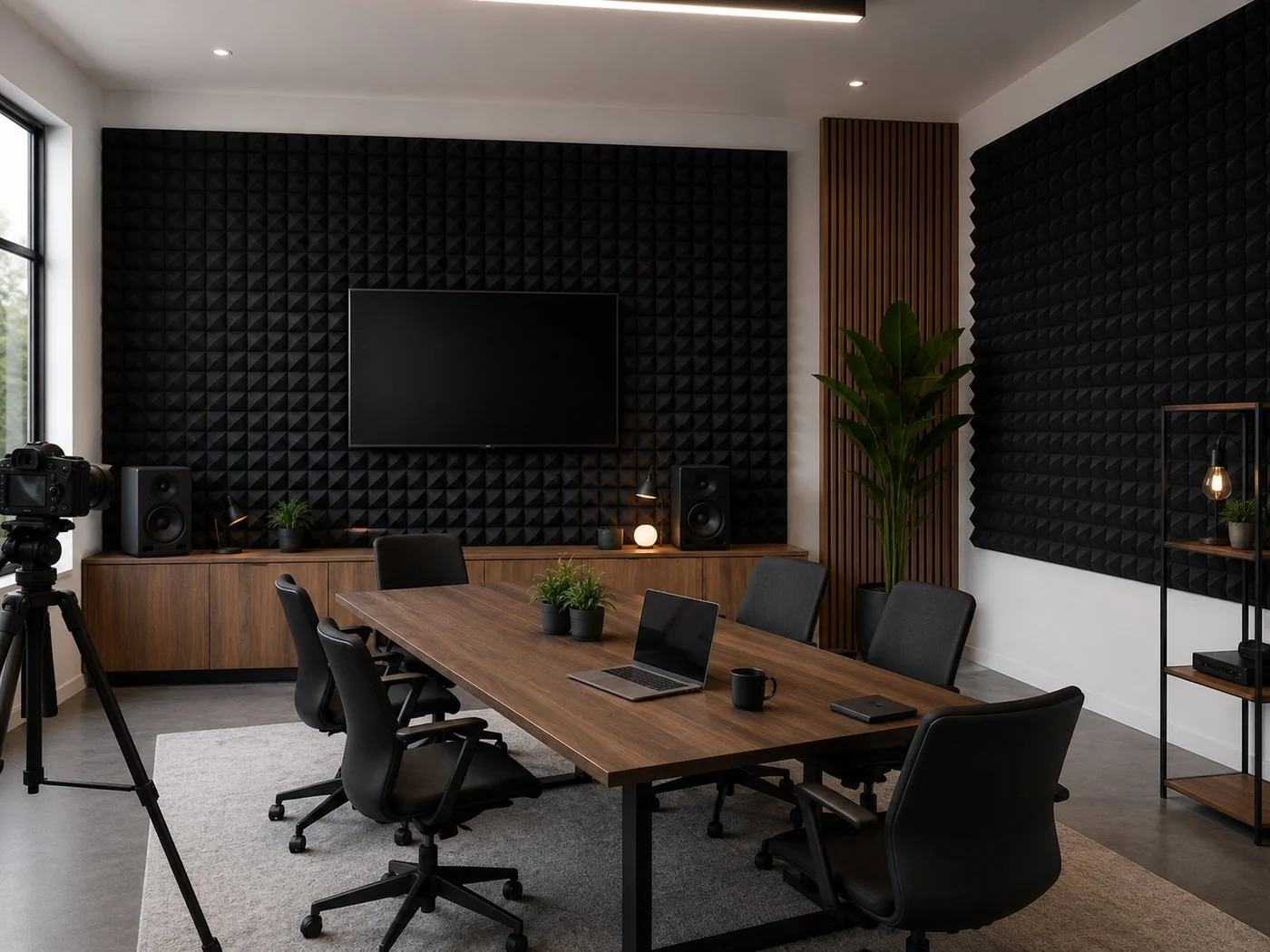
Meeting / Conference Room
OFFICE · WALL
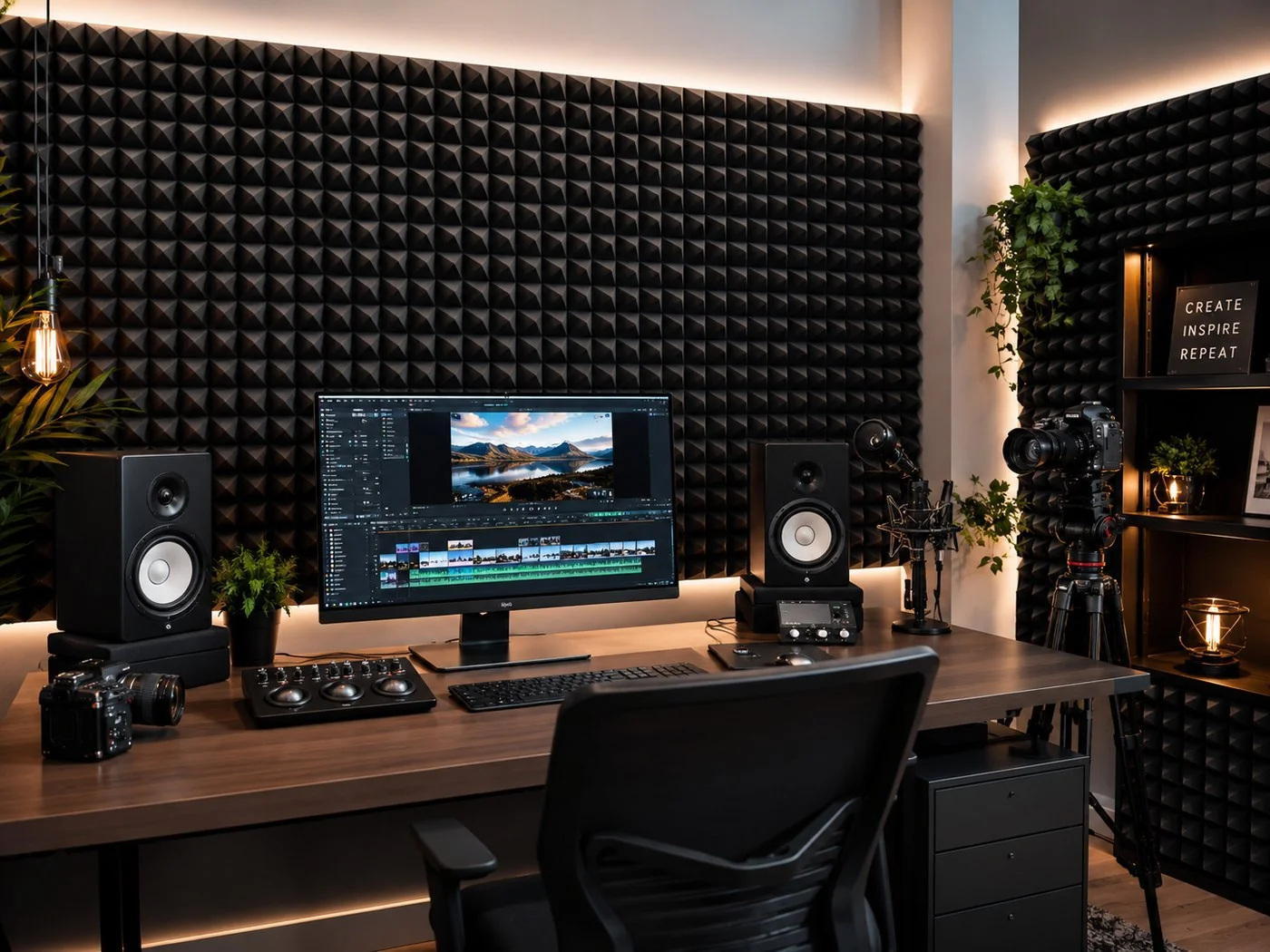
Video Editing Workstation
CREATOR · WALL
SECTORS WE SERVE
Trusted Across Every Project Type
🎙️
Recording Studios
🎮
Gaming Rooms
🎬
Home Theaters · Cinemas
📻
Podcast · Broadcast
🏢
Offices · Meeting Rooms
🏭
Industrial Plants
TECHNICAL SPECIFICATIONS
Everything You Need on One Sheet
MATERIAL
Open-Cell Polyurethane Foam (PU)
ACOUSTIC PERFORMANCE
αw 0.80 at 50 mm · NRC up to 0.85 · tested per ISO 354 in reverberation room · rated per EN ISO 11654 · Class B
FIRE REACTION
BS 5852 Pass — polyurethane matrix with flame-retardant additive
DENSITY
30 kg/m³ — verified per EN 1936
TENSILE STRENGTH
140 kPa — per GB/T 6344
TEAR RESISTANCE
160 N/m — per GB/T 10808
PROFILES
Pyramid (omnidirectional scattering) · Wedge (directional scattering)
STANDARD TILE
500 × 500 mm — 4 tiles per square meter
THICKNESS
25 mm · 50 mm (standard) · 100 mm
COLOR
Charcoal Black (standard) · custom colours on project request
MOUNTING
Spray adhesive · Double-sided foam tape · Mounting squares
STANDARDS
ISO 354 · EN ISO 11654 · EN 1936 · BS 5852 · CE · ISO 9001
FREQUENTLY ASKED
Quick Answers
3 most-asked questions with direct answers + 10 detailed questions organised in 4 categories.
🎵
MAX PERFORMANCE
What absorption can I get?
αw 0.80 / NRC up to 0.85 at the standard 50 mm thickness, tested per ISO 354. Class B sound absorber per EN ISO 11654.
🔥
FIRE PASS
Are panels fire-safe?
Yes — passes BS 5852 British furniture flammability test. Polyurethane matrix supplied with flame-retardant additive.
💡
ABSORBER, NOT SOUNDPROOF
Will it stop noise from neighbours?
No — acoustic foam is an absorber. It reduces echo INSIDE a room. To stop noise transmission, you need mass and decoupling (heavy partition).
BROWSE BY CATEGORY
What NRC and αw do Yamamah foam panels achieve?
At 50 mm thickness (the standard order), tested per ISO 354 in a reverberation room, the panels reach αw 0.80 with a Class B rating per EN ISO 11654, and an NRC up to 0.85. Thinner 25 mm panels favour mid and high frequencies, while 100 mm panels give extra low-frequency absorption.
What is the difference between Pyramid and Wedge profiles?
Pyramid is a four-sided pointed profile that gives a uniform, omnidirectional scattering pattern and a classic studio look. Wedge is a parallel triangular profile that diffuses sound in one main direction. Acoustically the two are very close at the standard 50 mm depth; the choice is mostly visual. Both can be mixed on the same wall for a custom finish.
Are foam acoustic panels fire-safe?
Yes. The foam passes BS 5852 (the British furniture and furnishings flammability test) and is supplied with a flame-retardant additive in the polyurethane matrix. The panels are intended for interior surface mounting and should not be exposed to open flame, but they meet standard project-level fire-safety requirements for studios, offices and residences.
Are these panels soundproof? Will they stop noise from neighbours?
No — and no acoustic foam in the world is soundproof. Acoustic foam is an absorber: it improves the sound INSIDE a room by reducing echo and reverberation. It does not stop sound passing through walls. To block noise transmission you need mass and decoupling — a heavy partition with damping, not a porous foam. We can specify both: foam panels for room treatment, and mass-loaded systems for soundproofing — please contact our engineer.
What thicknesses are available?
Three standard thicknesses: 25 mm (mid and high-frequency control, gaming and podcast booths), 50 mm (the most common — full speech and music absorption, αw 0.80), and 100 mm (extra low-frequency absorption for music studios and home cinemas).
What sizes are available?
Standard tile size is 500 × 500 mm. The tiles are easy to handle, can be installed by one person, and align edge-to-edge across walls and ceilings. Custom sizes are available on project request.
How are foam panels installed?
Three common methods. (1) Spray adhesive applied to the back of the panel — fast, low-cost, permanent. (2) Double-sided foam tape on the four corners and centre — removable if the wall finish is delicate. (3) Mounting squares for rental or temporary spaces. Substrate must be clean, dry and dust-free. No special tools are needed.
Where should I install foam panels in a room?
For a typical recording or podcast room, treat the first reflection points first — the wall behind the microphone or speakers, the side walls at ear height, and the ceiling above the listening position. Aim for 25-40% wall coverage to control reverb without making the room sound dead. Our acoustic engineer can prepare a free room-treatment layout from your room plan.
What is an open-cell polyurethane acoustic foam panel?
An open-cell polyurethane foam is a porous material where the air cells are interconnected. Sound waves enter the cells and lose energy through air friction inside the open structure, which converts sound into a tiny amount of heat. This open-cell architecture is the reason foam panels absorb sound effectively, unlike closed-cell insulation foam which mostly blocks heat.
Do you supply colors other than black?
Standard colour is charcoal black (the most popular finish for studios). Custom colours and project-specific tints are available on request with minimum order quantities — please contact us for sample swatches.
Ready for Your Next Studio?
Request a free sample, or book a site survey with our engineer — supply and install nationwide across Saudi Arabia.
— RELATED ABSORPTION PRODUCTS —
Explore more absorption products
— REQUEST QUOTE —
Get a quote for Foam Acoustic Panels
Tell us about your space — we reply within 30 minutes during business hours.