Sound Absorption Materials Acoustic Panels & Ceiling Systems in Saudi Arabia
Yamamah Smart supplies and installs professional sound absorption materials — acoustic fabric panels, PET panels, foam, wood acoustic panels, baffles, ceiling clouds, and acoustic ceiling tiles — to reduce echo, control reverberation, and improve speech clarity inside offices, mosques, classrooms, studios, restaurants, hospitals, hotels, and cinemas across Saudi Arabia.
— WHAT IS SOUND ABSORPTION? —
Reduce Echo, Improve Room Acoustics
Sound absorption materials convert incident acoustic energy into low-grade heat. They are distinct from soundproofing (which blocks transmission between rooms) and from diffusion (which scatters reflections). Absorption is measured by α per octave band, summarised by the NRC single number rating (ASTM C423), and classified A–E by the weighted αw (ISO 11654).
- Reduces echo, reverberation, and flutter inside enclosed spaces.
- Improves speech intelligibility (STI) and listening comfort.
- Targets octave bands 125 Hz – 4 kHz; product choice tunes the spectrum.
- Measured per ISO 354 (lab) and ISO 3382-2 (in real rooms).
How Absorption Works — Three Mechanisms
Different absorber types tackle different frequency ranges. Real-world treatments often combine all three to cover the audible spectrum.
Porous Absorption
Sound waves enter open fibers or cells; air friction inside the pores converts kinetic energy to heat. Best for mid-to-high frequencies; thicker product extends to bass.
250 Hz – 4 kHz · BroadbandMembrane / Panel Absorbers
A solid panel vibrates over a cavity acting as a mass-spring system. Tuned to the cavity depth and panel mass; targets specific low-mid frequencies that porous absorbers miss.
63 Hz – 500 Hz · Tuned Low-MidHelmholtz Resonators
Air mass in a neck/slot resonates with the cavity behind it, absorbing energy at a single resonant frequency. Used in slotted panels to remove problem-frequency room modes.
Tunable Narrow · 80 Hz – 400 Hz— WHY USE IT? · MEASURABLE OUTCOMES —
What You Actually Get
Sound absorption is not abstract — every outcome below can be measured before and after installation using internationally recognised methods.
— UNDERSTANDING NRC —
How to Read Absorption Ratings (NRC)
NRC (Noise Reduction Coefficient) is a single-number rating from 0.00 to 1.00 averaging absorption (α) across the 250, 500, 1000, and 2000 Hz octave bands. A panel with NRC 0.90 absorbs about 90% of mid-frequency sound energy that strikes it. Use NRC to compare materials quickly; use per-band α for design-grade calculations.
ISO 11654 Class A–E Rating
European acoustic engineers use the αw (weighted absorption coefficient) and Class A–E rating from ISO 11654. Class A is the highest absorption category — recommended for studios, theaters, and broadcast spaces.
— SOUND ABSORPTION PRODUCT RANGE —
Our Full Sound Absorption Range
Organized into four sub-categories — Wall Panels, Ceiling Solutions, Dividers, and Wood Acoustic Systems — exactly matching our site navigation so you can find the right material fast.
Wall Panels
4 PRODUCTS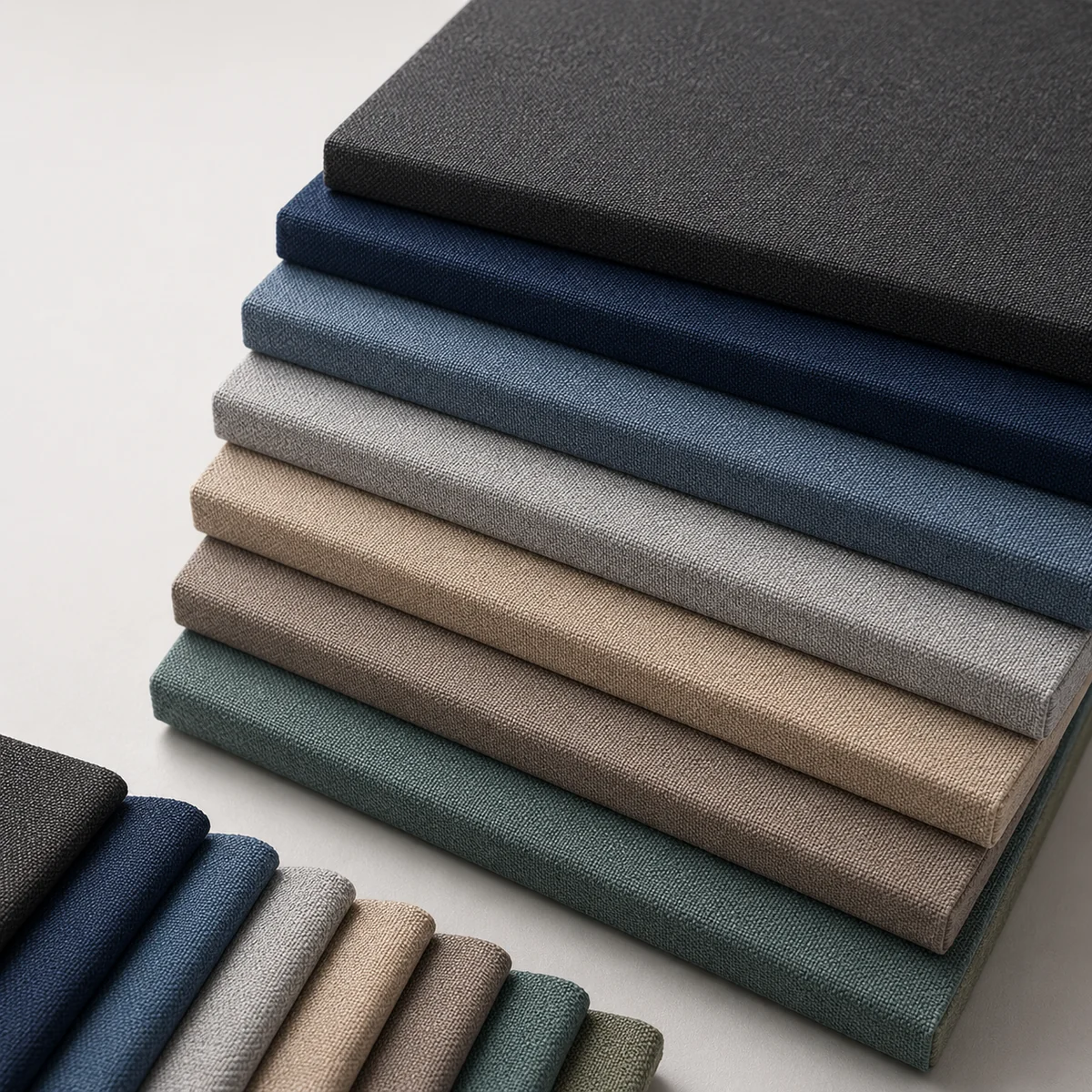
Acoustic Fabric Panels
Premium fabric-wrapped panels — high absorption, wide color and pattern range, available in 25/50/75/100 mm thickness for wall applications.
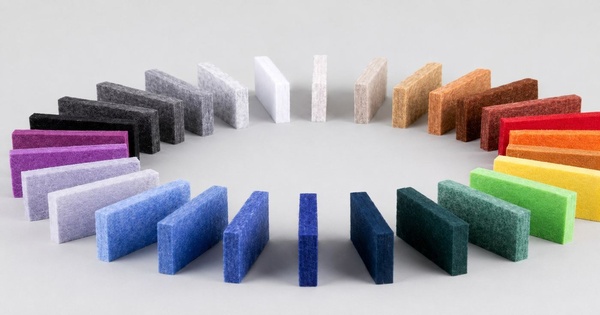
Acoustic PET Panels
100% recycled polyester — 67 YAMSIS colors, 50+ patterns, NRC up to 0.85, cleanable and safe for schools, clinics, and offices.
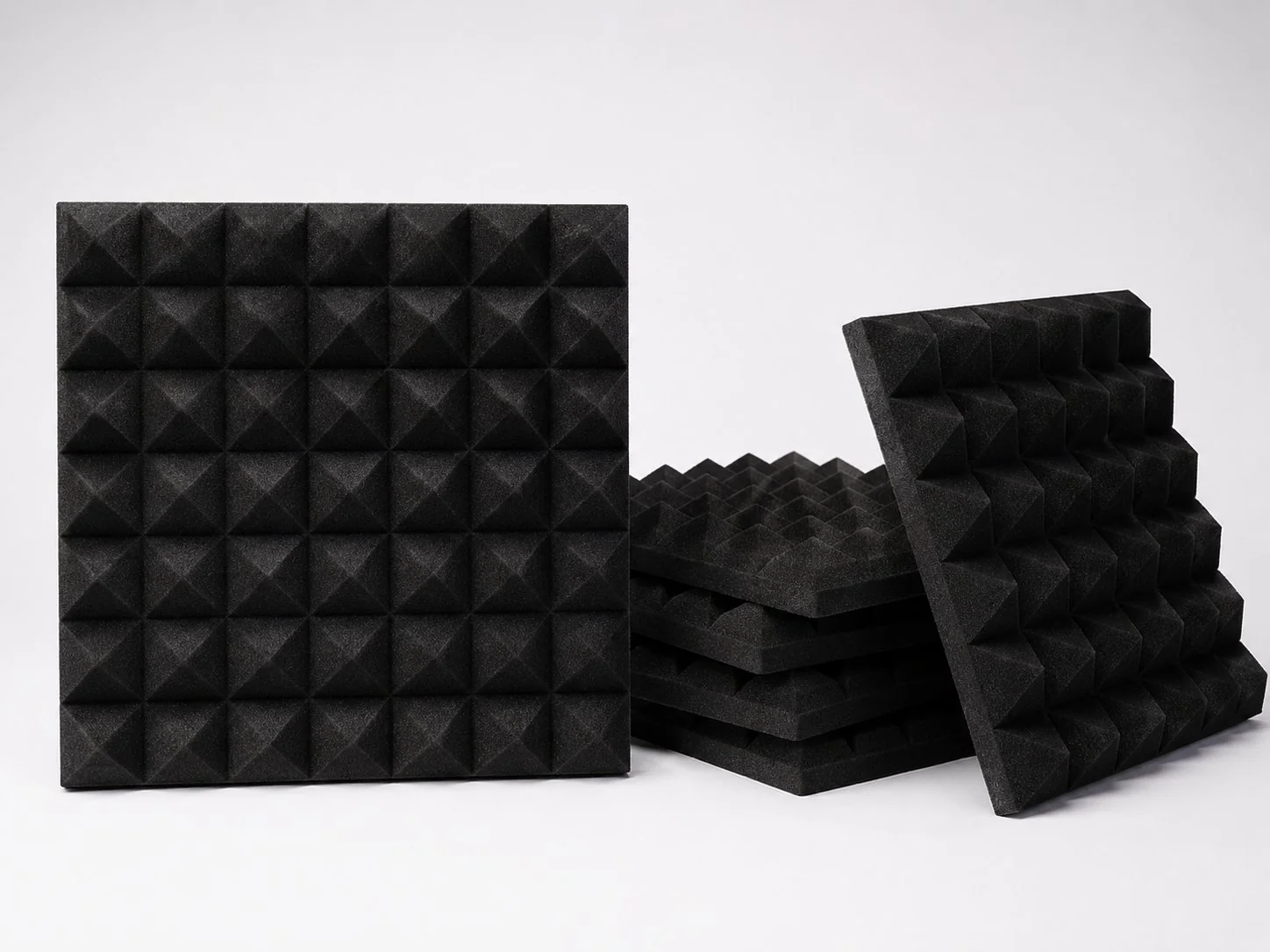
Acoustic Foam Panels
Open-cell foam in wedge, pyramid, and flat tile profiles — popular for studios, podcast rooms, and small acoustic treatments.
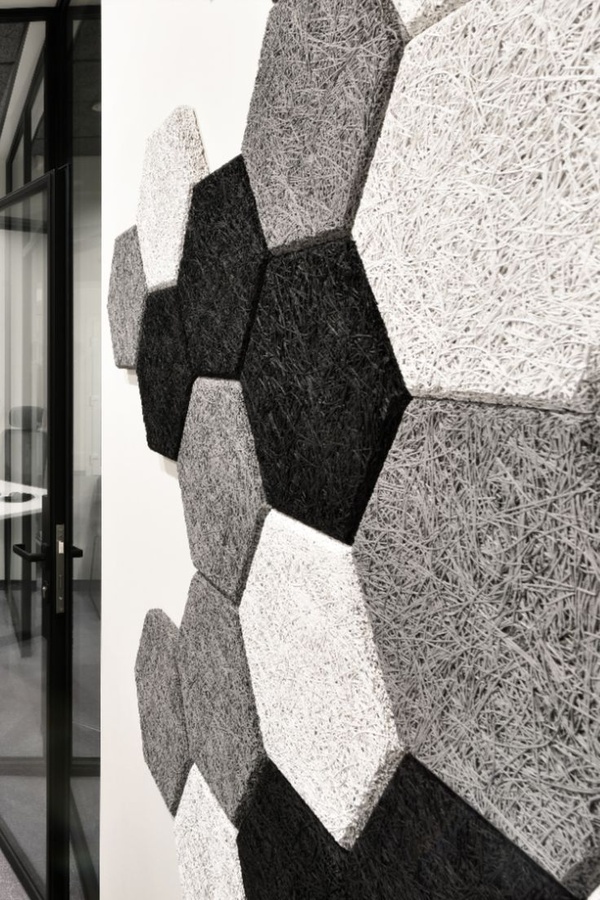
Wood Wool Acoustic Panels
Cement-bonded wood wool — durable, fire-rated options available, natural texture, suited for schools, gyms, and industrial-look interiors.
Ceiling Solutions→
4 PRODUCTS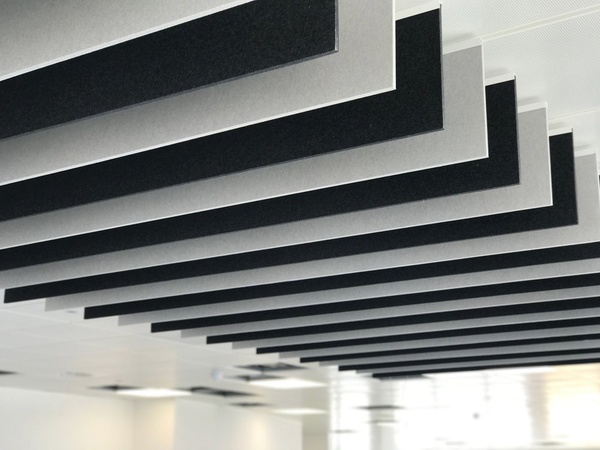
Acoustic Fabric Baffles
Vertical fabric-wrapped baffles suspended from the ceiling — high surface area, NRC up to 0.95, ideal for open offices and high-ceiling halls.
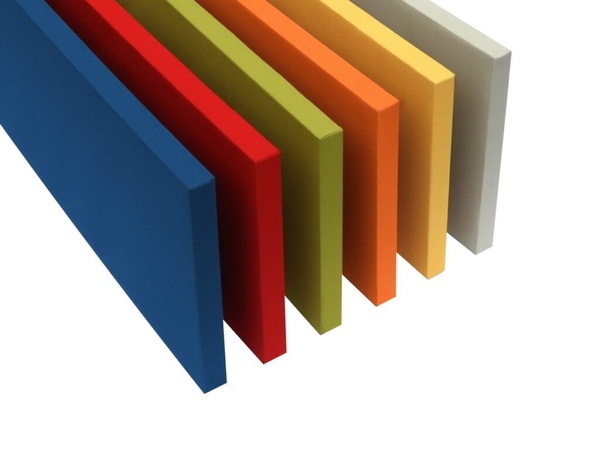
Acoustic PET Baffles
Eco-friendly recycled PET baffles in 67 YAMSIS colors — modern open-ceiling look with strong absorption and clean installation.
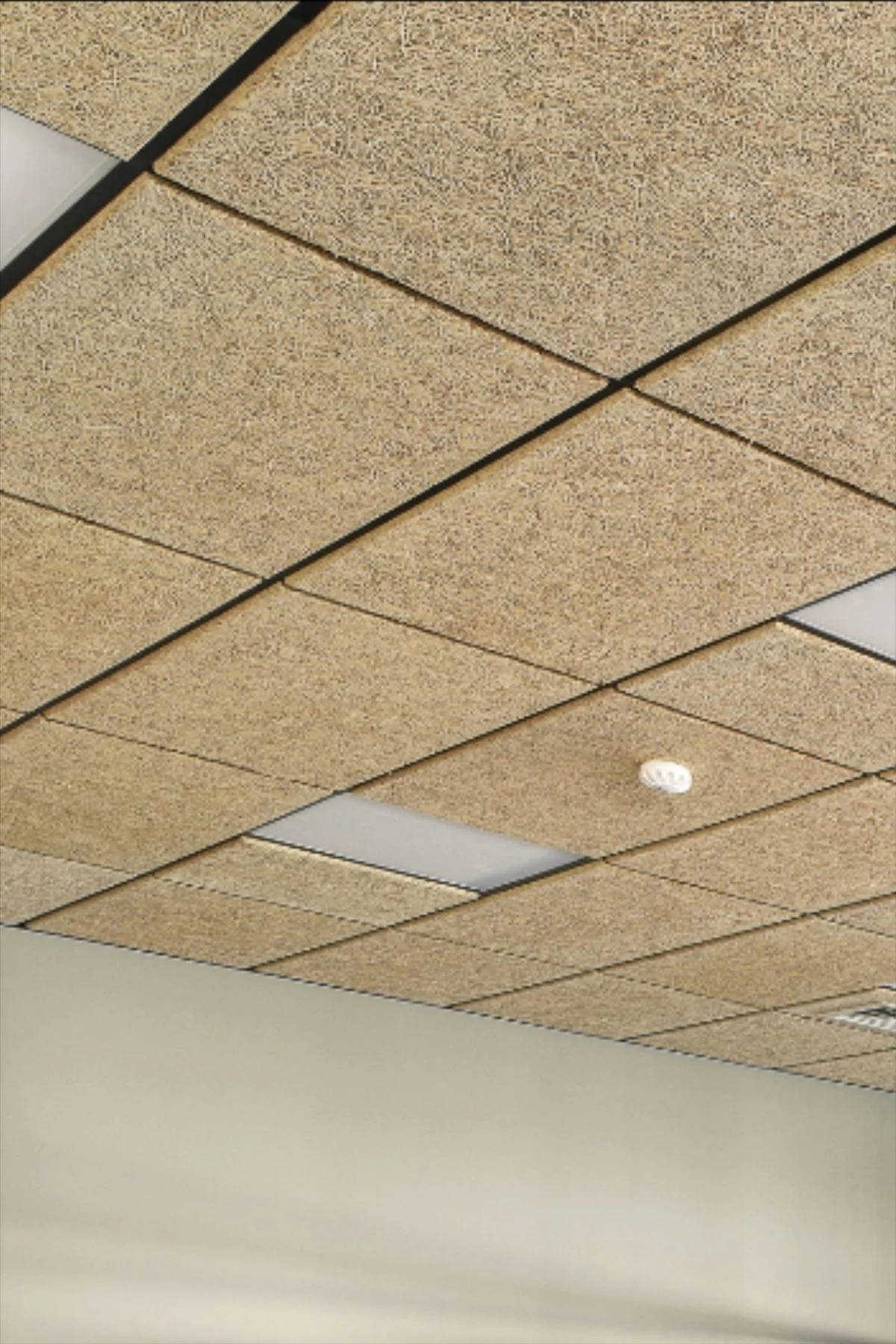
Acoustic Ceiling Tiles
Modular acoustic tiles for T-bar suspended ceiling grids — standard 600×600 / 600×1200 mm sizes with NRC 0.70–0.95 depending on the system.
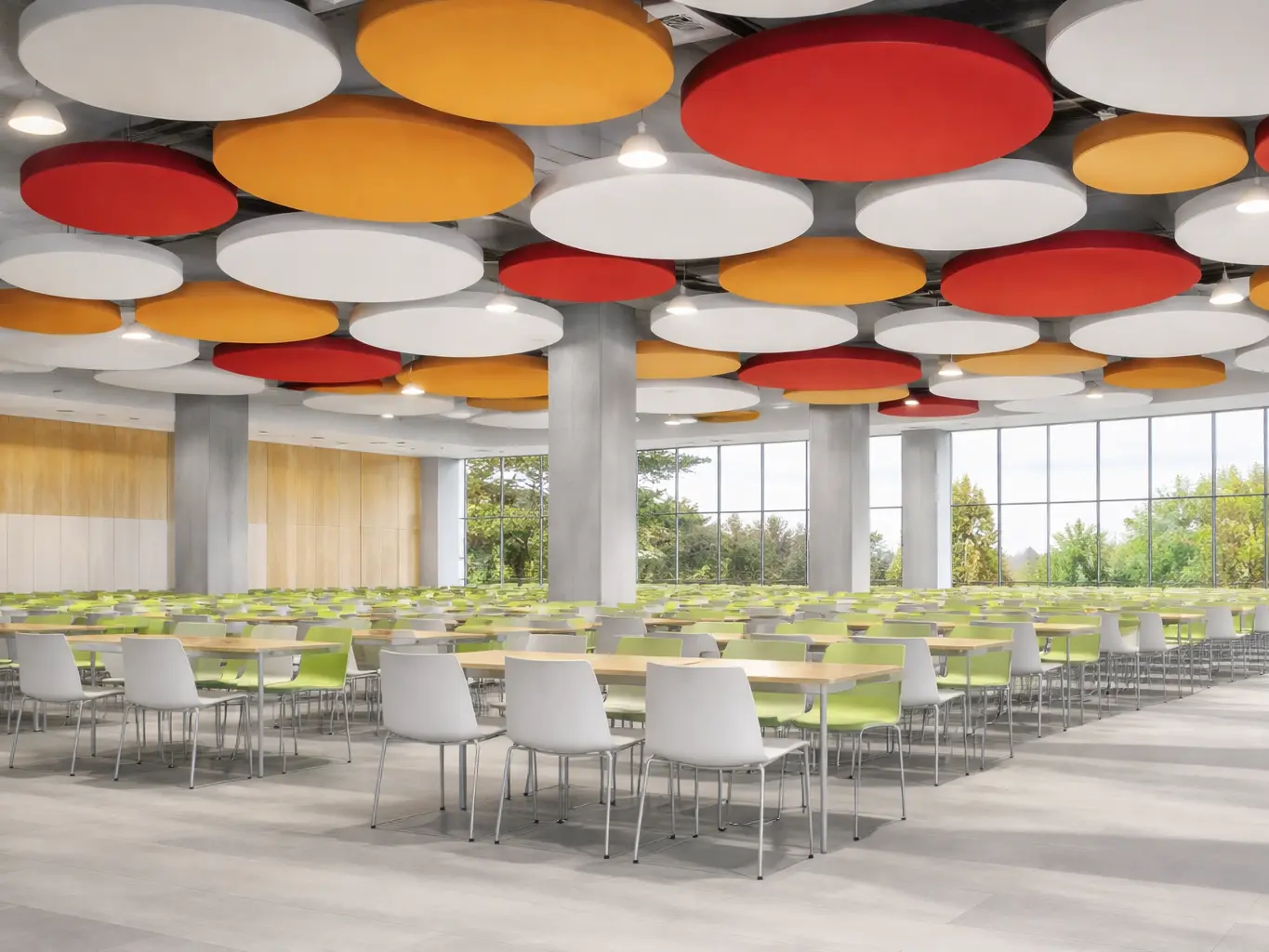
Acoustic Clouds & Rafts
Horizontal floating ceiling units — both upper and lower faces absorb, providing higher effective absorption in modern open ceiling layouts.
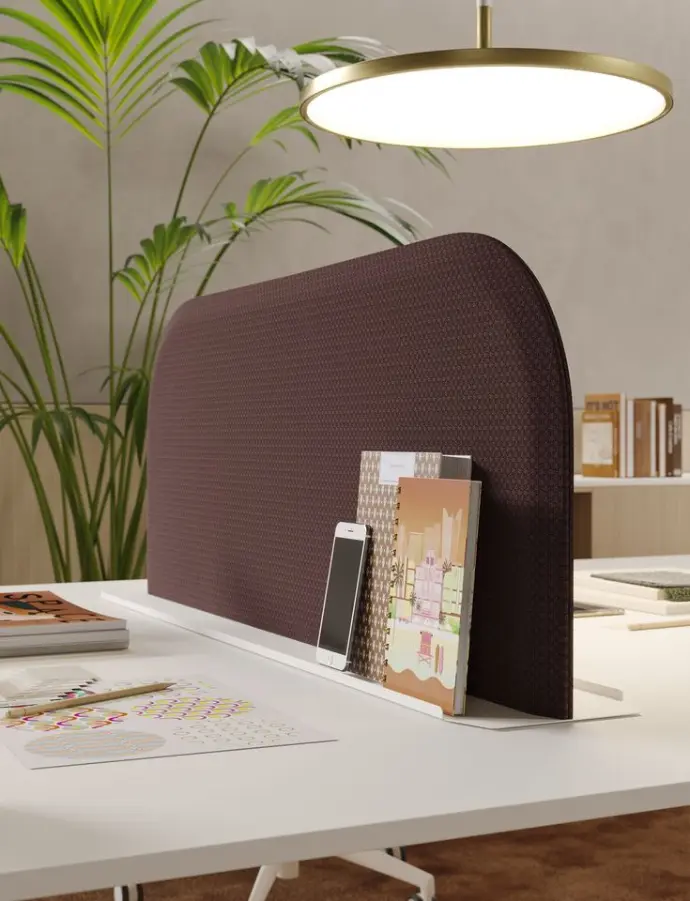
Wood Acoustic Systems
4 PRODUCTS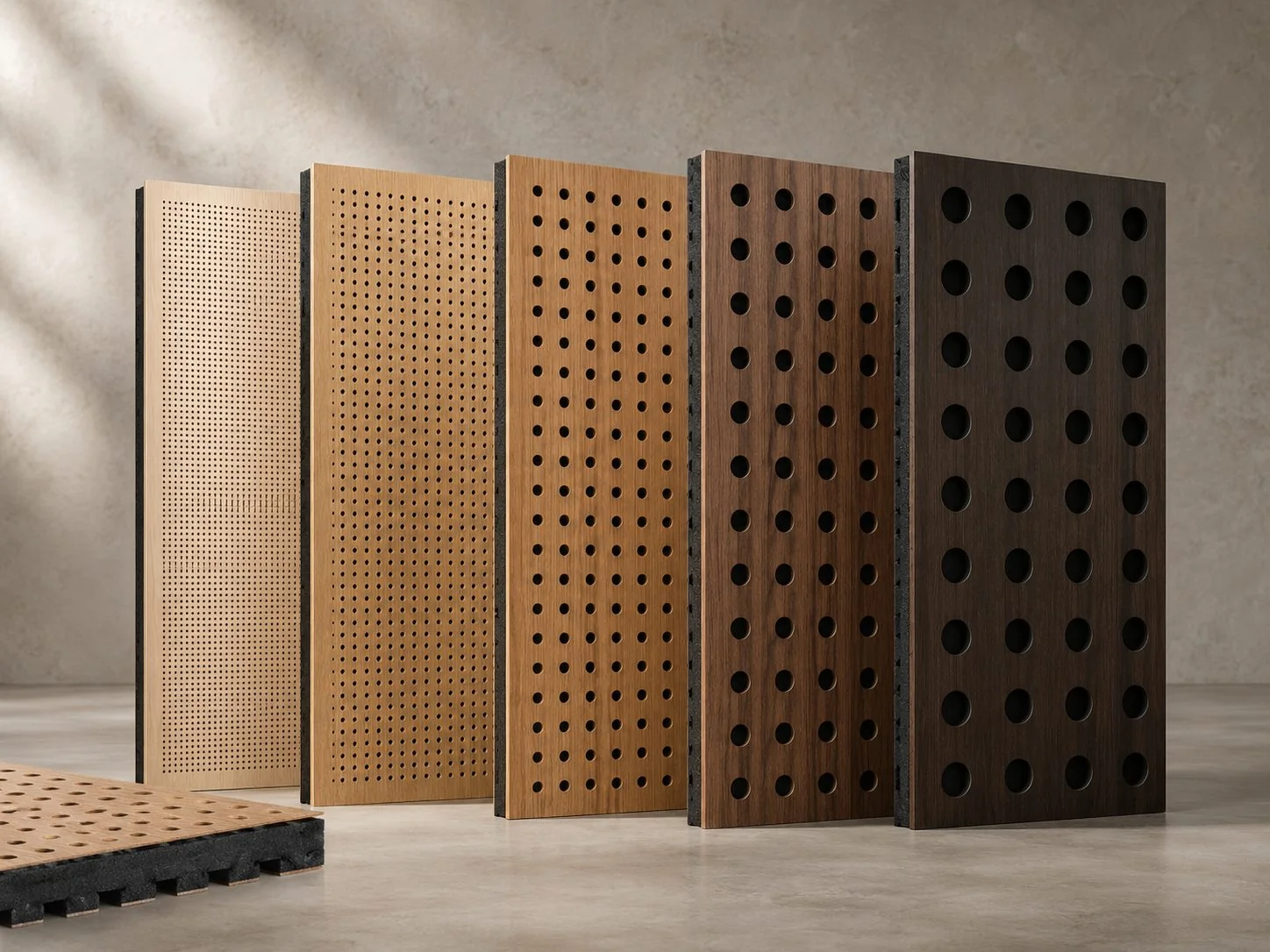
Perforated Wood Panels
Natural wood face with circular perforations and acoustic backing — premium look for meeting rooms, auditoriums, and executive offices.
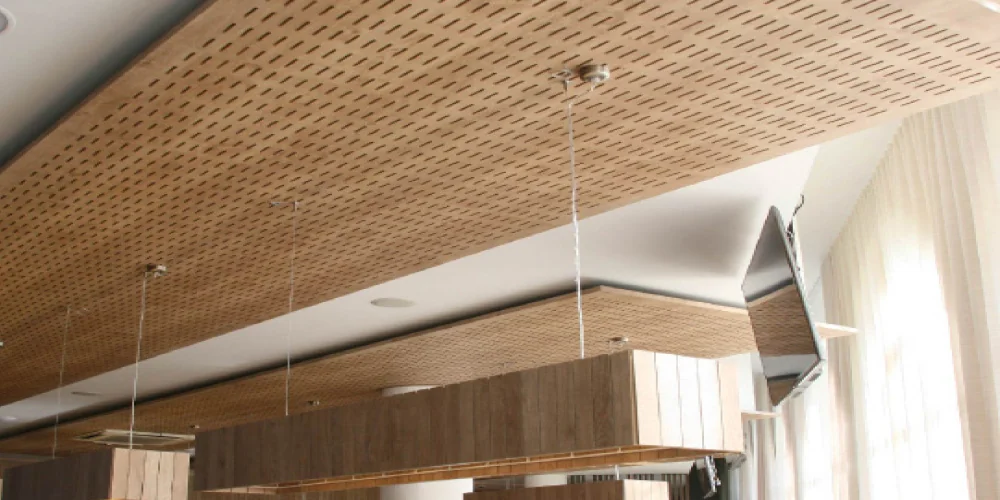
Slotted Wood Panels
Linear slot pattern over an acoustic backing — clean modern aesthetic with controlled mid-band absorption for offices and lobbies.
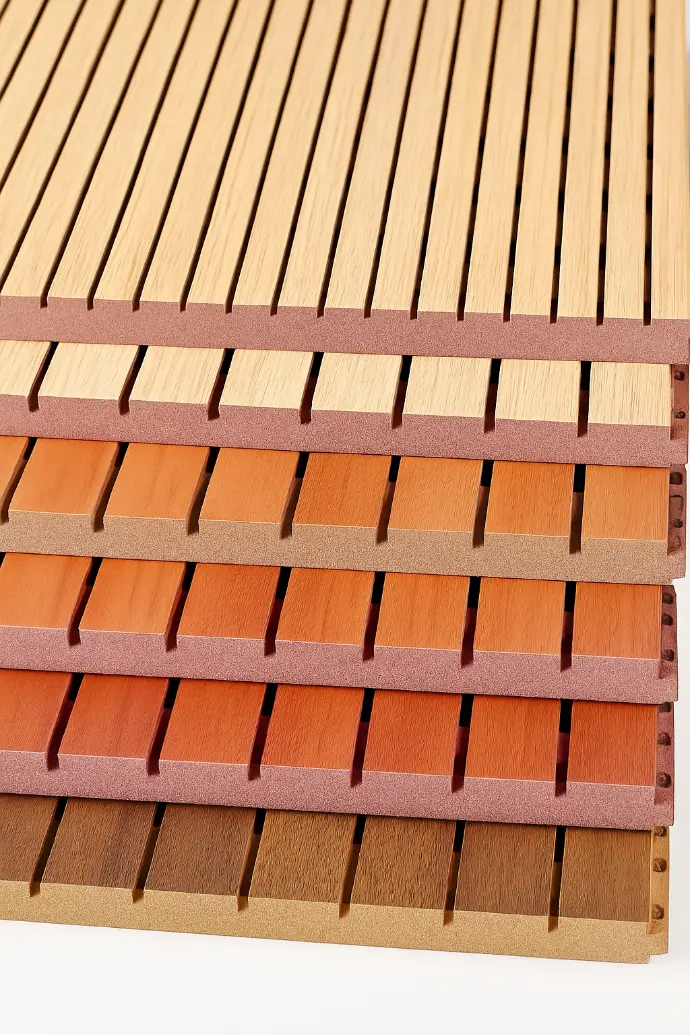
Grooved Wood Panels
V-groove or U-groove patterns with hidden acoustic core — warm wood finish ideal for boardrooms, hotels, and hospitality interiors.
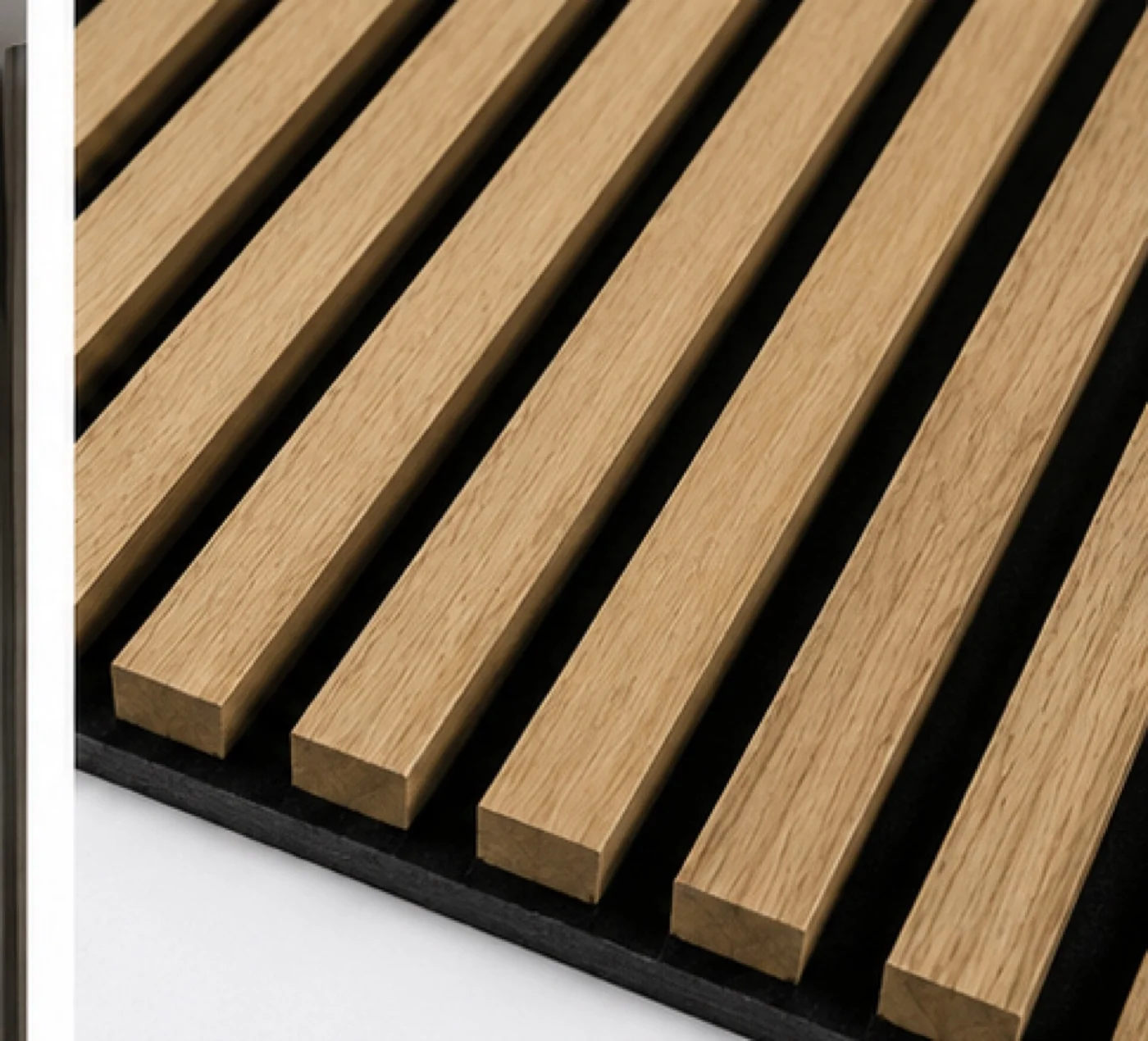
Wood Slat Acoustic Panels
Parallel solid-wood slats over a black acoustic felt backing — striking architectural feature with broadband absorption for premium spaces.
— CHOOSING THE RIGHT MATERIAL —
How to Choose Your Absorption Material
Selection depends on surface (wall vs ceiling), aesthetic, acoustic target (NRC and frequency range), and project context.
For Walls
Fabric panels, PET panels, perforated/slotted/grooved wood. Choose by aesthetic and room privacy.
For Ceilings
Acoustic ceiling tiles, baffles, clouds, and rafts. Choose by ceiling type and visual exposure.
For Studios
Thicker 75/100 mm fabric panels, bass traps, and foam — controls flutter echo and low-mid frequencies.
For Offices & Meeting Rooms
Mid-thickness fabric or PET panels on walls, plus ceiling clouds or tiles to reach 25–35% coverage.
For Eco / Sustainable Projects
PET (100% recycled polyester), wood wool, and moss panels — natural and recycled materials with absorption performance.
For Premium / Architectural Look
Perforated, slotted, grooved, or slat wood panels — warm natural finish for executive and hospitality spaces.
— APPLICATIONS BY SPACE —
Where Sound Absorption Makes a Difference
Every room shape, finish, and function calls for a different absorption strategy. Below are sectors where Yamamah Smart routinely supplies and installs absorption systems.
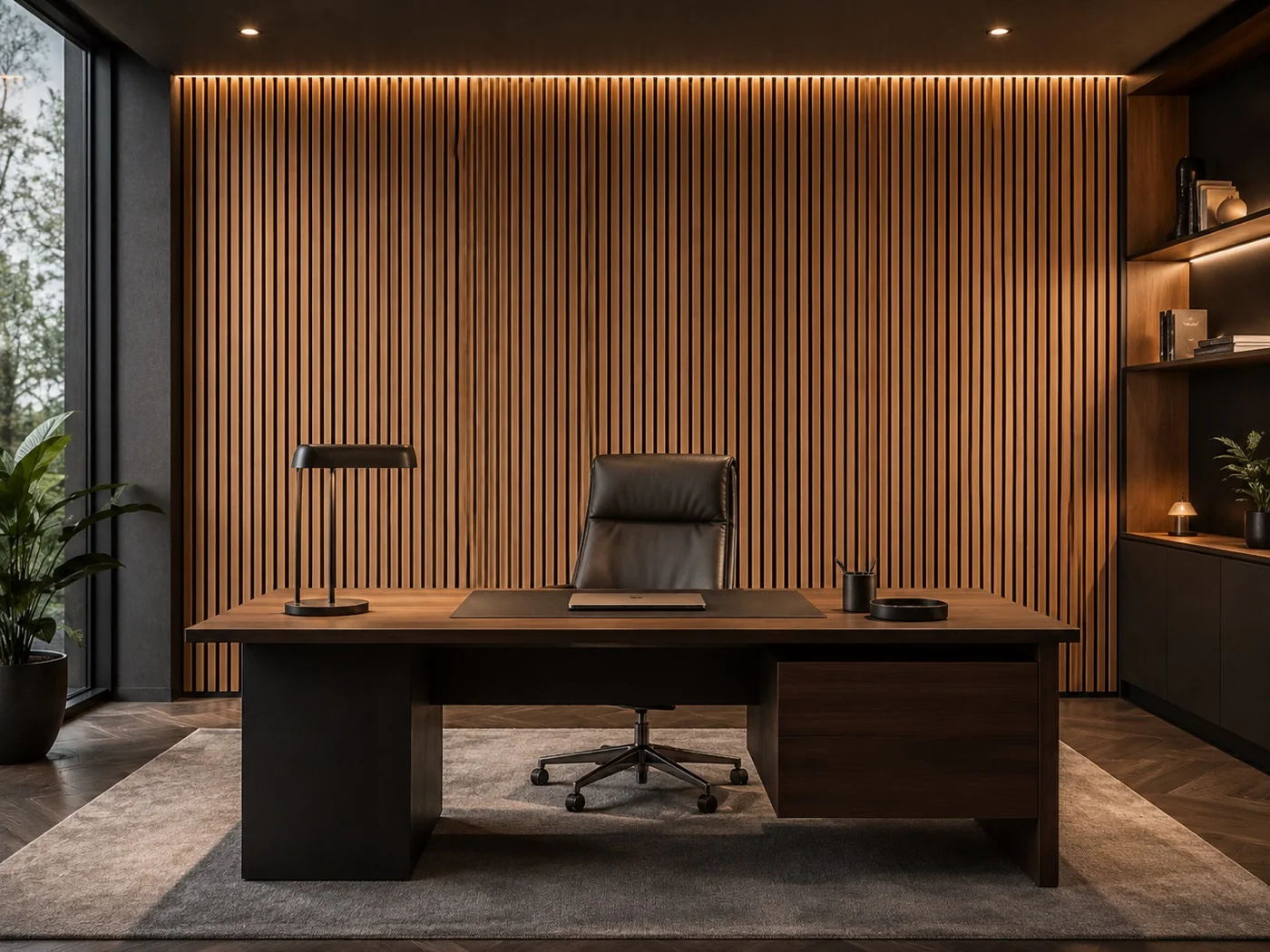
Offices & Meeting Rooms
Reduce meeting fatigue, control echo in glass-and-hard-finish offices, improve call clarity.
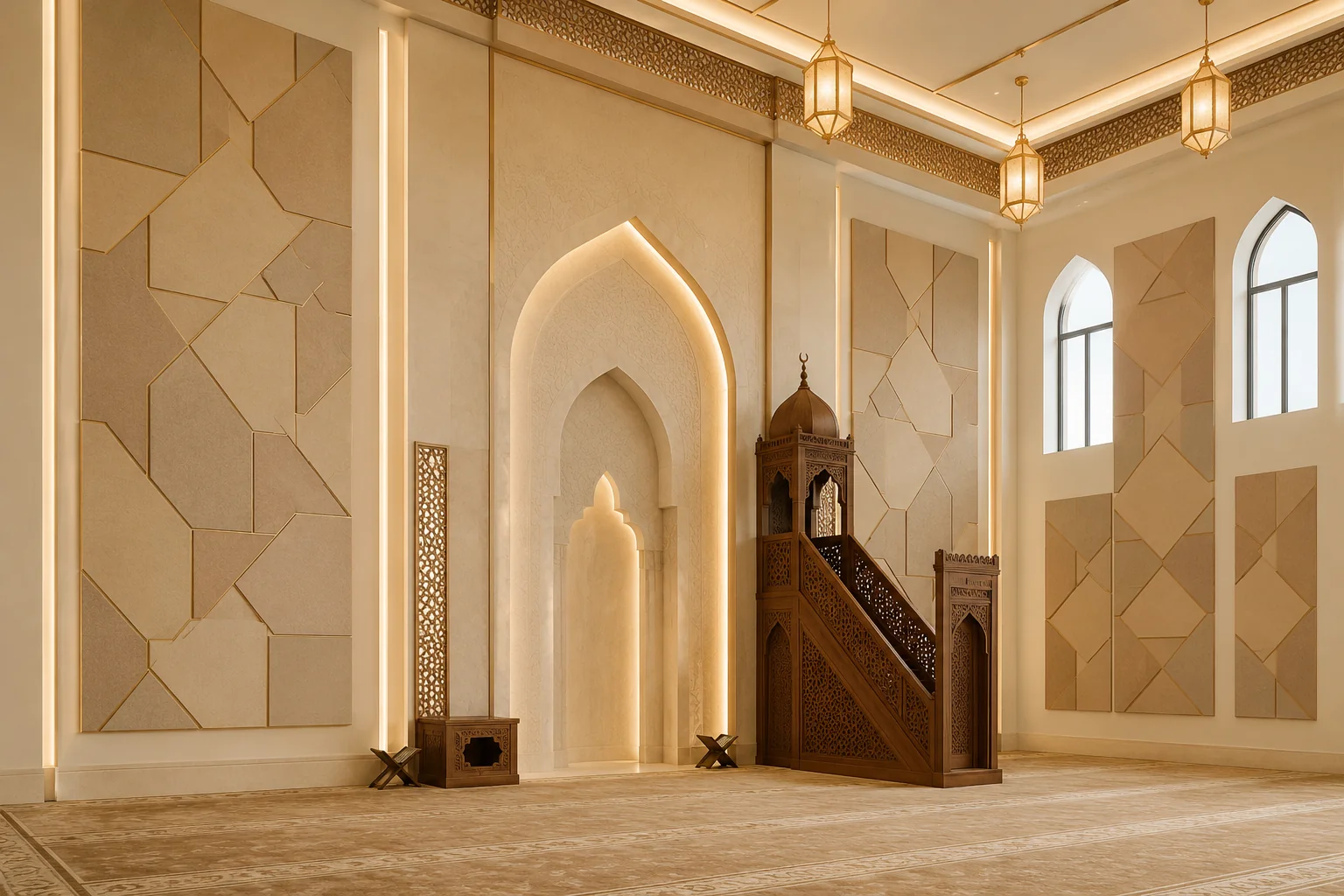
Mosques
Improve speech intelligibility of the khutbah and reduce excessive reverberation while preserving architectural calm.
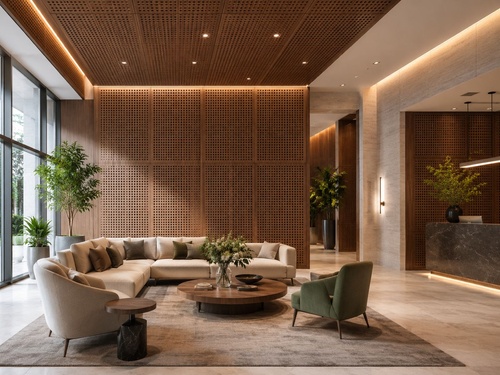
Schools & Universities
Lower noise in classrooms, lecture halls, libraries, and student commons; choose safe, cleanable PET or wood wool surfaces.
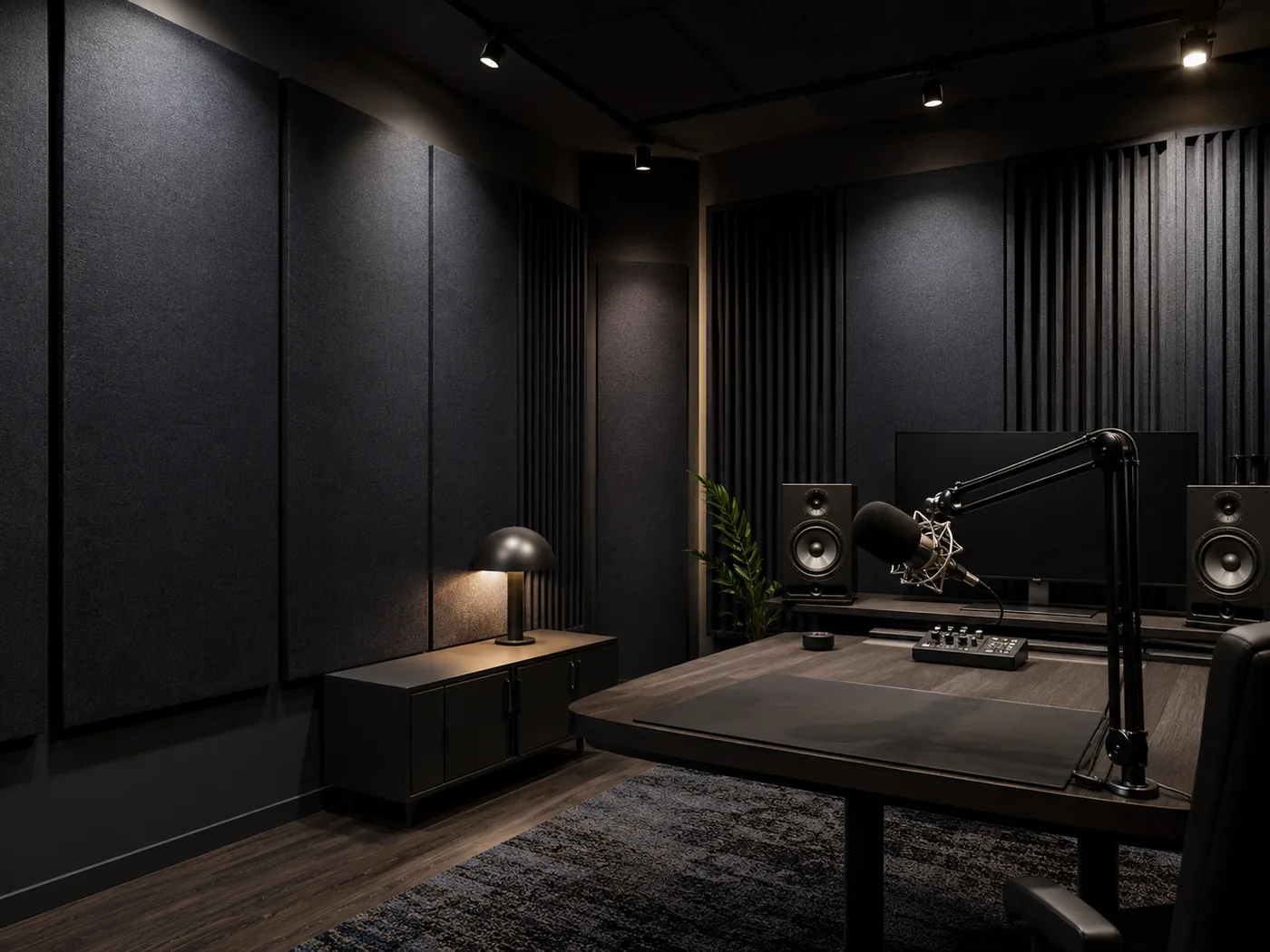
Studios & Podcast Rooms
Control reflections and flutter using 75/100 mm fabric panels; manage low frequencies with bass treatment.
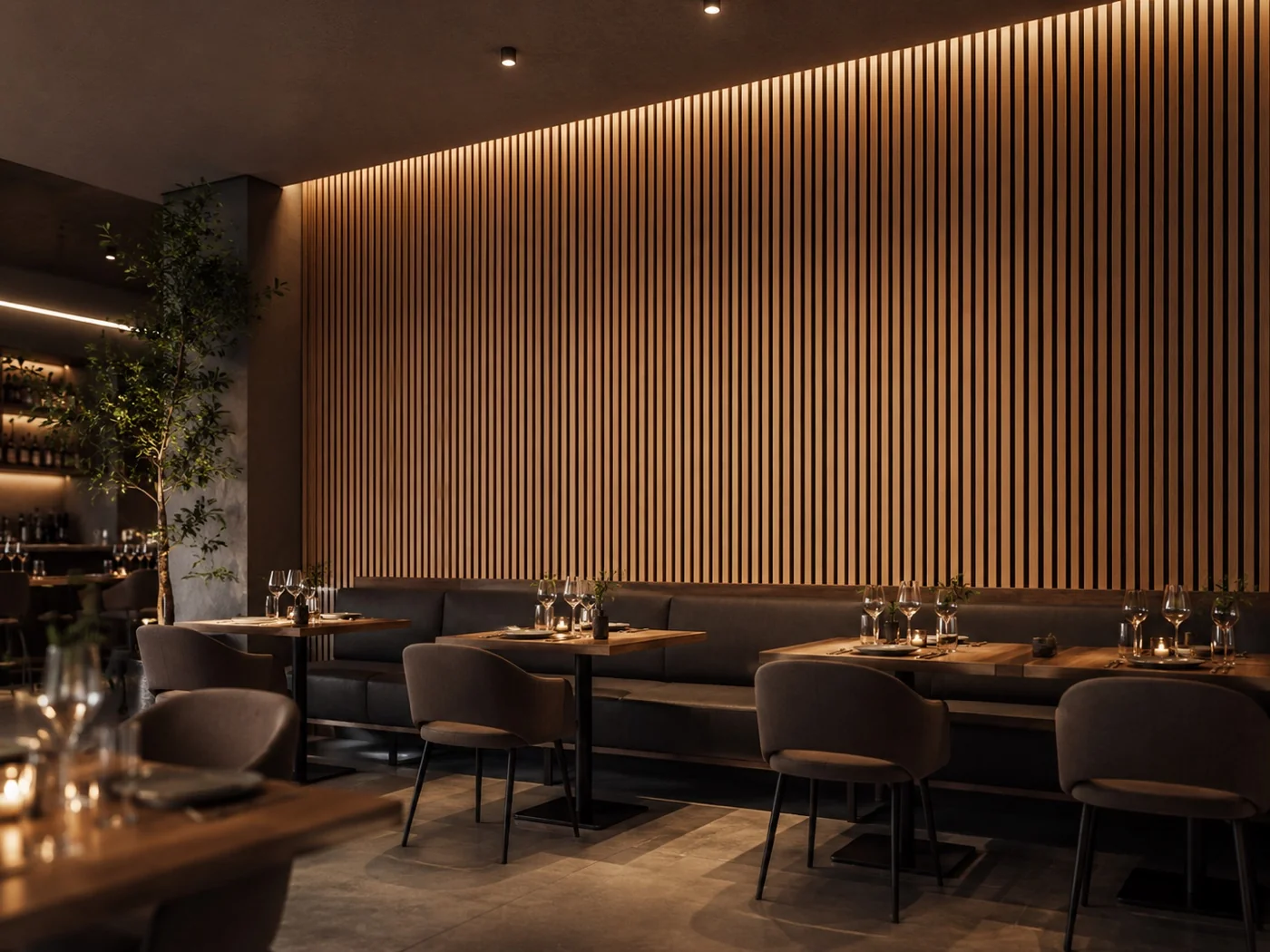
Restaurants & Cafés
Reduce dining noise using ceiling baffles, clouds, and decorative wall absorbers without compromising design.
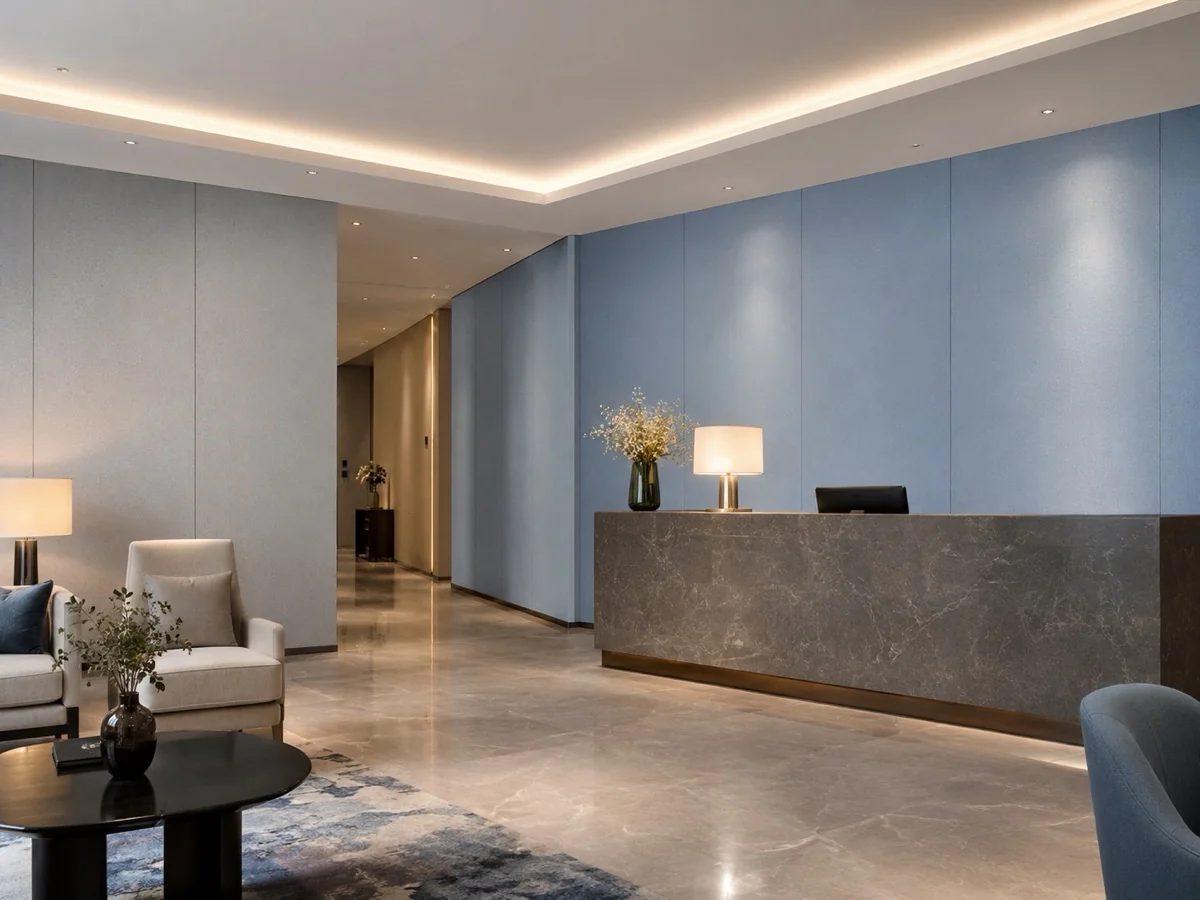
Hospitals & Clinics
Calm acoustic finishes for waiting and treatment areas; specify cleanable, fire-rated materials.
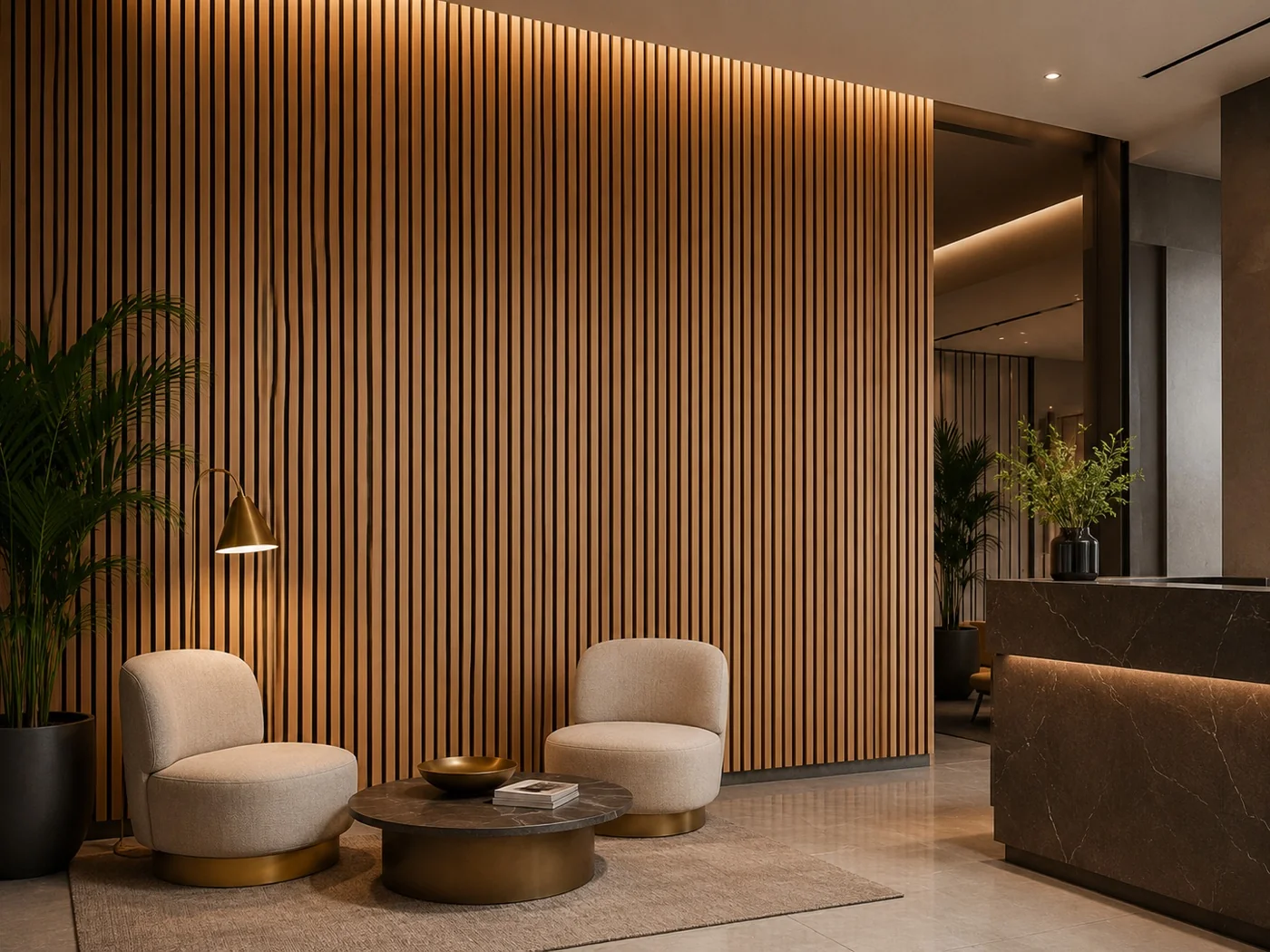
Hotels & Hospitality
Corridor and lobby absorption, meeting room treatment, and absorptive ceiling for guest comfort.
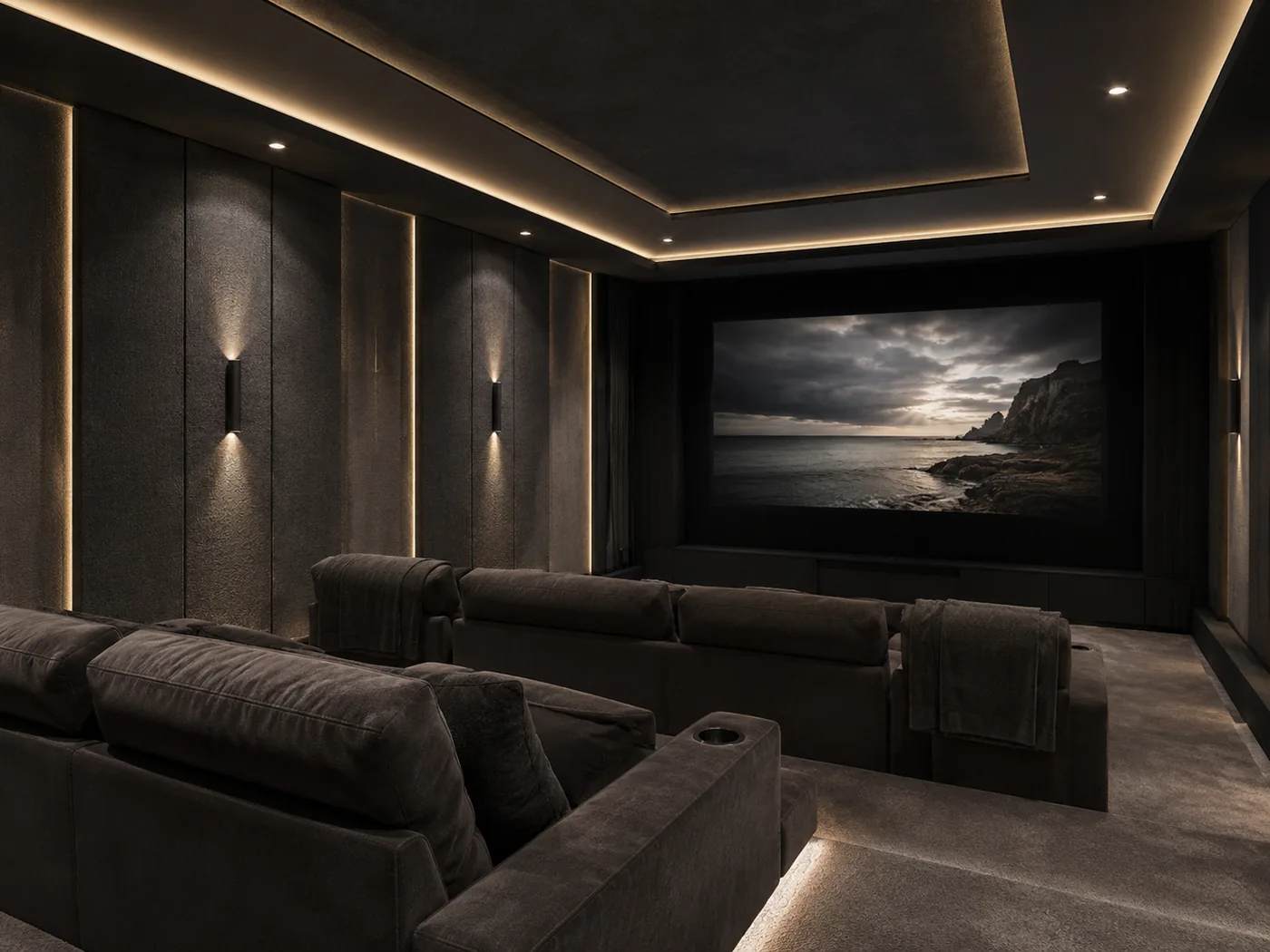
Cinemas & Home Theaters
Wall and ceiling absorption to remove reflections and improve sound quality and immersion.
— CUSTOMIZATION & SPECS —
Custom Sizes, Colors & Finishes
Yamamah Smart provides standard and custom configurations for every absorption product family. Final acoustic performance depends on the selected system, thickness, mounting method, and tested assembly.
— OUR PROCESS —
From Echoey Room to Acoustically Balanced Space
We move from a noise or echo complaint to a fully installed absorption solution in five clear steps.
— WHY YAMAMAH SMART —
Why Choose Yamamah Smart for Sound Absorption?
Full sound absorption range — fabric, PET, foam, wood, baffles, clouds
Custom colors, sizes, shapes & patterns
Fire-rated material options on request
Professional supply & installation across Saudi Arabia
NRC tables, submittals & catalogues available on request
Eco-friendly options — recycled PET, wood wool, natural moss
— FREQUENTLY ASKED —
Sound Absorption Questions
Q01 What is NRC and what's a good value? +
Q02 How much wall coverage do I need to fix office echo? +
Q03 What's the difference between fabric, PET, and foam panels? +
Q04 Are your absorption panels fire-rated? +
Q05 Can you customize colors, patterns, and shapes? +
Q06 What is the difference between α, NRC, and αw? +
Q07 Which international standards do your absorption products meet? +
Q08 What is RT60 and what's the target for my room? +
— GET ABSORPTION ADVICE —
Need Help Choosing the Right Absorption Material?
Send us your room photos, dimensions, ceiling height, surface finishes, and the echo / reverberation issue. Our team will recommend the suitable absorption material, approximate coverage, and installation method.
WhatsApp / Phone: +966 50 660 0672 · Email: [email protected]