5 Soundproofing Solutions • Kingdom‑wide

Professional Sound‑Proofing for Every Building in Saudi Arabia

Solutions that stop sound transmission between rooms and buildings — high‑density barriers, outdoor noise walls, and certified masking systems. Professional installation following the "Limp Mass" principle for maximum acoustic performance.

5
solutions
200+
projects
15+
cities
100%
satisfaction
ACOUSTIC PERFORMANCE
2535455565+
POORFAIRGOODEXCELLENT
STC — a single number summarising a wall's ability to stop sound. Each +5 points = double the perceived performance.
🏥
HospitalSTC 50+ · IIC 50+
🏢
Private OfficeSTC 45+ · AI < 0.20
🎙️
Recording StudioSTC 60+ · NRC 0.85
🏠
ApartmentSTC 55+ · IIC 55+
STCAIRBORNE
IICIMPACT
NRCABSORB
150+
Projects Completed
10 yrs
Manufacturer Warranty
ISO 354
Tested Standards
1,200 m²
Fabrication Facility
+966
Saudi Arabia HQ
CERTIFIED TO ISO 23351-1ASTM E90 · E413ASTM E1130CETÜV SUDGreenGuard
STC 33–55 dB
Certified Soundproofing
ISO 23351-1 · ASTM E90
Professional Install
ASTM E1130 Masking
Kingdom‑wide Shipping
STC 33–55 dB
Certified Soundproofing
ISO 23351-1 · ASTM E90
Professional Install
ASTM E1130 Masking
Kingdom‑wide Shipping

— SOUNDPROOFING PRODUCTS —

Our Sound‑Proofing Range

Eight engineered solutions to block, seal, and mask sound across every part of the building.
— TWO WAYS TO CONTROL NOISE —

Sound‑Proofing & Masking

There are two scientific ways to stop noise from disturbing you: Blocking (stopping sound from crossing between spaces) or Masking (covering speech with calibrated pink noise).

🛡️
BLOCKING — STOPS TRANSMISSION

Sound‑Proofing

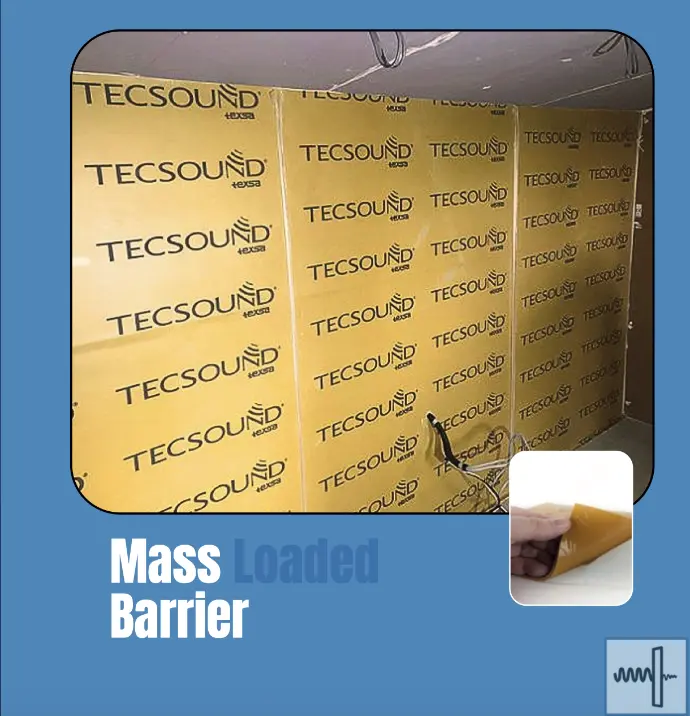
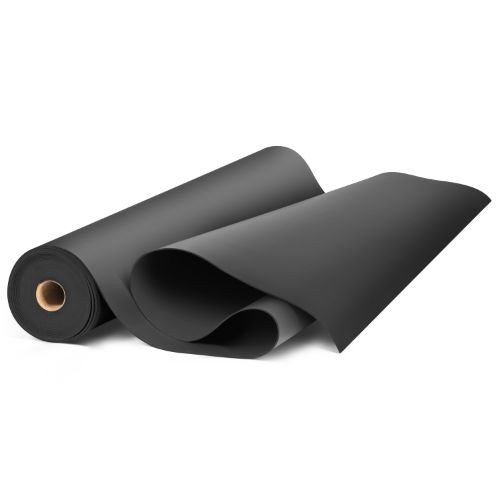
Prevents sound from crossing between two separate spaces (noisy neighbor, highway, machine room). Works through mass & density.

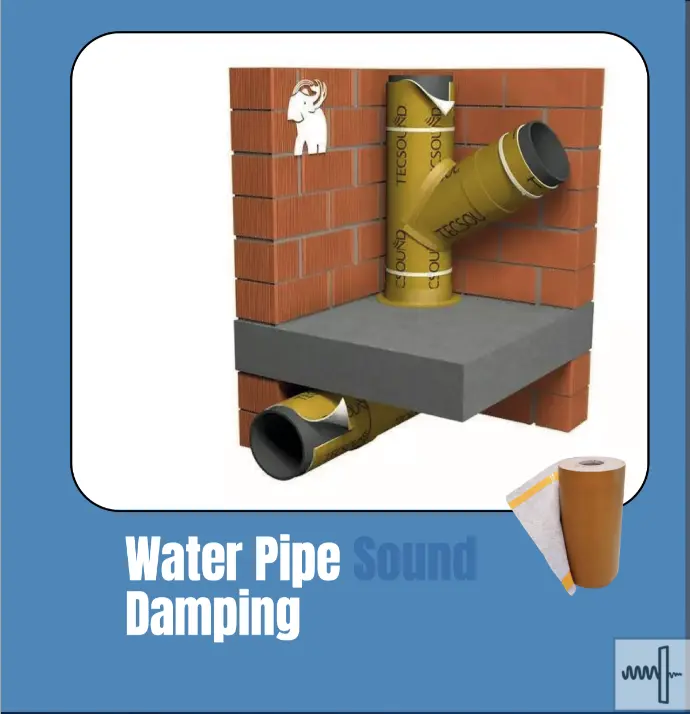
4 products on this page: MLV · Mass Loaded Barrier · Outdoor Sound Barrier · Water Pipe Damper
🔊
MASKING — FOR OFFICES

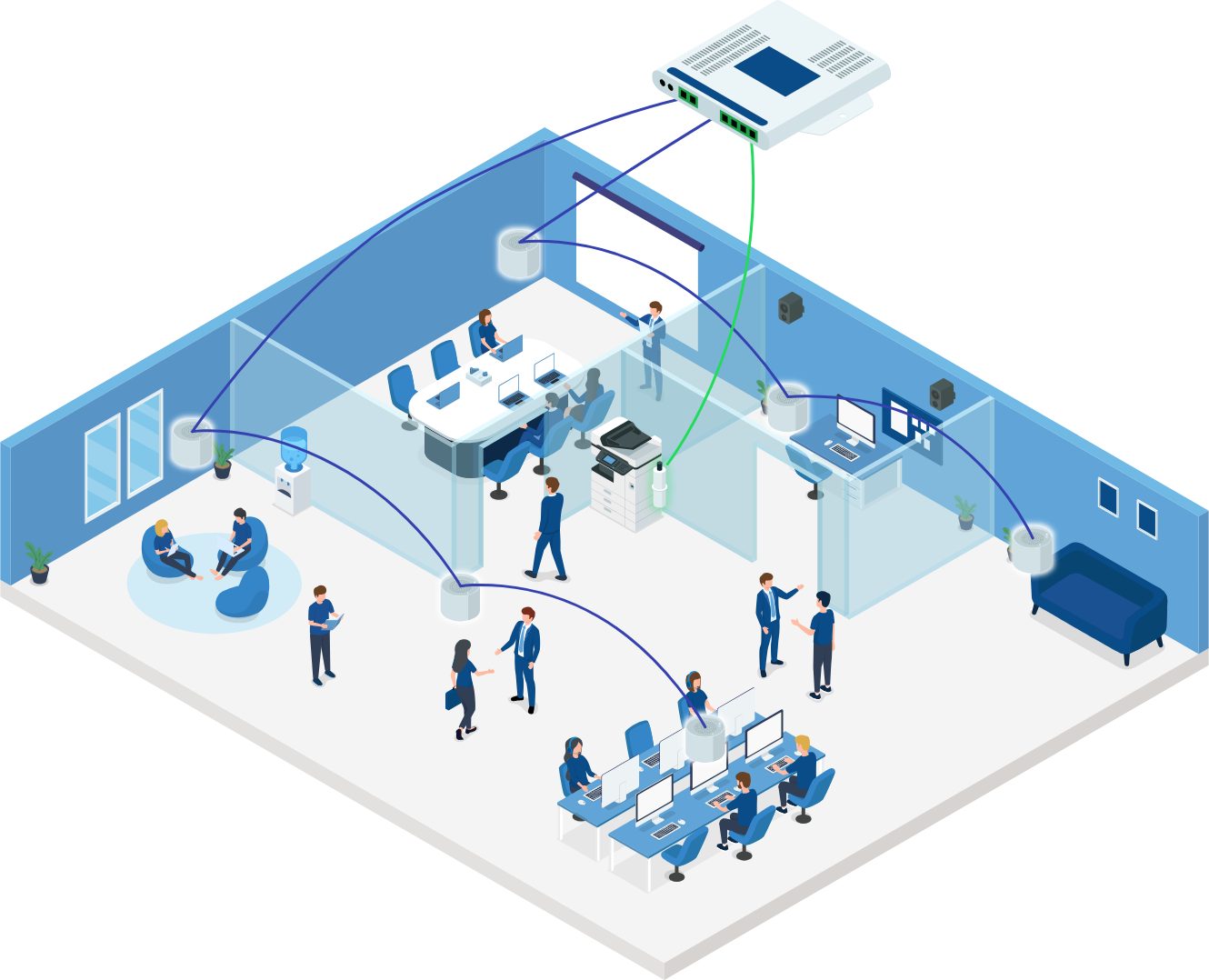
Sound Masking

Raises speech privacy in open offices via calibrated pink noise without increasing overall noise.

1 product on this page: Sound Masking System (ASTM E1130)

— THE ENGINEERING BEHIND IT —

What Is Sound‑Proofing?

Stopping sound waves from passing between two spaces via mass + decoupling + damping + absorption — four physics principles, tested in lab. t-else=""
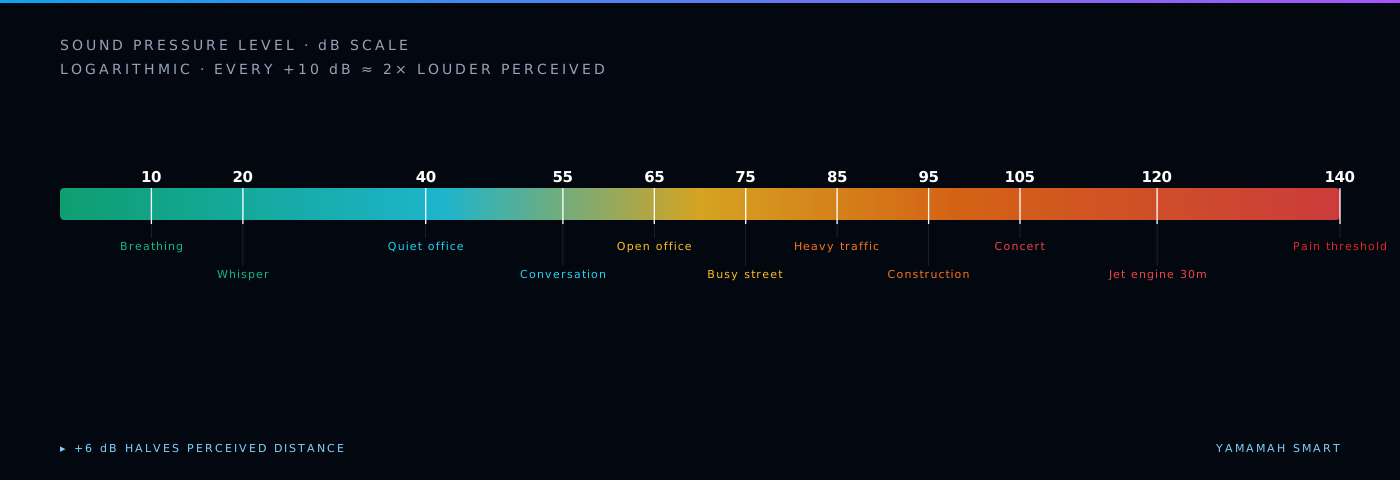
Sound pressure level dB scale from breathing 10dB to pain threshold 140dB
01 · DECIBEL SCALE

Sound Is Not Linear

The decibel scale is logarithmic. Every +10 dB is perceived as twice as loud. That's why dropping from 70 to 50 dB in your room feels enormous.

  • 40 dB — quiet office; deep focus possible
  • 65 dB — open office; speech privacy starts to fail
  • 85 dB — occupational safety limit (8-hour) — OSHA

REF · OSHA 1910.95 · ISO 1996-1
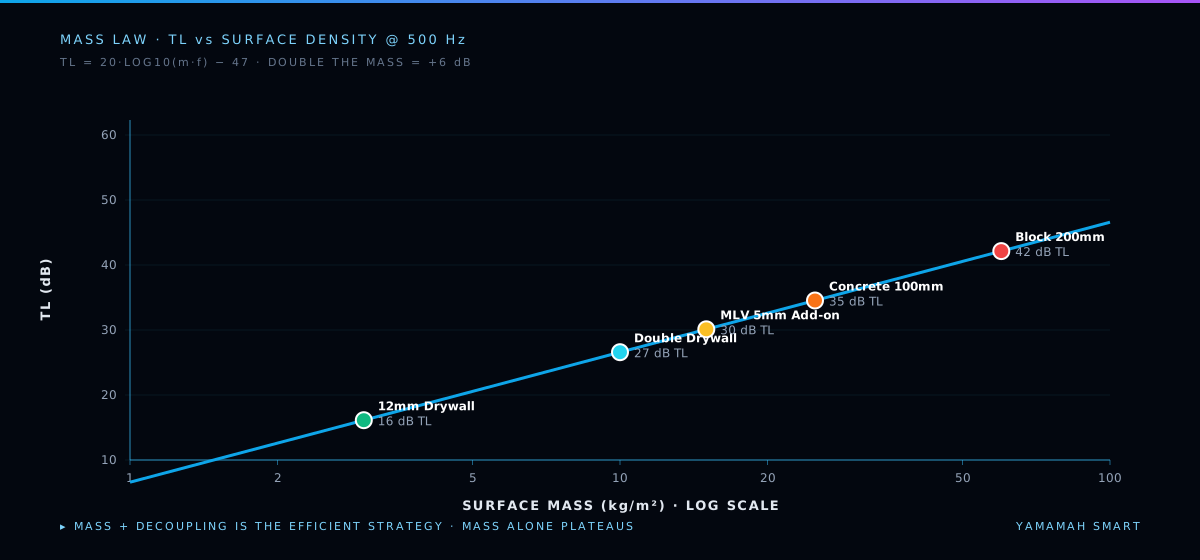
Mass Law graph: transmission loss vs surface density at 500 Hz
02 · MASS LAW

Doubling Mass = +6 dB

A barrier reduces sound by 20·log₁₀(m·f) − 47 dB (drywall @ 500 Hz). Doubling the surface mass adds only +6 dB. That's why mass plus decoupling is the right strategy.

  • 12 mm drywall (10 kg/m²) ≈ STC 33
  • Double drywall + 5 mm MLV (25 kg/m²) ≈ STC 41
  • Decoupled double wall + cavity insulation ≈ STC 60+

REF · ASTM E90 · ASTM E413
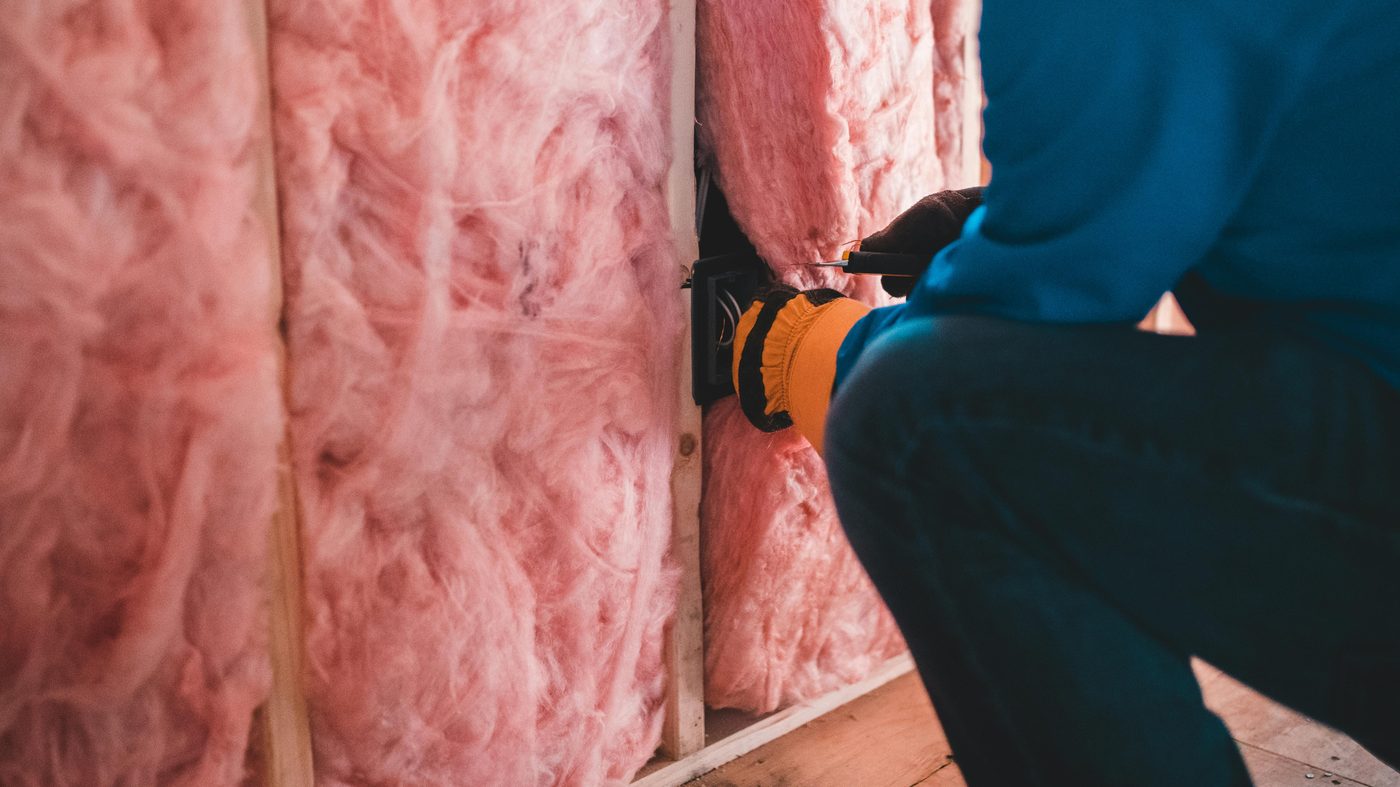
Real construction photo: worker installing pink fiberglass insulation batts in a stud-framed wall cavity — the absorption layer in a sound-proof wall assembly
Real Install · Cavity Insulation
Photo: Pexels
03 · ABSORPTION LAYER · IN SITU

Absorption — Inside the Cavity

Insulation batts (pink or gold) are friction-fit between studs at 40-60 kg/m³ density. Their job: absorb acoustic energy inside the cavity before it exits the other side. Combined with double drywall + MLV + resilient channels → STC 60+.

  • Photo: real install — pink fiberglass batts between timber studs
  • Electrical boxes must be sealed with intumescent putty pads
  • Density, not just thickness, determines performance

REF · ASTM E90 LABORATORY · ASTM C518 DENSITY
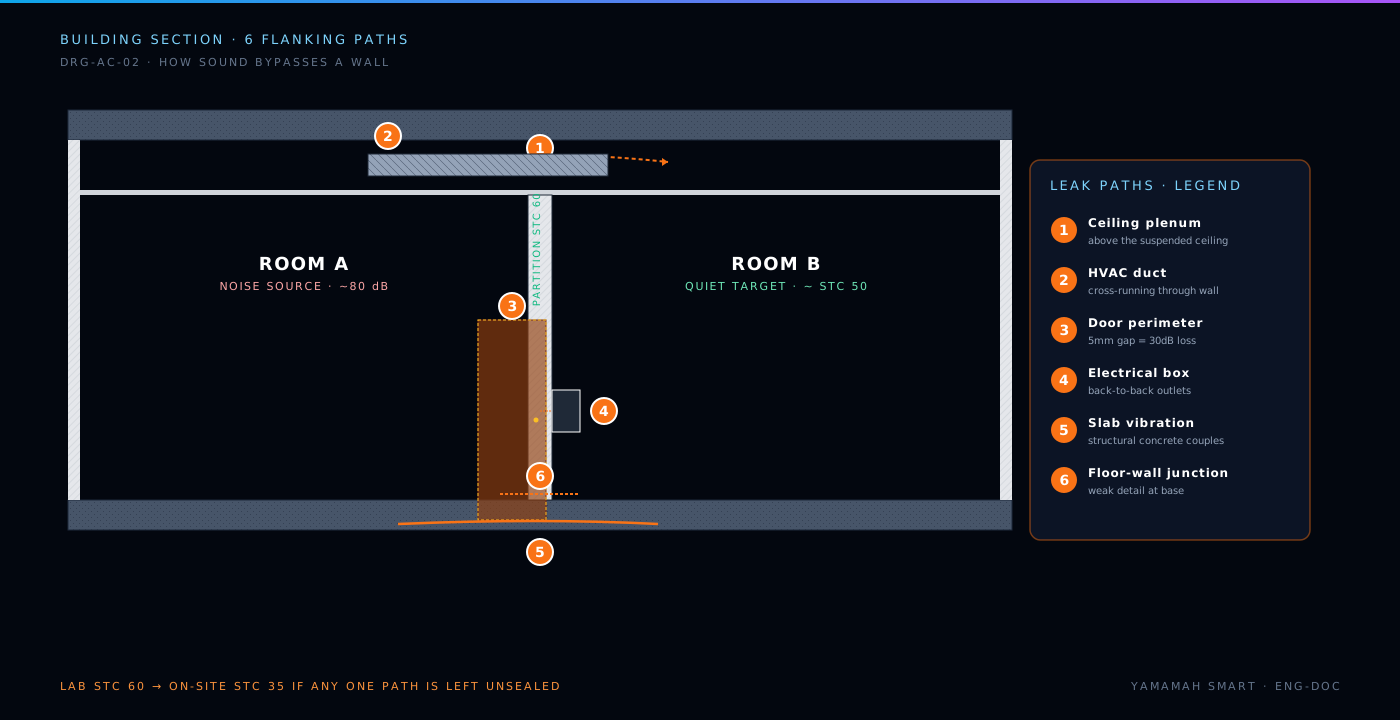
Architectural building section: two rooms separated by a partition wall with 6 sound flanking paths labeled — ceiling plenum HVAC duct door perimeter electrical box slab vibration floor junction
04 · FLANKING PATHS

A Wall Is Only as Strong as Its Weakest Leak

An STC 60 wall in lab may deliver only STC 35 on site if the contractor leaves a 5 mm door gap or a shared HVAC duct. Every joint, every penetration, every opening = a leak that must be sealed.

  • Door perimeter · electrical boxes · HVAC ducts
  • Shared ceiling plenum · floor/wall junctions
  • Structural slab vibration coupling

REF · NRC CANADA IRC FLANKING TRANSMISSION RESEARCH · ASTM E336

— STANDARDS & METRICS —

We Work to Certified International Standards
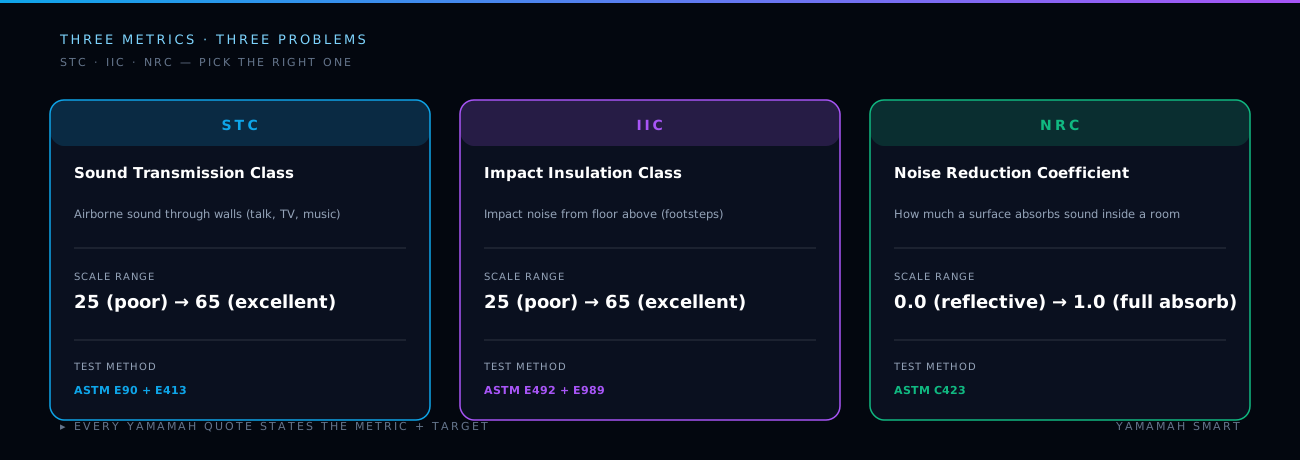
STC vs IIC vs NRC — three different acoustic metrics with test standards
METRICS · 3 SCALES · 3 PROBLEMS

Three Metrics, Don\'t Mix Them

Each metric answers a different question. Picking the wrong metric = wrong solution = failed project.

  • STC — airborne sound between two rooms (talk, TV)
  • IIC — impact noise from floor above (footsteps, drops)
  • NRC — echo absorption inside a room (speech clarity)

EVERY QUOTE WE ISSUE STATES THE METRIC + TARGET VALUE

STANDARDS WE FOLLOW · 8 NORMS

ISO 23351-1
Speech privacy in office spaces (open-plan, meeting rooms, calls).
ASTM E90
Laboratory measurement of airborne sound transmission loss through partitions.
ASTM E413
Classification rating for sound insulation — produces the STC number from E90 data.
ASTM E1130
Speech privacy measurement in open offices — used to validate sound masking systems.
ASTM E492 + E989
Laboratory impact insulation (IIC) — for floor/ceiling assemblies above occupied spaces.
ASTM C423
Sound absorption coefficient (NRC) — measures how much sound a surface absorbs vs reflects.
Saudi Building Code
SBC general provisions — every project designed to satisfy local occupant-comfort & mechanical noise requirements.
EN ISO 717-1
European single-number rating of airborne sound insulation (Rw) — equivalent to STC.

— PROVEN PROJECT PERFORMANCE —

Real Field Numbers

Three selected projects (client names confidential per NDA). Every number measured before and after install with the same meter and the same grid points.

CORPORATE · RIYADH
Open-plan office floor · 1,200 m² · Speech privacy issue
0.85
BEFORE
0.20
AFTER
−0.65 Articulation Index · Sound masking system @ 45 dBA · pink noise · 64 zones · raises masking floor to drop speech intelligibility (AI is on a 0-1 scale where lower = more private).
ASTM E1130 · verified measurement
HOSPITAL · JEDDAH
Recovery room adjacent to busy nursing station
62
BEFORE
40
AFTER
−22 dBA LAeq · MLV 5mm + double drywall + isolated ceiling + automatic door seal
ASTM E90 · verified measurement
INDUSTRIAL · DAMMAM
Generator room beside office mezzanine
92
BEFORE
62
AFTER
−30 dBA peak · Mass-loaded barrier 8kg + decoupled wall + acoustic louvers
ASTM E90 · verified measurement

— ENGINEERING METHODOLOGY —

Measurements Before & After

Every project starts with a number and ends with a number. No claims without a measured value — we document every dB we win for you.

📐
Site survey
Architectural drawings + visual inspection of all four boundaries.
🔬
Calibrated SLM
Class 1 sound level meter (IEC 61672) — calibrated annually.
📊
Multi-point measurement
LAeq across 9 grid points per room — averaged per ISO standard.
🎯
Octave-band analysis
63 Hz – 8 kHz analysis identifies low/mid/high frequency leakage.
🧱
Build-up specification
Selected wall layers verified against ASTM E90 laboratory data.
Post-install validation
Re-measure with same SLM at same points — written acceptance report.

— OUR PROCESS —

From Assessment to Install

STEP 01
📋
Free Assessment

On‑site visit, noise measurement, and source identification.

STEP 02
📐
Design & Selection

Solution modeling, product selection, and full quote.

STEP 03
🛠️
Professional Install

Technicians trained on the "Limp Mass" principle.

STEP 04
Verify Result

Post‑install measurement to ensure promised performance.

— INDUSTRIES SERVED —

We Serve Every Sector

🏢
Corporate
🏥
Healthcare
🎓
Education
🏨
Hospitality
🏭
Industrial
🏡
Residential

— WHY YAMAMAH SMART —

Your Trusted Partner in Sound‑Proofing

Complete Soundproofing Range

5 products in one place

Internationally Certified

ISO 23351-1 · ASTM E90 · CE

Free Acoustic Assessment

Before any quote — no commitment

Trained Technicians

On Limp Mass principles

Kingdom‑Wide Shipping

From Riyadh to Jeddah & Dammam

Performance Guarantee

Post‑install measurement

— FAQ —

Quick Answers

Do foam panels block neighbor noise?+
No. Foam absorbs echo inside a room but does not stop sound from passing through walls. To stop your neighbor hearing you, you need mass + decoupling (MLV, double drywall, mineral wool) — not lightweight foam.
Why isn't adding another drywall layer enough?+
Mass Law gives only +6 dB when you double density — modest. An effective wall combines four ingredients: mass (double drywall) + damping (MLV) + absorption (mineral wool) + decoupling (resilient channel). Without all four, on-site performance disappoints.
What's the difference between blocking and absorbing?+
Blocking = stopping sound between spaces (measured by STC). Absorption = reducing echo inside one room (measured by NRC). Most projects need both — one doesn't solve the other.
Airborne vs impact noise — what's the difference?+
Airborne noise travels through air (talking, TV, music) — measured by STC. Impact noise travels through structure (footsteps, drops, knocks) — measured by IIC. Each needs a different fix: airborne = mass in the wall; impact = resilient layer under the floor.
What causes most soundproofing projects to fail?+
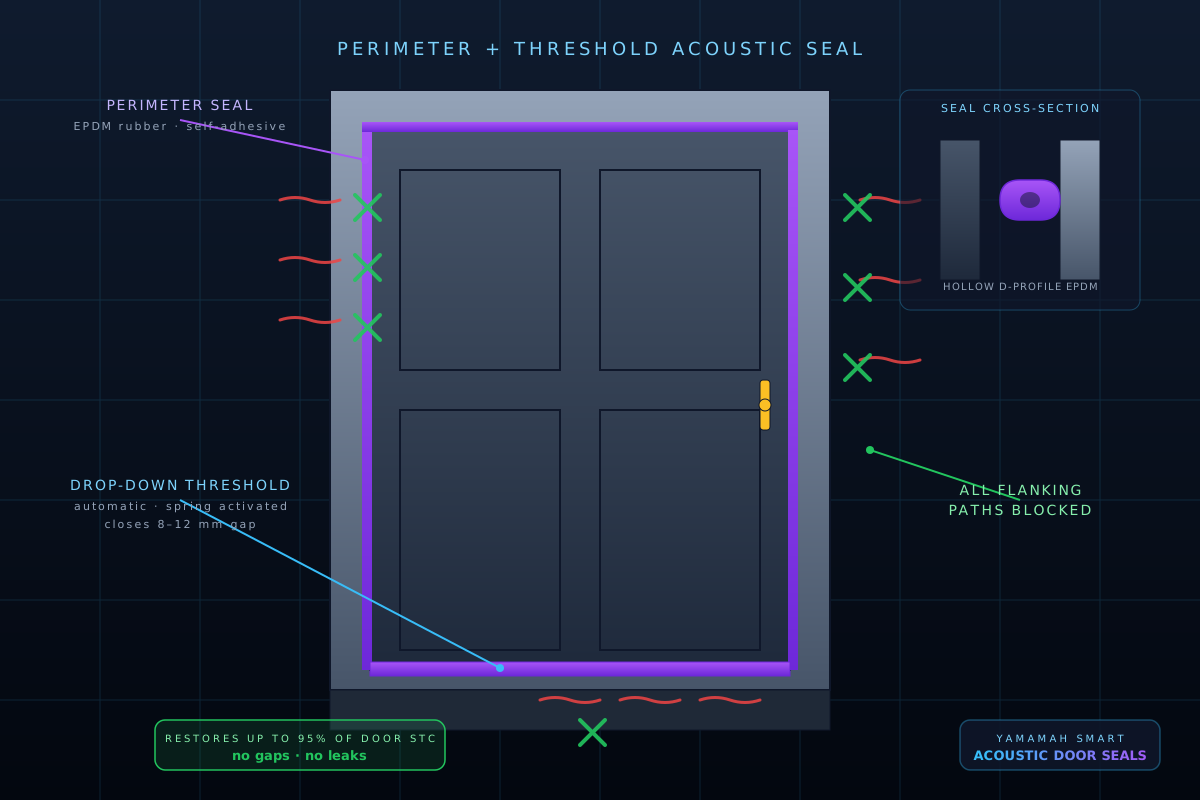
Flanking paths. A wall might be STC 60 in lab, but a 5 mm door gap, a shared HVAC duct, or an unsealed electrical box drops on-site performance to STC 35. Every joint and every penetration must be sealed.
What's the fix for a noisy-neighbor wall?+
5 mm MLV over the existing wall, then an additional drywall layer on resilient channels. Adds ~12 dB STC without demolition. For higher performance (STC 60+), we build a decoupled double wall with Mass Loaded Barrier and mineral wool.
Is floor soundproofing different?+
Yes — floors need a resilient layer (elastomer or cork) below the finish to break the vibration path into the structural slab. Improves both IIC (impact) and STC. Concrete is harder than timber and needs separate assessment.
What about ceilings?+
Ceilings usually have impact noise from above (IIC) or flanking through a shared plenum (lateral STC). Solution: a hat-channel suspended ceiling + mineral wool in cavity + double drywall. Stops both vertical and lateral paths.
Can I install this myself?+
Some products (MLV, Water Pipe Damper) are DIY-friendly. But high-STC walls need understanding of resilient channels, avoiding acoustic bridges, sealing electrical boxes — small mistakes cost big dB. We recommend professional install for any sensitive project (studio, hospital, office).
When do I need Sound Masking instead of blocking?+
In open-plan offices where you cannot build walls, Sound Masking is better than trying to isolate every workstation. Calibrated pink noise @ 45 dBA raises speech privacy with no physical barriers. For private offices, use traditional blocking.
Which product fits my problem?+
Noisy neighbor or machine room? MLV or Mass Loaded Barrier. Highway/construction noise? Outdoor Barrier. Loud water pipes? Water Pipe Damper. Chaotic open office? Sound Masking System.
Do you ship outside Riyadh?+
Yes, we ship to 15+ Saudi cities with local installation where available (Jeddah, Dammam, Makkah, Madinah, Taif, Abha, Tabuk...).
What are your international certifications?+
ISO 23351-1 · ASTM E90/E413 · ASTM E1130 · CE · TÜV SUD · GreenGuard · design compliant with Saudi Building Code (SBC).
How long does the project study take?+
Initial assessment within 24–48 hours. Full quote within 3–5 days after site visit. Installation begins within a week of approval.

— START YOUR PROJECT —

Ready for Professional Sound‑Proofing?

Get a free acoustic assessment and instant quote from the Yamamah Smart team

Address
Al‑Mashael 6972, Riyadh 14326
Coverage
All Saudi Cities