Riyadh is a significant Saudi city with major projects and unique acoustic requirements. Yamamah Smart delivers acoustic treatment for mosques, offices, schools, and restaurants across the city. This guide offers a practical framework for choosing acoustic panels in Riyadh by project type — office, mosque, school, restaurant, or villa.
Why Riyadh Needs Specialized Acoustic Treatment
Saudi cities like Riyadh face unique acoustic challenges — hard architectural surfaces (concrete ceilings, gypsum walls, marble), high external noise in central districts, and continuous HVAC operation 10-11 months per year.
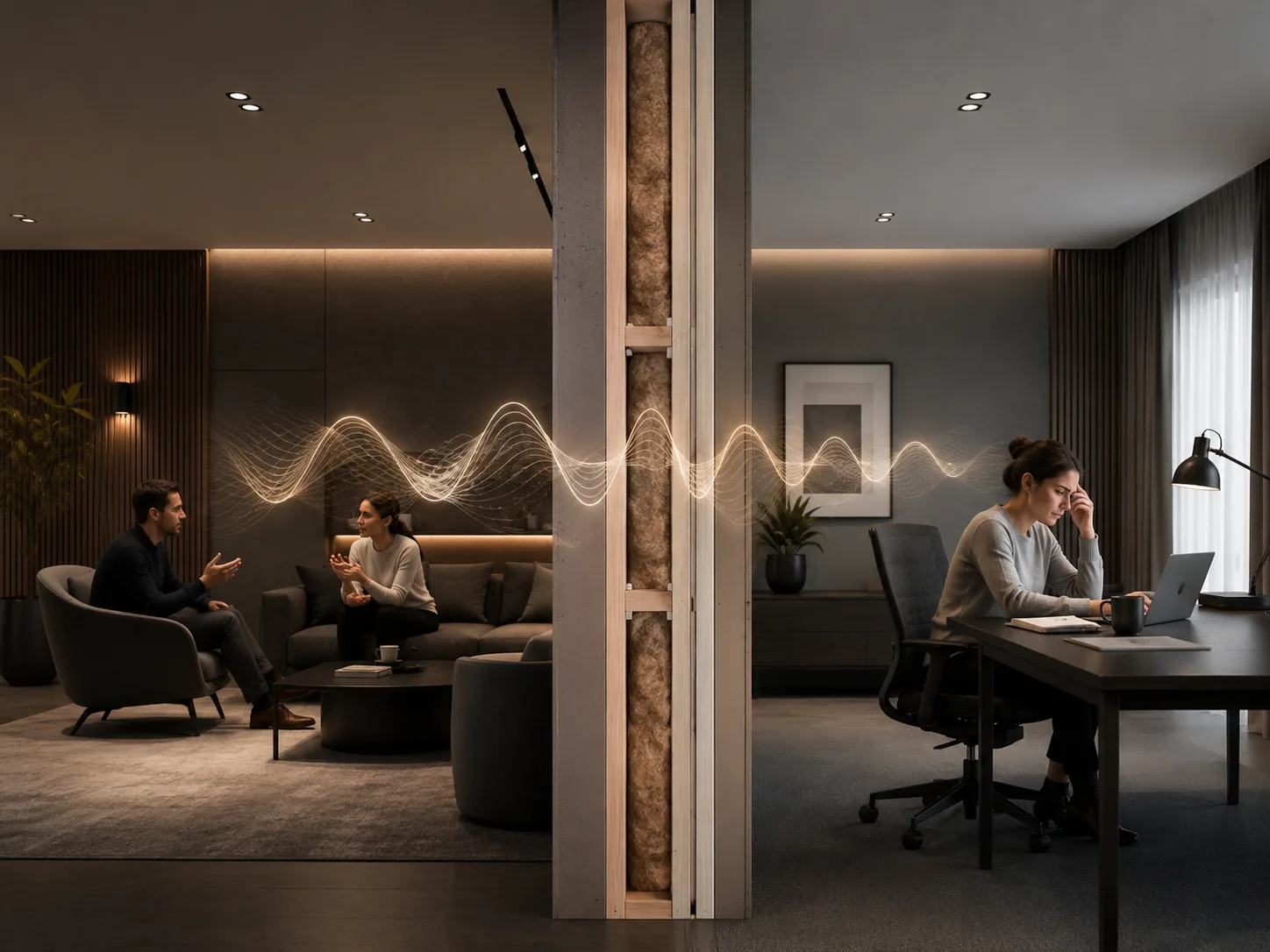
Acoustic treatment combines absorption (reducing echo inside the room) with insulation (preventing sound transmission between spaces). Acoustic panels work on the first part. For sound insulation details, see our sound insulation solutions.
Acoustic Materials Available in the Saudi Market
1. Fabric-Wrapped Panels — The Most Popular
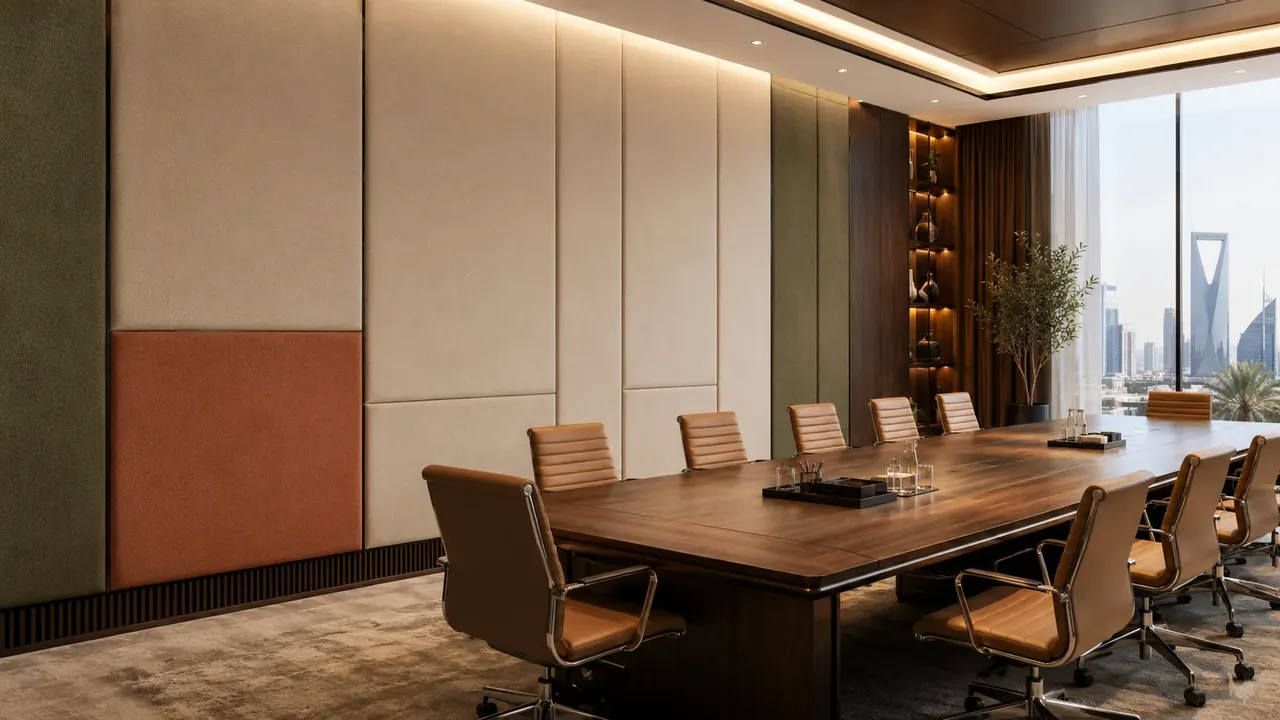
Fiber core (Glass Wool or Polyester) wrapped in certified fabric. NRC up to 1.00 at 50mm. Best for offices, meeting rooms, hotels, mosques. See our Fabric Acoustic Panels page.
2. PET Felt Panels — Eco-Friendly
Made from recycled plastic bottles. Lightweight, colorful, eco-friendly. NRC 0.65-0.85. See PET Baffles page.
3. Wood Wool Panels
Natural wood fibers bonded with cement — combines acoustic absorption with thermal insulation. NRC 0.50-0.80. Common in classrooms and industrial projects.
4. Perforated Acoustic Wood
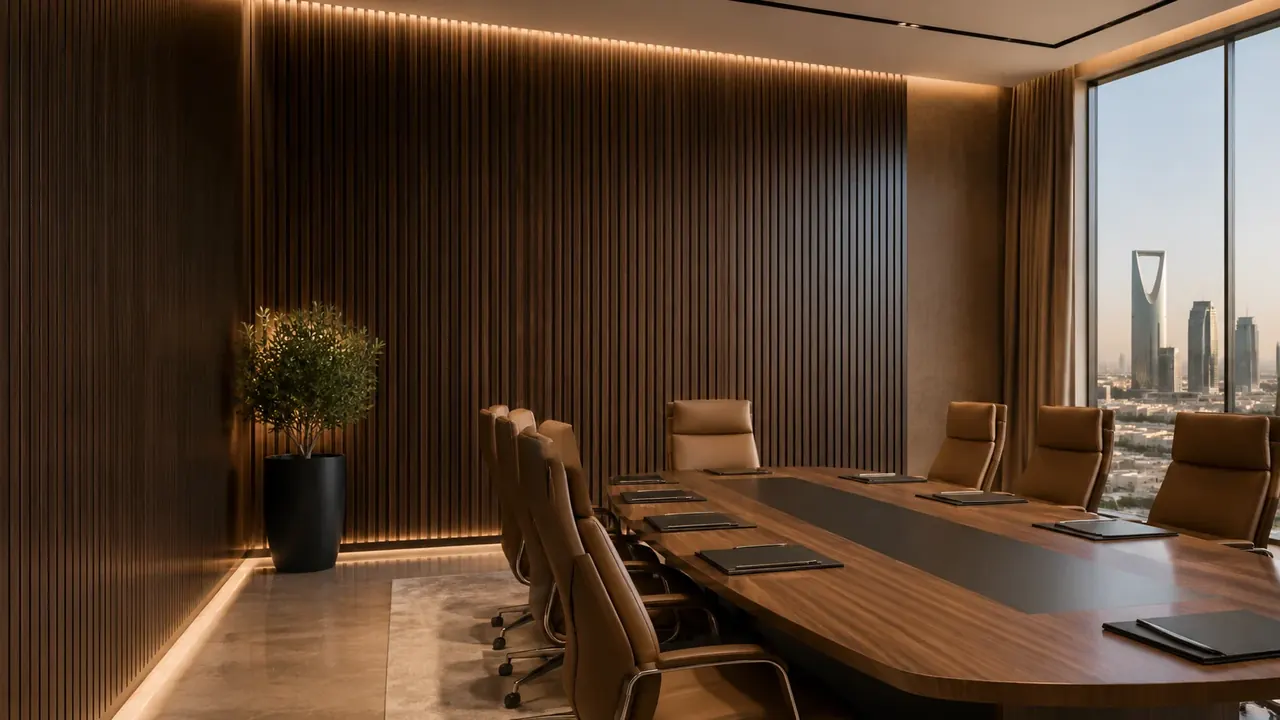
MDF or HDF panels with grooves/holes over an acoustic core. Offers a luxury wood appearance. See Wood Slat Acoustic Panels.
Quick Comparison Table
Recommendations by Project Type
🕌 Mosques
Mosques need high speech clarity with RT60 of 1.2-1.6 seconds. Recommended: 50mm fabric panels on rear and Qiblah walls plus ceiling baffles. See our Mosques industry page.
🏢 Corporate Offices
Target RT60 ≤ 0.5 second, background noise 40-45 dB. See our Offices industry page.
🎓 Schools and Classrooms
ASHA studies show classroom RT60 should be ≤ 0.4 second. See Schools industry page.
🍽️ Restaurants and Cafes
Restaurants with RT60 > 1 second see 8-12% lower sales (MIT 2018 studies). See Restaurants industry page.
Next Step
If you are planning a project in Riyadh:
- 📐 Define project type and area
- 🎯 Choose the right material from the comparison table
- 📞 Request a quote from Yamamah Smart at +966 50 660 0672 — with free site visit and acoustic measurement.
Browse our solutions:
Content is for guidance only. Recommendations are based on internationally-recognized engineering practices (ISO 354, ASTM C423) and Yamamah Smart applications across +150 projects since 2018.