Designing acoustic treatment for a small studio (under 20 m²) is one of the most rewarding challenges in audio engineering. Get it right and a compact bedroom becomes a space that produces broadcast-quality voice and accurate music monitoring. Get it wrong and bass builds up in the corners, vocals sound boxy, and every recording needs heavy correction.
This guide outlines the four acoustic problems every small studio faces, the panel families that solve each, and the exact placement strategy used by Yamamah Smart engineers in over 30 studio projects across Saudi Arabia.
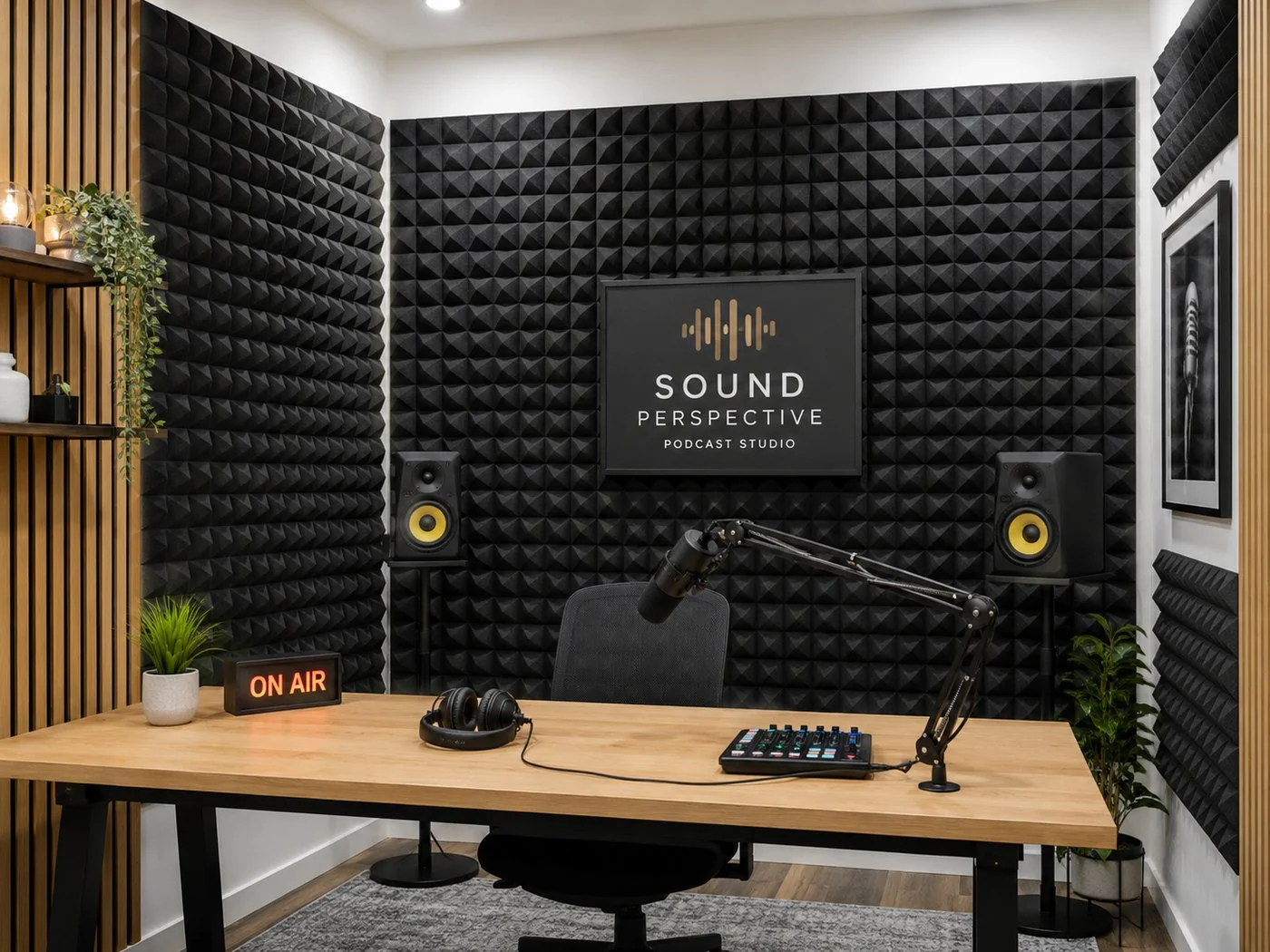
The Four Acoustic Problems in Small Rooms
1. Flutter Echo Between Parallel Walls
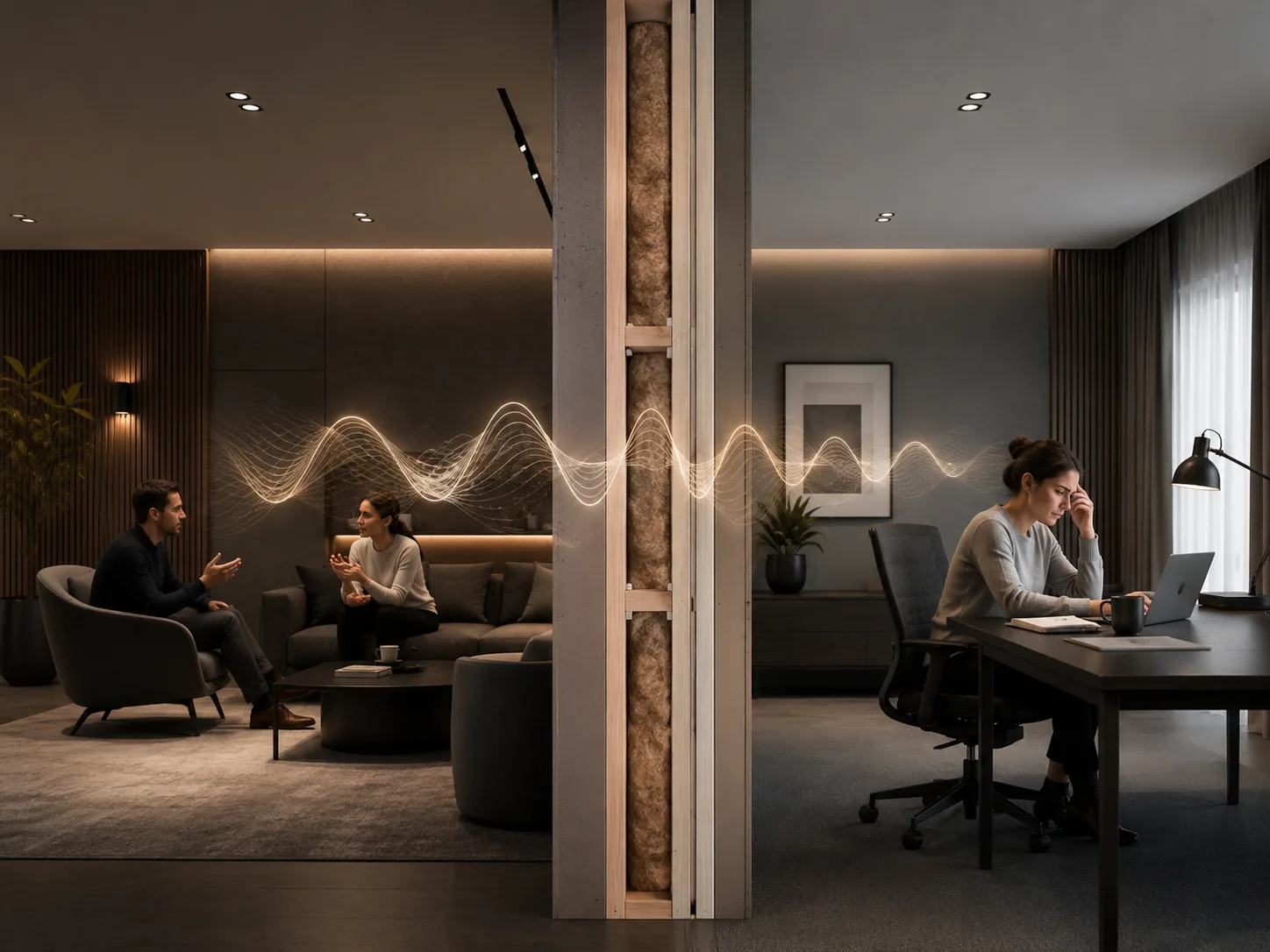
Slap echo bounces back and forth between flat parallel surfaces. Solution: treat at least one wall in each pair with broadband absorbers — fabric panels or PET panels with high absorption (NRC ≥ 0.85 — verify per product test report).
2. First Reflection Points
Sound from your monitors reflects off the side walls, ceiling, and desk before reaching your ears. These reflections smear the stereo image. Place absorbers at the mirror points — where a mirror on the wall would let you see the speaker from your listening position.
3. Low-Frequency Build-up in Corners
Bass frequencies (under 200 Hz) accumulate in room corners, creating a muddy low end. Standard 50 mm panels handle this only weakly. Use thicker fabric panels (100 mm) or stack PET panels with an air gap behind them for boosted low-frequency absorption.
4. Overdamping
Covering every wall in absorbers creates a 'dead' room that sounds unnatural. Leave 30–40% of surfaces reflective. The goal is controlled reverberation around 0.3–0.4 seconds RT60 for vocal booths, 0.4–0.5 seconds for mixing rooms.
Recommended Yamamah Products for Small Studios
These four product families cover every treatment need in a sub-20 m² room. All NRC values verified per ASTM C423 / ISO 354. Fire ratings comply with EN 13501-1 where applicable.
Studio Layout: Where to Place Each Panel
A typical 4×3 m project studio needs roughly 6–8 m² of broadband absorption distributed as follows:
- Behind the monitors: 2 PET panels (100×60 cm) at speaker height
- Side walls — first reflection points: 2 fabric panels (60×60 cm, 50 mm) at ear height
- Ceiling cloud above mix position: 1 fabric baffle or 2 PET panels suspended 40 cm below ceiling
- Back wall behind listener: 1 fabric panel (100×60 cm, 100 mm thick) for bass control
- Bass traps in two corners: Floor-to-ceiling stacked PET or 100 mm fabric panels
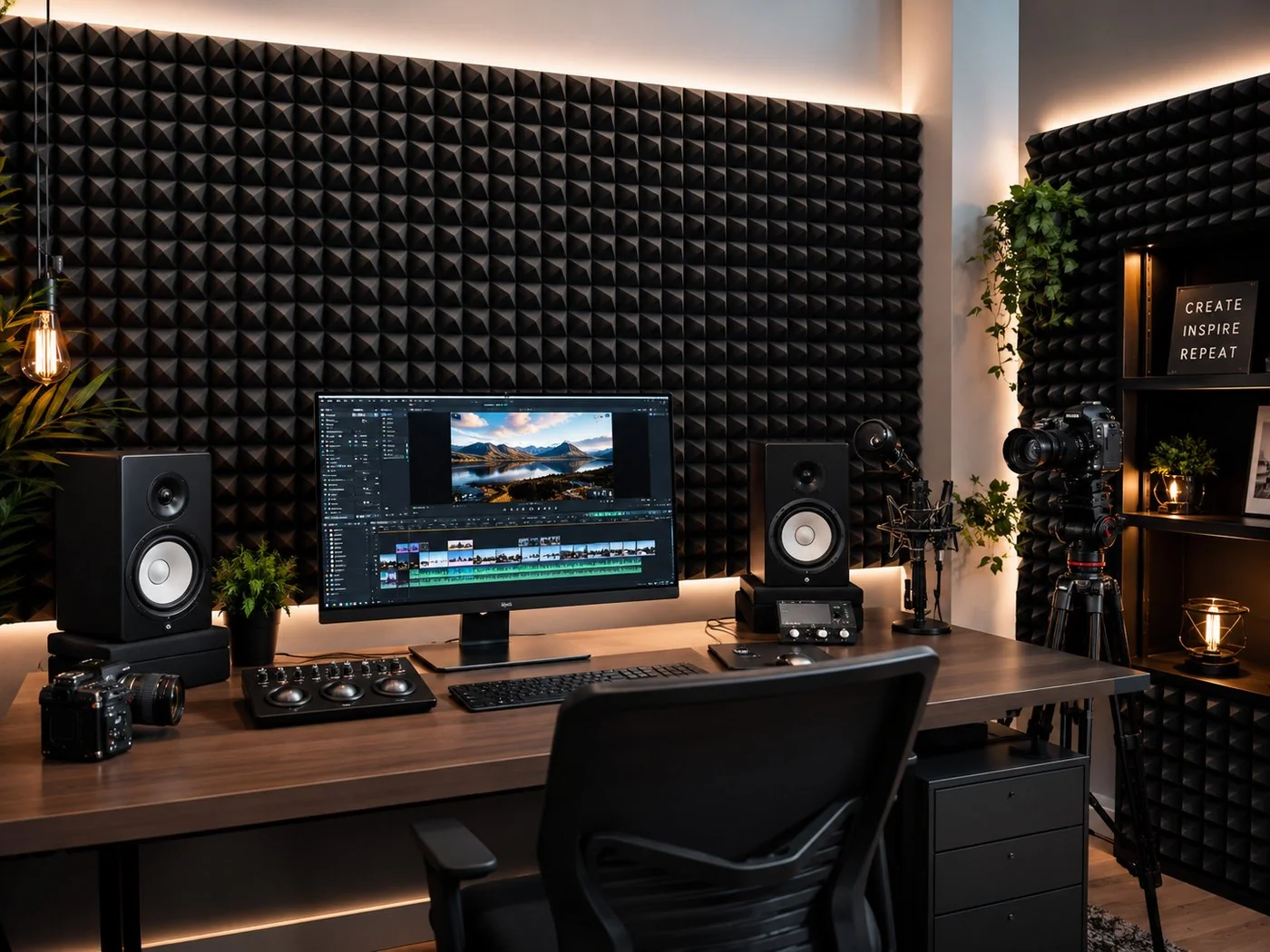
Common Mistakes to Avoid
Why Yamamah Smart for Studios
Backed by SNSQA — 150+ projects delivered, 1,200+ m² installed, 25+ products in catalog. Every studio project includes a free RT60 measurement, panel layout drawings, and verified product specs (NRC tested per ASTM C423 / ISO 354).
Get a Free Acoustic Consultation
Our Yamamah Smart engineers assess your space and recommend the right panels with certified professional installation.
💬 WhatsApp: +966506600672 ✉ [email protected]تصميم المعالجة الصوتية لاستوديو صغير (أقل من 20 م²) من أكثر التحديات إثارةً في هندسة الصوت. إذا أُتقن، تتحوّل غرفة نوم صغيرة إلى مساحة تنتج صوتاً بجودة بث وقياس موسيقي دقيق. وإذا أُخفق، يتراكم الباس في الزوايا، ويبدو الصوت غير واضح، وتحتاج كل تسجيلة معالجة ثقيلة.
يحدّد هذا الدليل المشاكل الصوتية الأربع التي تواجه كل استوديو صغير، عائلات الألواح التي تعالج كل مشكلة، واستراتيجية التركيب التي يستخدمها مهندسو اليمامة الذكية في مشاريع الاستوديوهات في المملكة.
المشاكل الصوتية الأربع في الغرف الصغيرة
١. الصدى المتكرّر بين الجدران المتوازية
صدى ارتدادي يتنقل ذهاباً وإياباً بين الأسطح المتوازية المستوية. الحل: عالج جداراً واحداً على الأقل في كل زوج بممتصات واسعة النطاق — ألواح قماشية أو PET بمعامل NRC ≥ 0.85.
٢. نقاط الانعكاس الأول
الصوت من مكبّرات الصوت ينعكس على الجدران الجانبية والسقف والمكتب قبل أن يصل إلى أذنيك. هذه الانعكاسات تشوّش الصورة المجسّمة. ضع الممتصات في نقاط المرآة — حيث ستراها مرآة على الجدار من موضع الاستماع.
٣. تراكم الترددات المنخفضة في الزوايا
الترددات الباصية (أقل من 200 هرتز) تتراكم في زوايا الغرفة، مما يخلق صوتاً منخفضاً موحلاً. الألواح القياسية بسُمك 50 مم تعالج ذلك بشكل ضعيف فقط. استخدم ألواحاً قماشية أسمك (100 مم) أو ركّب ألواح PET مع فجوة هواء خلفها لتعزيز امتصاص الترددات المنخفضة.
٤. الإفراط في التخميد
تغطية كل الجدران بالممتصات تخلق غرفة 'ميتة' تبدو غير طبيعية. اترك 30–40% من الأسطح عاكسة. الهدف هو صدى متحكَّم به حوالي 0.3–0.4 ثانية RT60 لكبائن التسجيل، و0.4–0.5 ثانية لغرف المكساج.
منتجات اليمامة الموصى بها للاستوديوهات الصغيرة
تغطّي عائلات المنتجات الأربع هذه كل احتياجات المعالجة في غرفة أقل من 20 م². كل قيم NRC موثّقة وفق ASTM C423 / ISO 354. تصنيفات الحريق تلتزم بـ EN 13501-1 حيث ينطبق.
تخطيط الاستوديو: أين تضع كل لوح
استوديو نموذجي 4×3 م يحتاج تقريباً 6–8 م² من الامتصاص الواسع النطاق موزّعة كالتالي:
- خلف مكبّرات الصوت: لوحان PET (100×60 سم) على ارتفاع مكبّر الصوت
- الجدران الجانبية — نقاط الانعكاس الأول: لوحان قماشيان (60×60 سم، سُمك 50 مم) على ارتفاع الأذن
- غيمة سقف فوق موضع المكساج: بفل قماشي أو لوحان PET معلّقان 40 سم تحت السقف
- الجدار الخلفي خلف المستمع: لوح قماشي (100×60 سم، سُمك 100 مم) للتحكم بالباس
- مصائد باس في زاويتين: ألواح PET مكوّمة من الأرض للسقف، أو ألواح قماشية 100 مم
أخطاء شائعة يجب تجنّبها
لماذا اليمامة الذكية للاستوديوهات
مدعومة بـ SNSQA — 150+ مشروع مُنجَز، 1,200+ م² مُركَّب، 25+ منتج في الكتالوج. كل مشروع استوديو يشمل قياس RT60 مجاني، رسومات تخطيط الألواح، ومواصفات منتج موثّقة (NRC مختبر وفق ASTM C423 / ISO 354).
اطلب استشارة صوتية مجانية
فريق مهندسي اليمامة الذكية يقيّم مساحتك ويوصي بالألواح المناسبة مع تركيب احترافي معتمد.
💬 واتساب: 966506600672+ ✉ [email protected]