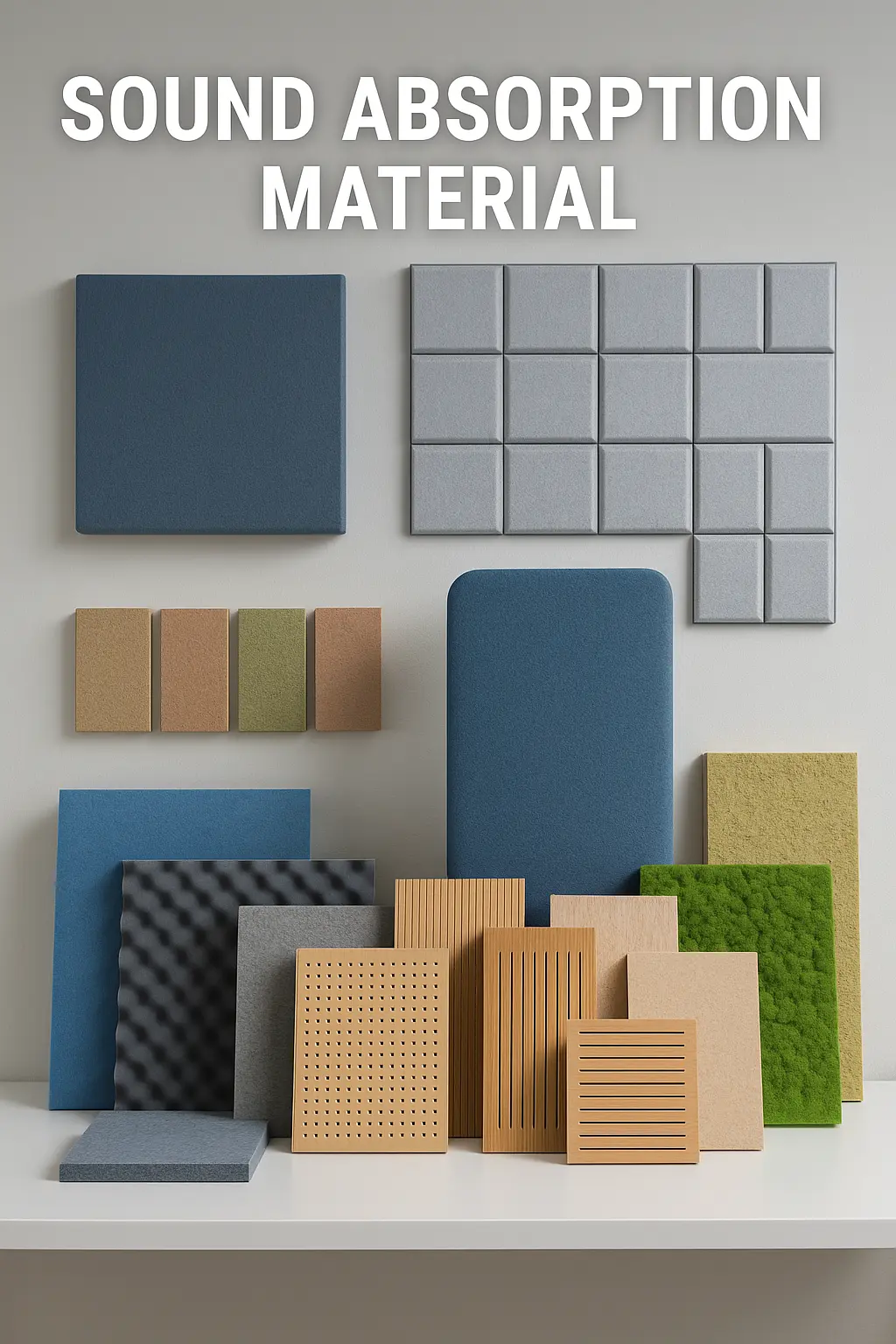
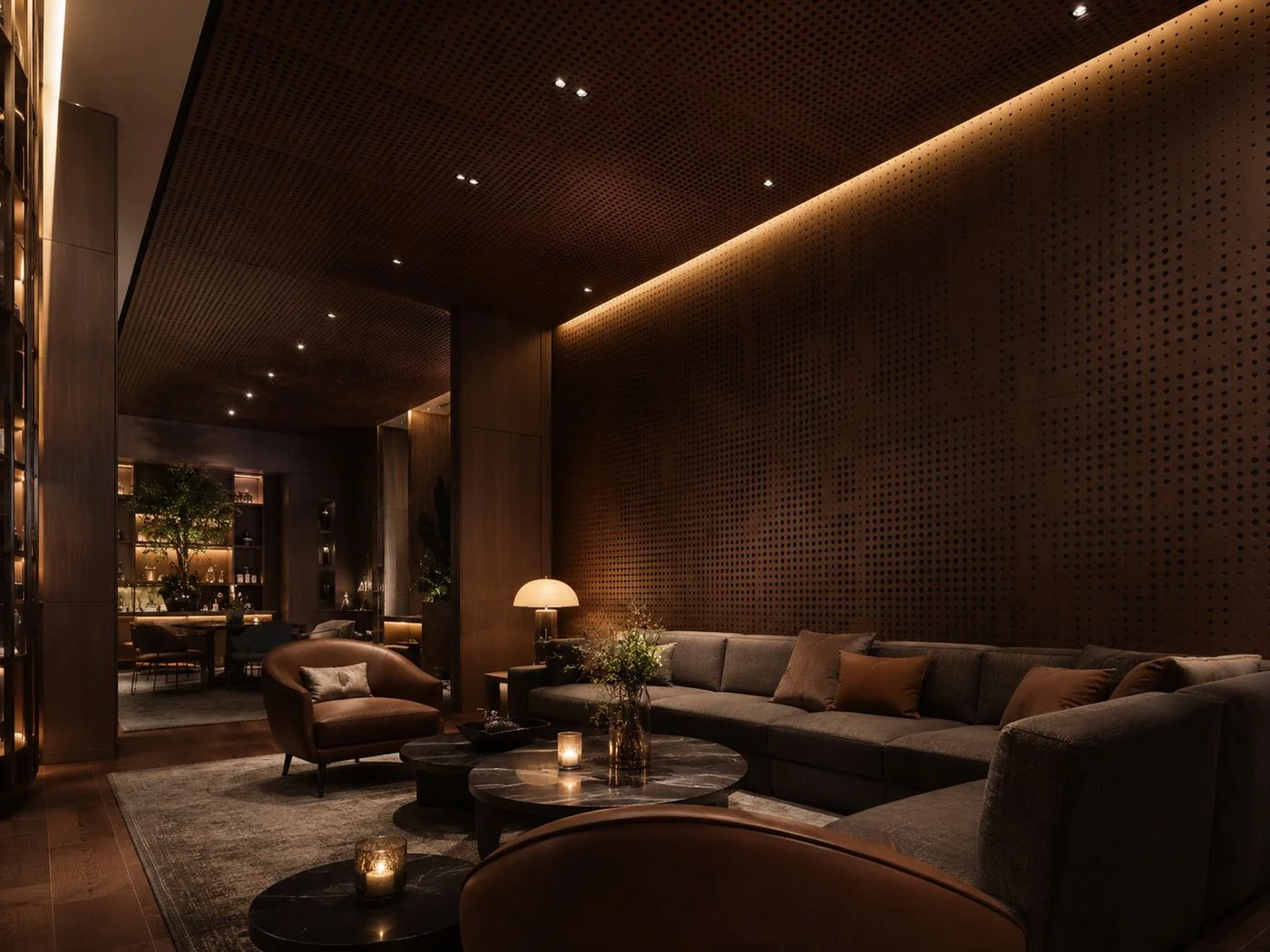
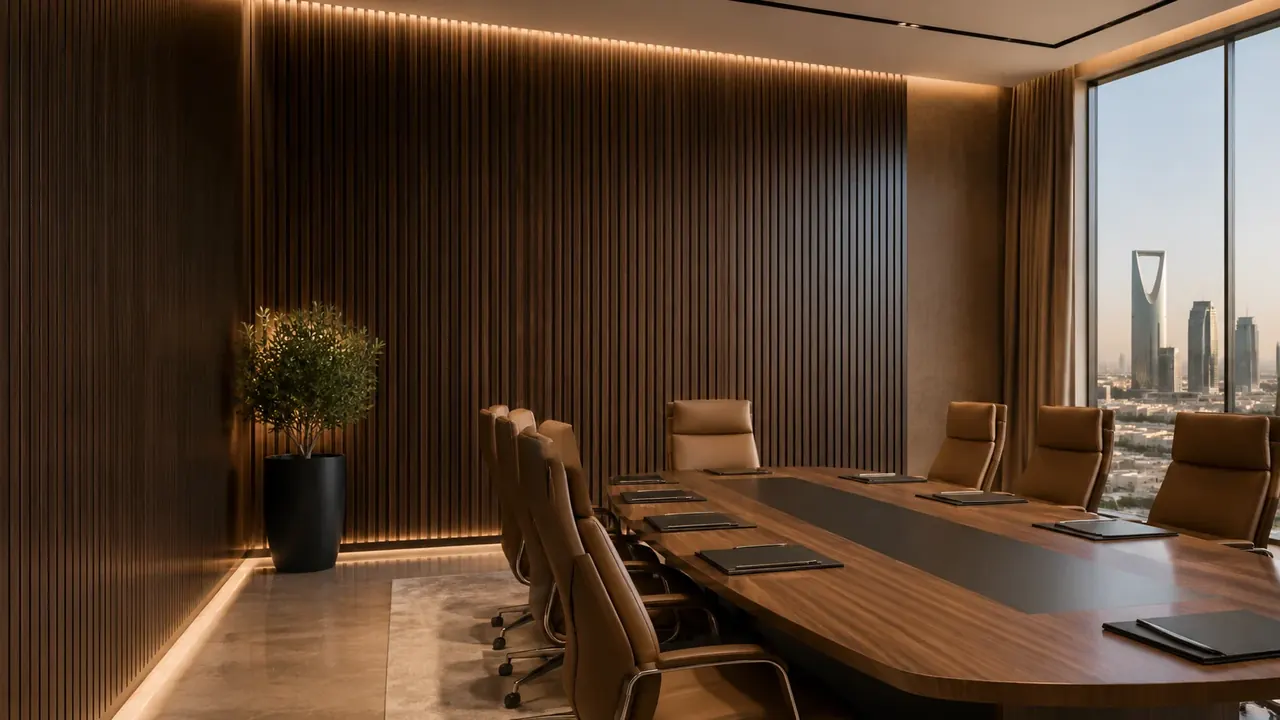
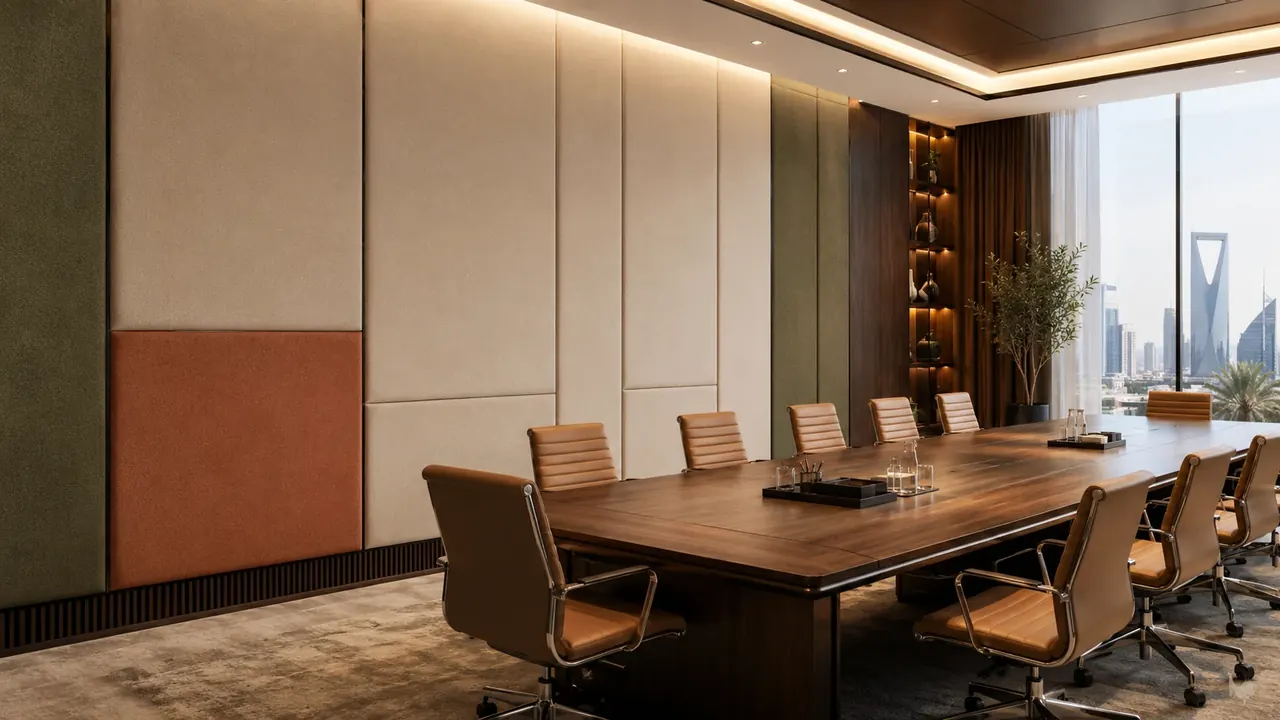
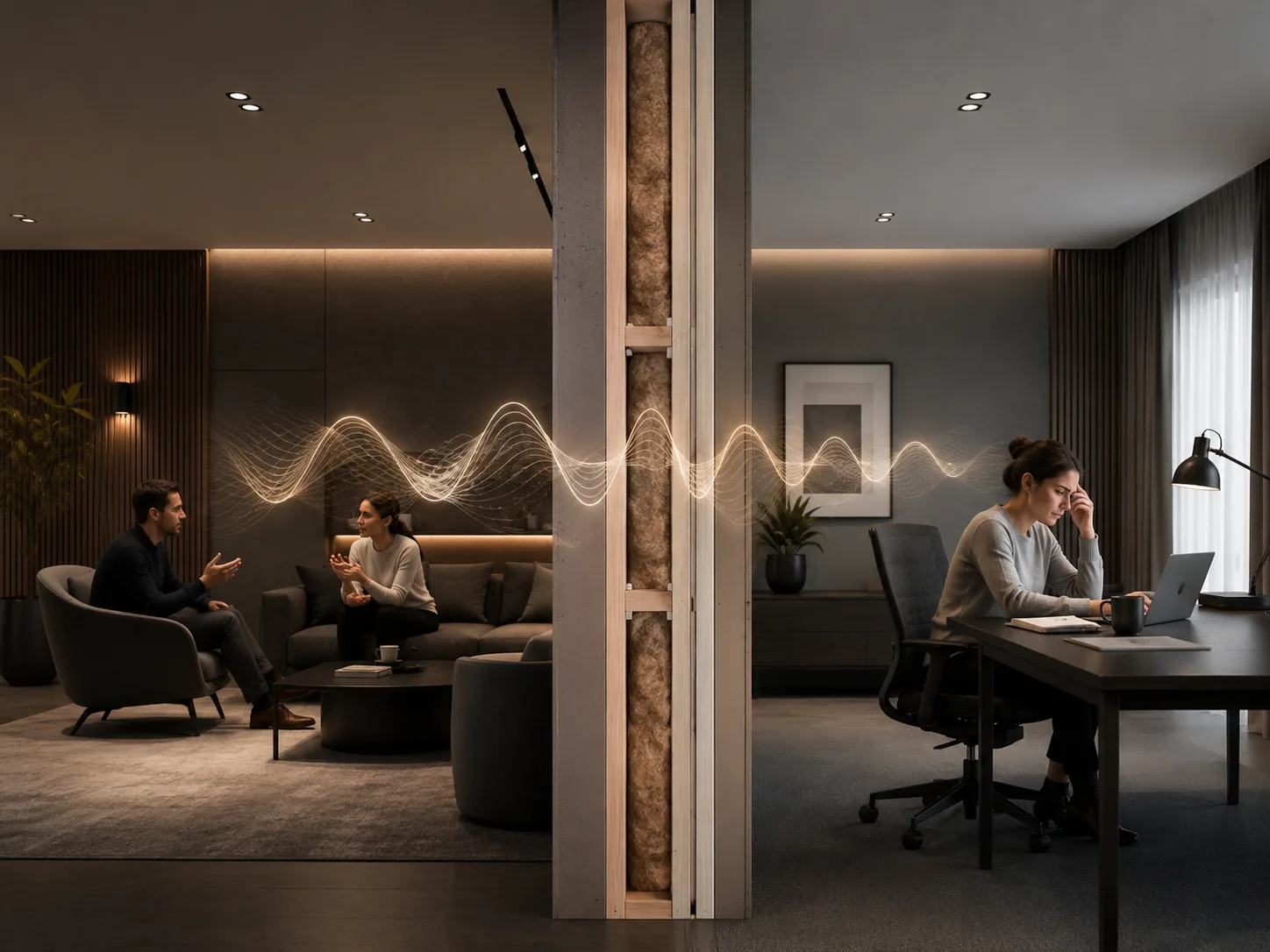
Acoustic treatment for sound absorption material selection in Saudi Arabia has its own constraints — room volume, activity type, fire requirements, and project budget shape every decision. This guide identifies the most common challenges in this category, the acoustic physics behind each, and the international standards your project should meet.
Common Acoustic Challenges & Solutions
Define your NRC target firstOffice: ≥ 0.50 room average. Conference: ≥ 0.70. Studio: ≥ 0.80. The target drives material thickness and coverage area.
Match fire classificationAssembly spaces need A2-s1, d0 (Wood Wool). Commercial typically accepts B-s1, d0 (Wood Slats, certain fabrics).
Consider mounting flexibilityPET cuts with a knife. Wood needs CNC routing. Fabric ships pre-fabricated to size.
Aesthetics drive 50% of decisions67 PET colours, 30+ fabric colours, 12 wood-wool colours, 8 wood-slat finishes.
V is room volume in m³; A is total absorbing area in Sabins (m²·NRC). For a 100 m³ room targeting RT60 = 0.5 s, you need 32 Sabins of absorption. A 4 m² fabric panel with an NRC of 0.90 in this example provides 3.6 Sabins — so ~9 panels achieve the target.
Referenced International Standards
ASTM C423
Sound absorption coefficient measurement
Reverberation room method used to publish NRC values. The American reference for absorption testing.
ISO 354
Sound absorption in reverberation rooms
European equivalent of ASTM C423. Same test method, internationally harmonized.
EN ISO 11654
Acoustic absorber rating αw (Class A–E)
Single-number weighted classification — Class A (αw ≥ 0.90) is the highest-performing absorption tier.
ISO 3382
Reverberation time measurement
Specifies RT60, C50, C80, and STI measurement procedures for performance and ordinary spaces.
EN 13501-1
Reaction-to-fire classification
European fire classification A1/A2/B/C/D + smoke (s1/s2/s3) + droplets (d0/d1/d2). Required by Saudi assembly codes.
ANSI S12.60
Acoustical performance for schools
Sets RT60 ≤ 0.6 s and background noise ≤ 35 dB(A) targets for primary classrooms.
Reference Target Values
Metric
Target
Source / Standard
RT60 — Conference Room
0.4–0.6 s @ 500 Hz–2 kHz
ISO 3382-3 / WELL Standard
RT60 — Classroom
≤ 0.6 s
ANSI S12.60
RT60 — Recording Studio
0.3–0.4 s
Toole, 'Sound Reproduction'
Background noise
≤ 35 dB(A) classroom · ≤ 45 dB(A) office
ANSI S12.60 / WELL
Speech Transmission Index
STI ≥ 0.60 (good) · ≥ 0.75 (excellent)
IEC 60268-16
NRC target (general)
≥ 0.50 average · ≥ 0.80 per panel
ASTM C423
Implementation Steps
1
Site assessmentAn engineer measures the existing acoustic environment — clap-test RT60, ambient dB(A), and surface inventory. Free service from Yamamah Smart.
2
Sabin calculationUsing room volume and surface materials, we compute the absorbing area required to hit the target RT60. The result drives panel quantity.
3
Product selectionPanel family is chosen by NRC target, fire rating, aesthetic, and budget. Verified test reports back every spec.
4
Layout & installationPanel layout is drawn against the architectural plan; installation uses approved mounting hardware (adhesive, Z-clip, or Button-Fix).
5
Post-install measurementAfter installation we re-measure RT60 and ambient dB(A) to confirm the design target was achieved. Report issued to the project owner.
Example Project Applications
Yamamah Smart has delivered installations across these categories in Saudi Arabia. Every project begins with a site survey, NRC calculation, and layered acoustic plan.
Corporate officesOpen-plan workstations + glass-walled meeting rooms in Riyadh and Jeddah, treated with ceiling absorbers and wall fabric panels.
Hospitality & F&BHotel lobbies, fine-dining restaurants, and busy cafés with hard floors and double-height ceilings — solved by suspended baffles + wall slats.
Education & worshipUniversities, classrooms, and mosques where speech intelligibility is the primary acoustic goal — controlled reverberation per ANSI S12.60.
Frequently Asked Questions
How long does an acoustic project take in Saudi Arabia?
From site survey to commissioning, a typical commercial project takes 2–4 weeks. Residential treatments often complete in under a week. Yamamah Smart provides an indicative timeline at the survey stage.
What's the difference between NRC and STC?
NRC (Noise Reduction Coefficient, ASTM C423) measures absorption — how much sound a material soaks up inside a room. STC (Sound Transmission Class, ASTM E90) measures isolation — how well a wall blocks sound from passing through. Most projects need both, in different layers.
Can acoustic panels be installed in an occupied space?
Yes. Most Yamamah Smart panel systems use low-VOC adhesives or mechanical clips that allow installation in active offices and homes with minimal disruption — typically 8 m² per hour per installer.
Do panels require maintenance?
Fabric and PET panels are vacuumed periodically; wood panels can be cleaned with a damp cloth. Yamamah Smart's panels are designed for 10+ year service life with no acoustic degradation when installed indoors per spec.
Can I get test reports for project documentation?
Yes — every product family ships with the relevant ASTM C423 / ISO 354 acoustic test report, EN 13501-1 fire classification, and (on request) the EPD for LEED submissions.
Get a Free Acoustic Consultation
Our Yamamah Smart engineers assess your space and recommend the right panels with certified professional installation.
المعالجة الصوتية لـاختيار مواد امتصاص الصوت في المملكة لها خصوصياتها — حجم الغرفة، نوع النشاط، متطلبات الحريق، وميزانية المشروع تشكّل كل قرار. هذا الدليل يحدّد التحديات الأكثر شيوعاً في هذه الفئة، الفيزياء الصوتية وراء كل منها، والمعايير الدولية التي يجب أن تستوفيها.
التحديات الصوتية الشائعة وحلولها
حدّد هدف NRC أولاًمكتب: ≥ 0.50 متوسط الغرفة. اجتماعات: ≥ 0.70. استوديو: ≥ 0.80. الهدف يحدّد سُمك المادة ومساحة التغطية.
طابق تصنيف الحريقمساحات التجمعات تحتاج A2-s1, d0 (صوف خشبي). التجاري عادةً يقبل B-s1, d0 (شرائح خشبية، بعض القماشيات).
المظهر يقود 50% من القرارات67 لون PET، 30+ لون قماشي، 12 لون صوف خشبي، 8 تشطيبات شرائح خشبية.
مقارنة معامل الامتصاص NRCكلما زاد المعامل (يقترب من 1.0)، زادت كفاءة الامتصاص
المعادلةمعادلة Sabin للرنين
RT60 = 0.16 × V / A → A = 0.16 × V / RT60_target
V هو حجم الغرفة بالمتر المكعب؛ A هي المساحة الماصّة الكلية بـ Sabins (م²·NRC). لغرفة 100 م³ تستهدف RT60 = 0.5 ث، تحتاج 32 Sabins من الامتصاص. لوح قماشي 4 م² بقيمة NRC 0.90 في هذا المثال يقدّم 3.6 Sabins — أي ~9 ألواح تحقّق الهدف.
المعايير الدولية المرجعية
ASTM C423
قياس معامل الامتصاص الصوتي
طريقة حجرة الصدى المعتمدة لقياس قيم NRC. المرجع الأمريكي لاختبار الامتصاص.
ISO 354
قياس الامتصاص في حجرة الصدى
المكافئ الأوروبي لـ ASTM C423. نفس طريقة الاختبار بتنسيق دولي.
EN ISO 11654
تصنيف الممتصات αw (الفئات A–E)
تصنيف واحد موزون — الفئة A (αw ≥ 0.90) هي الأعلى أداءً في الامتصاص.
التعليم والعبادةالجامعات والصفوف والمساجد حيث وضوح الكلام هو الهدف الصوتي الرئيسي — رنين متحكَّم به وفق ANSI S12.60.
الأسئلة الشائعة
كم تستغرق المعالجة الصوتية في السعودية؟
من مسح الموقع إلى التشغيل، يستغرق مشروع تجاري نموذجي 2-4 أسابيع. المعالجات السكنية تكتمل غالباً خلال أسبوع. اليمامة الذكية تقدّم جدولاً زمنياً إرشادياً في مرحلة المسح.
ما الفرق بين NRC و STC؟
NRC (Noise Reduction Coefficient، ASTM C423) يقيس الامتصاص — كم يمتص اللوح من صوت داخل الغرفة. STC (Sound Transmission Class، ASTM E90) يقيس العزل — كم يحجب الجدار من صوت يمرّ عبره. معظم المشاريع تحتاج الاثنين في طبقات مختلفة.
هل يمكن تركيب الألواح في مساحة مشغولة؟
نعم. معظم أنظمة اليمامة الذكية تستخدم لواصق منخفضة VOC أو مشابك ميكانيكية تسمح بالتركيب في المكاتب والمنازل المُشغّلة دون اضطراب يُذكر — عادةً 8 م² في الساعة لكل مركّب.
هل الألواح تحتاج صيانة؟
الألواح القماشية وPET تُكنس دورياً؛ الألواح الخشبية تُنظّف بقماشة رطبة. ألواح اليمامة الذكية مصمّمة لعمر خدمة 10+ سنوات بلا تراجع صوتي عند التركيب الداخلي وفق المواصفة.
هل يمكنني الحصول على تقارير اختبار للتوثيق؟
نعم — كل عائلة منتج تأتي مع تقرير اختبار صوتي مرجعي وفق ASTM C423 / ISO 354، تصنيف حريق وفق EN 13501-1، و(عند الطلب) شهادة الإعلان البيئي EPD لتقديمات LEED.
اطلب استشارة صوتية مجانية
فريق مهندسي اليمامة الذكية يقيّم مساحتك ويوصي بالألواح المناسبة مع تركيب احترافي معتمد.
Tabuk and NEOM is a significant Saudi city with major projects and unique acoustic requirements. Yamamah Smart delivers acoustic treatment for mosques, offices, schools, and restaurants across the cit...
Riyadh is a significant Saudi city with major projects and unique acoustic requirements. Yamamah Smart delivers acoustic treatment for mosques, offices, schools, and restaurants across the city. This ...
The bedroom is now an office, a podcast studio, and a sleep sanctuary all at once. This Yamamah Smart field toolkit covers the 5-piece bedroom acoustic stack — mass barrier, panels, door seal, window treatment, HVAC silencer — plus 3 strategies by budget and 5 KSA-specific use cases.