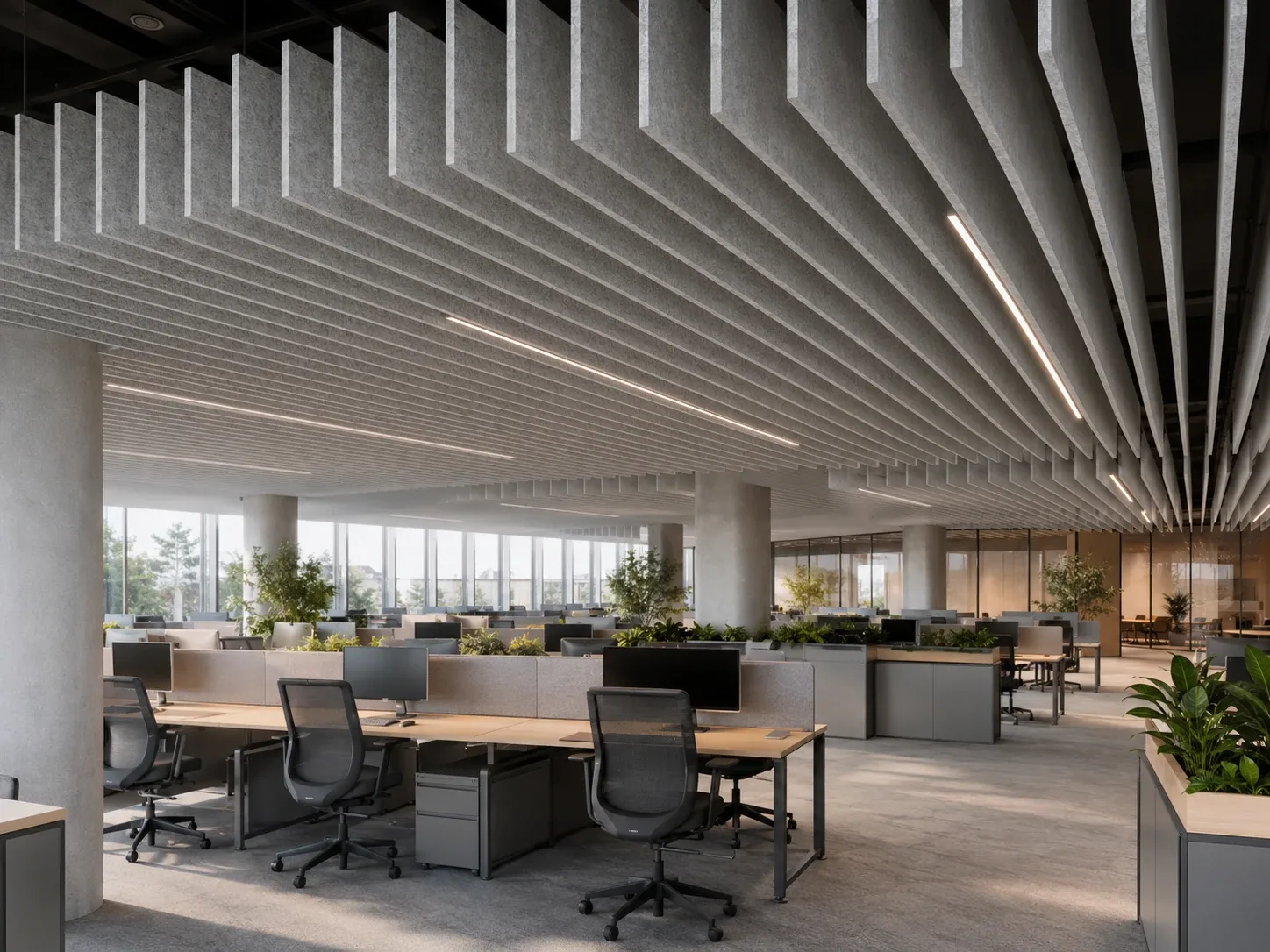
Acoustic ceiling tiles installation — Yamamah Smart
ACOUSTIC CEILING TILES · SAUDI ARABIA

Acoustic Ceiling Tiles in Saudi Arabia

Sound Absorption / Acoustic Treatment
Used for Echo reduction · reverberation control · room acoustics
Installation area Ceiling (suspended grid)
Main metric NRC / αw
Important: This product reduces echo INSIDE the room. It does not block sound between rooms unless combined with a full soundproofing system.

Fabric and PET acoustic ceiling tiles for T-grid ceilings, direct-fix applications, echo control, and improved acoustic comfort.

Fabric & PET options600×600 mm600×1200 mmCustom sizesFabric 25 / 50 mmPET 12 / 24 mmT-Grid installationDirect fix installationEcho & reverberation control

Acoustic ceiling tiles are designed for sound absorption — echo and reverberation control — not for full soundproofing between rooms.

— PRODUCT OVERVIEW —

What are acoustic ceiling tiles?

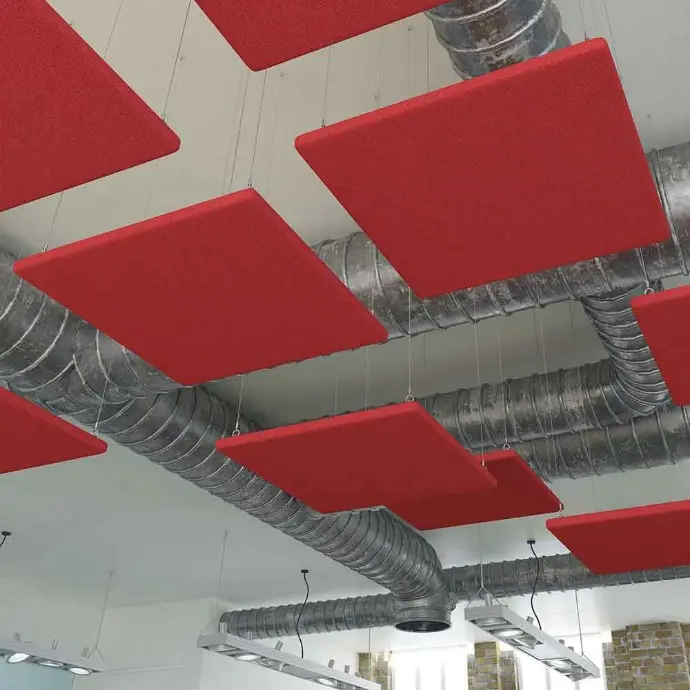
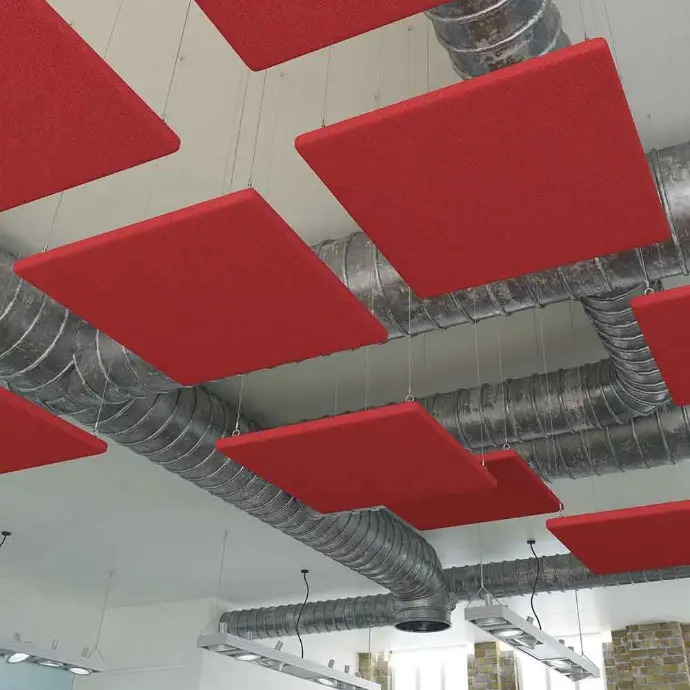
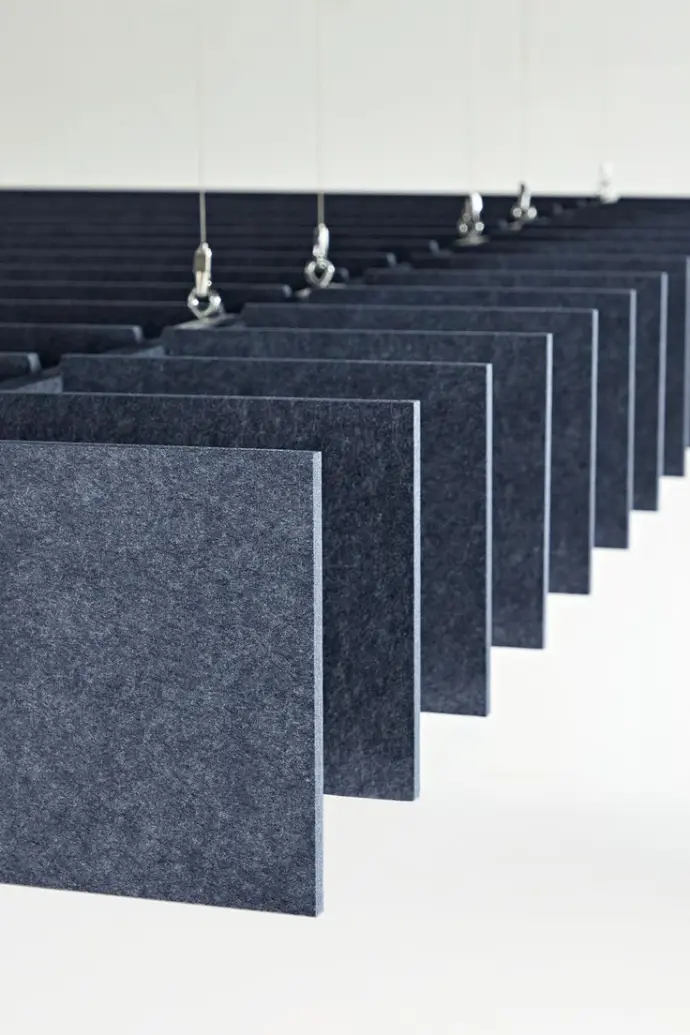
Acoustic ceiling tiles are modular ceiling elements made from sound-absorbing materials — fabric-wrapped acoustic cores or PET felt — installed in suspended T-grid ceilings or fixed directly to concrete and gypsum ceilings. They reduce ceiling reflections, control reverberation, and improve speech clarity inside the room.

Use acoustic ceiling tiles for:

  • Echo reduction and reverberation control
  • Improved speech clarity for meetings and learning
  • More comfortable, calmer interior spaces
  • Modular replacement of existing T-grid tiles
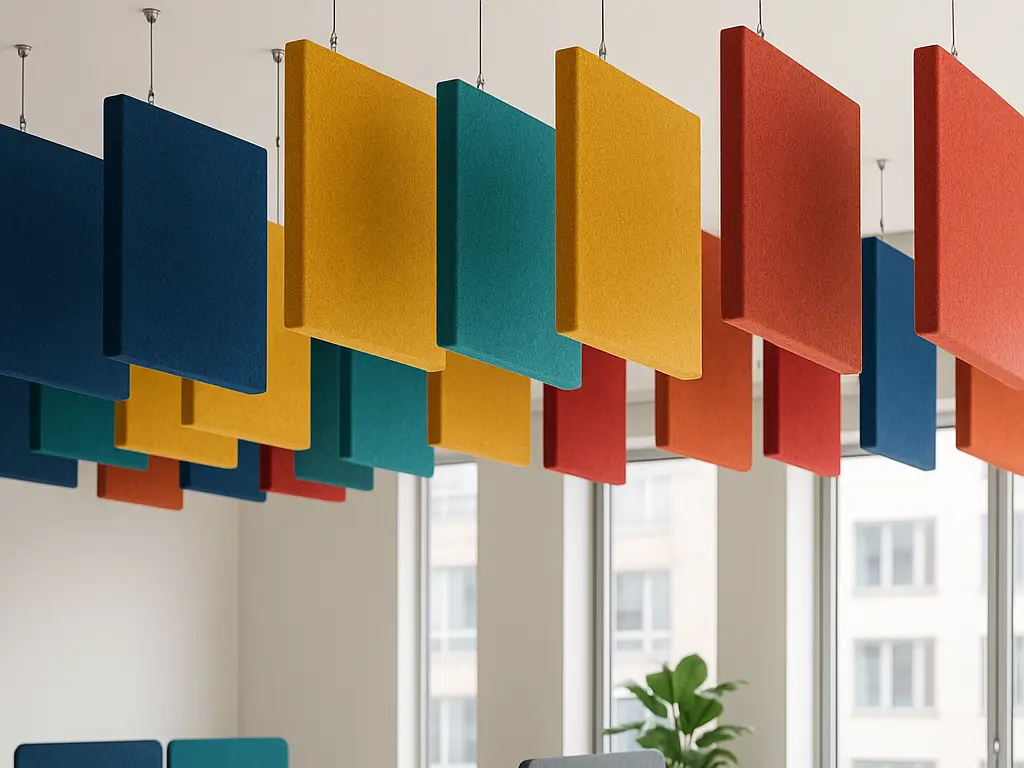
  • Decorative acoustic ceiling zones

Acoustic ceiling tiles alone DO NOT:

  • Block sound transmission between floors or rooms
  • Stop noise from passing through the structure
  • Replace full soundproofing systems (MLV, insulation, sealing)
  • Substitute for door, wall, or floor acoustic treatment

— FABRIC vs PET —

Fabric vs PET Ceiling Tiles

Both materials absorb sound — pick the one that matches your visual brief, acoustic target, and installation method.

FeatureFabric Ceiling TilesPET Ceiling Tiles
AppearancePremium soft fabric finishModern PET felt look
Thickness25 mm or 50 mm12 mm or 24 mm
Best UsePremium offices, mosques, meeting rooms, studiosSchools, open offices, decorative ceiling zones
Acoustic PerformanceExcellent with 50 mm — high absorption at most frequenciesGood absorption with design flexibility
CustomizationFabric colors and custom sizesCNC shapes, colors, perforation patterns
InstallationT-grid drop-in or direct fixT-grid drop-in, direct fix, or suspension
Recommended ApplicationsMeeting rooms, mosques, studios, hospitality, premium interiorsSchools, open offices, libraries, creative interiors

— INSTALLATION —

Installation Options

Four standard ways to install acoustic ceiling tiles — match the method to the ceiling type, project phase, and visual intent.

T-Grid Drop-In Tiles

Choose when:

Ceiling already has a T-grid 600×600 or 600×1200 mm system, or one will be installed for new fit-outs.
Direct Fix Ceiling Tiles

Choose when:

Ceiling is concrete or gypsum, no grid, and tiles need to be fixed directly with glue or mechanical fasteners.

Replacement Ceiling Tiles

Choose when:

Existing mineral fiber or gypsum tiles need an acoustic upgrade — replaced like-for-like in the same grid.

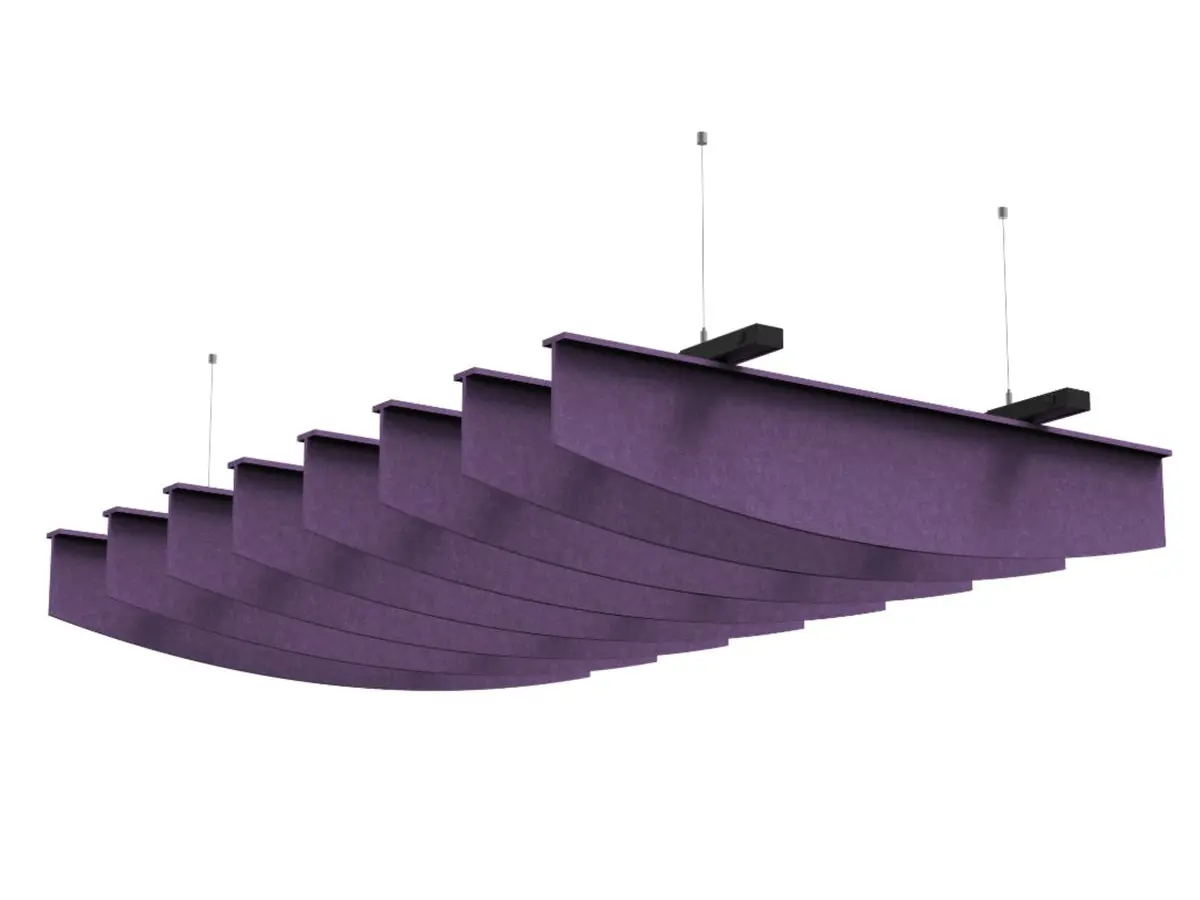
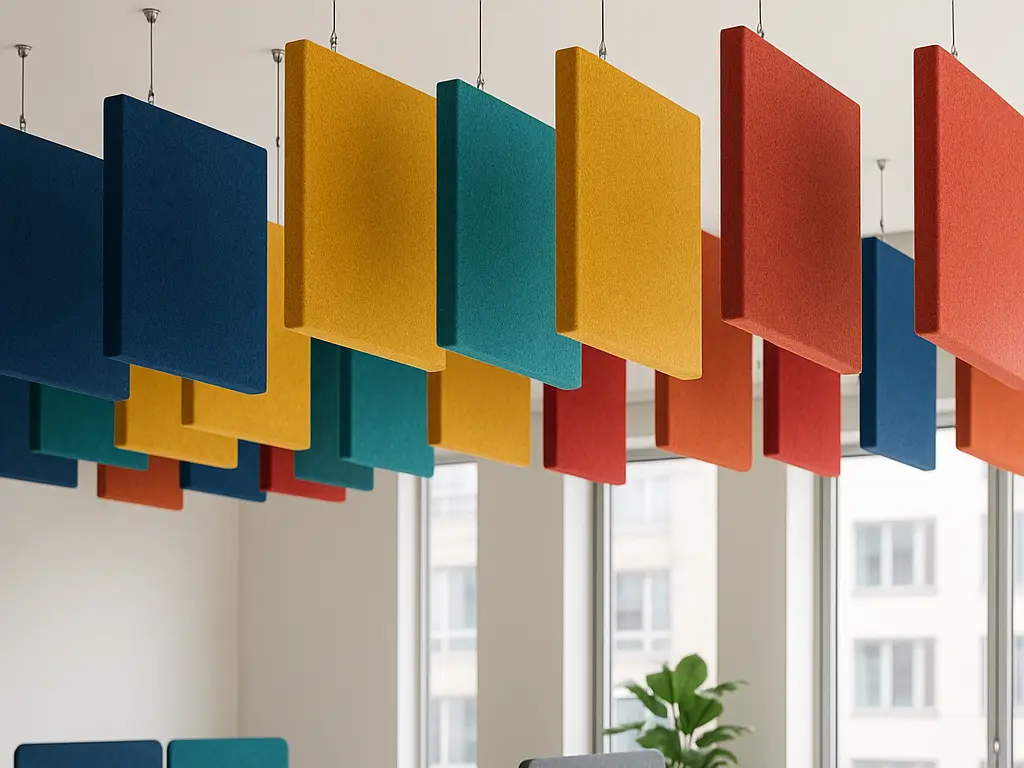
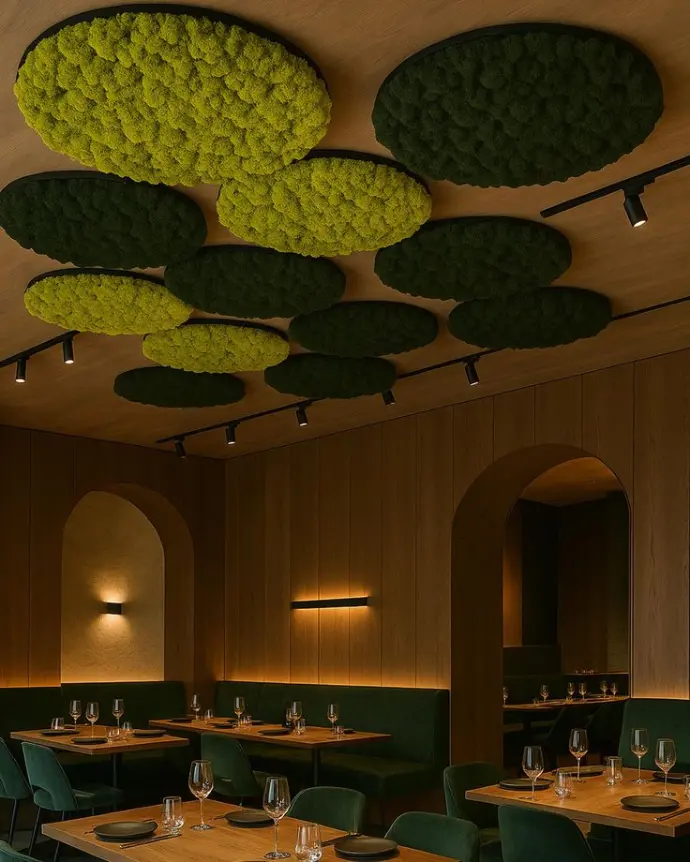
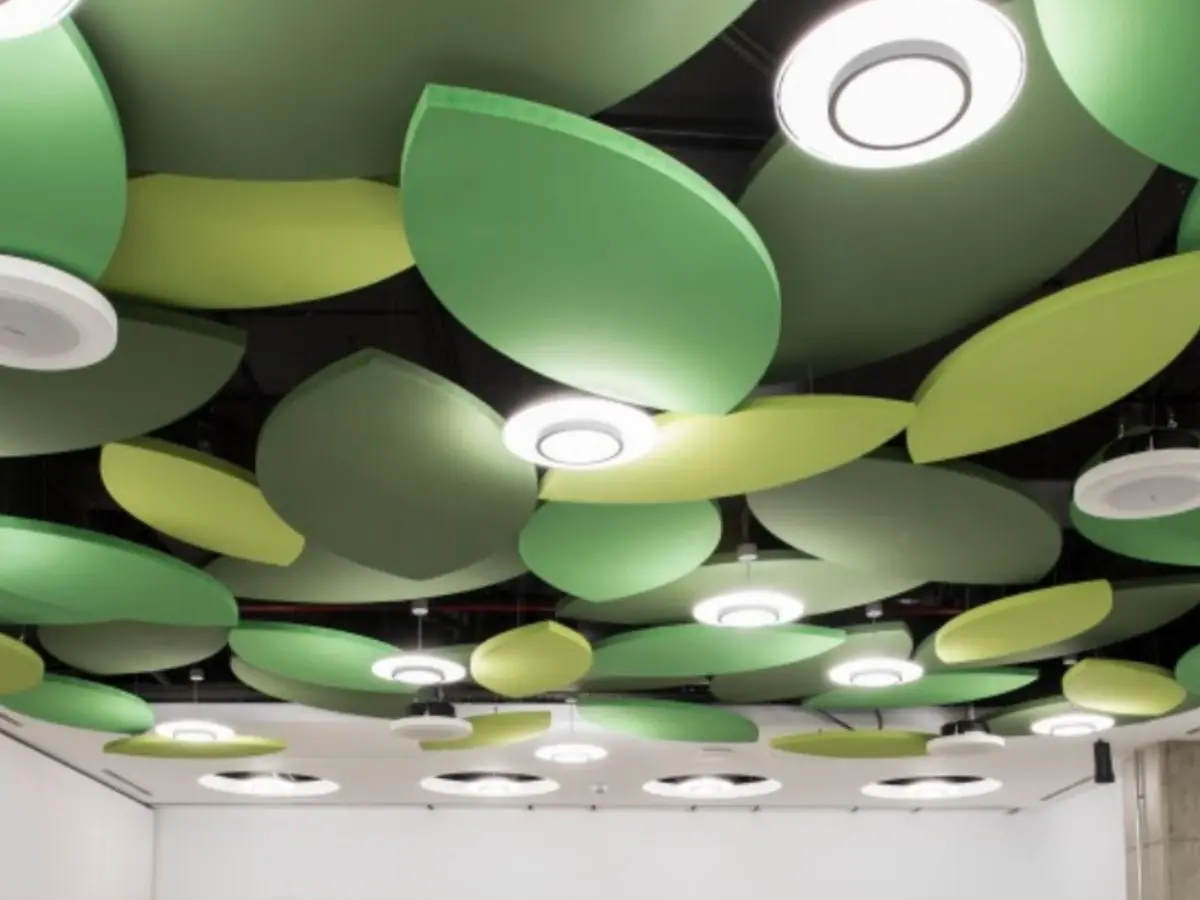
Decorative Ceiling Fields

Choose when:

You want acoustic feature zones — pattern, colour-block, or branded ceiling layouts in selected areas.

— HOW IT WORKS —

How acoustic ceiling tiles actually work

The ceiling is one of the largest reflective surfaces in any room. Acoustic ceiling tiles intercept sound at the ceiling plane before it bounces back, reducing echo and improving speech clarity.

01

Ceiling Reflections

Hard ceilings (concrete, gypsum, metal) reflect sound back into the room, causing reverberation and echo.

02

Absorption Material

Fabric-wrapped acoustic cores and PET felt absorb the sound energy as it strikes the tile surface.

03

Cavity & Thickness

Thicker tiles and air-cavity behind the tile improve absorption — especially at mid and low frequencies.

04

Coverage & Room Height

The more ceiling area covered and the lower the ceiling, the stronger the perceived improvement.

— CHOOSE THE RIGHT SYSTEM —

Pick the right ceiling tile system

Tell us your ceiling condition and we will guide you to the right Yamamah Smart solution.

I have a T-Grid ceiling

Recommended:

Drop-in acoustic ceiling tiles (Fabric 25/50 mm or PET 12/24 mm) at 600×600 or 600×1200 mm — replace or supplement existing tiles.

I have a gypsum or concrete ceiling

Recommended:

Direct-fix acoustic ceiling tiles glued or mechanically fastened to the slab — Fabric for premium spaces, PET for budget-conscious projects.

I want decorative acoustic ceiling zones

Recommended:

Decorative tile fields with pattern, colour-block, or branded layouts — combine Fabric and PET tiles for visual rhythm and acoustic performance.

— APPLICATIONS —
Where acoustic ceiling tiles are best used

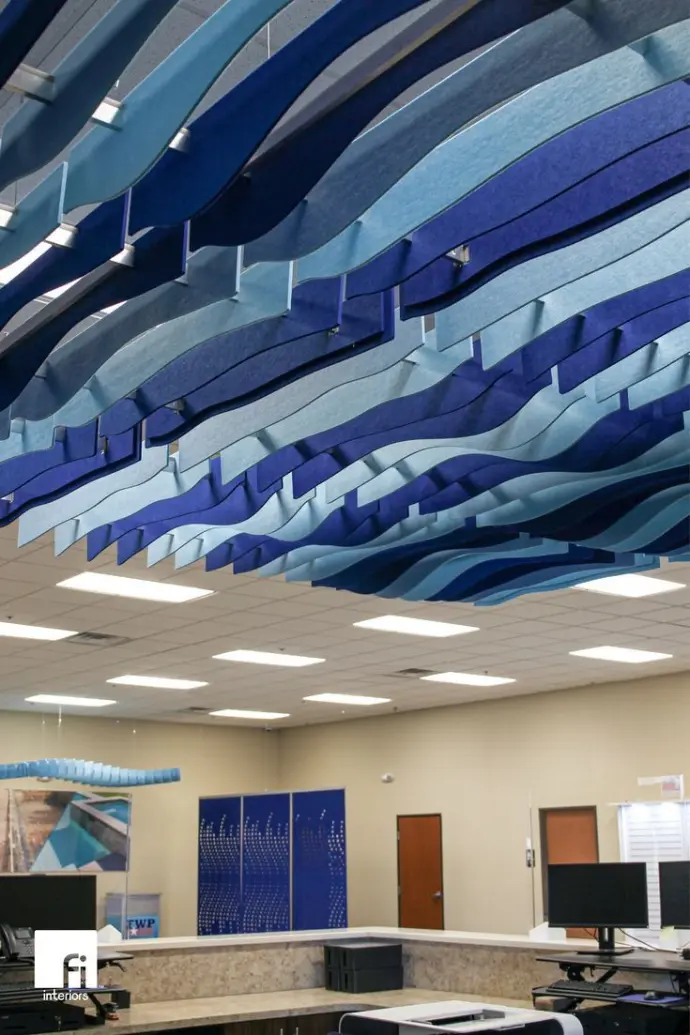
Office ceiling with acoustic tiles

Offices

Problem: Speech reflections and HVAC noise reduce concentration.Recommended: 50 mm Fabric or 24 mm PETMethod: T-grid drop-in across open-plan areas
Classroom ceiling with acoustic tiles

Schools

Problem: High reverberation makes teacher speech hard to follow.Recommended: 50 mm Fabric or 24 mm PETMethod: T-grid drop-in over classrooms and learning halls
Clinic waiting area with acoustic tiles

Clinics

Problem: Patient privacy and calm require lower reverberation.Recommended: 25 mm Fabric or 12 mm PETMethod: Direct fix or T-grid in waiting and consultation rooms
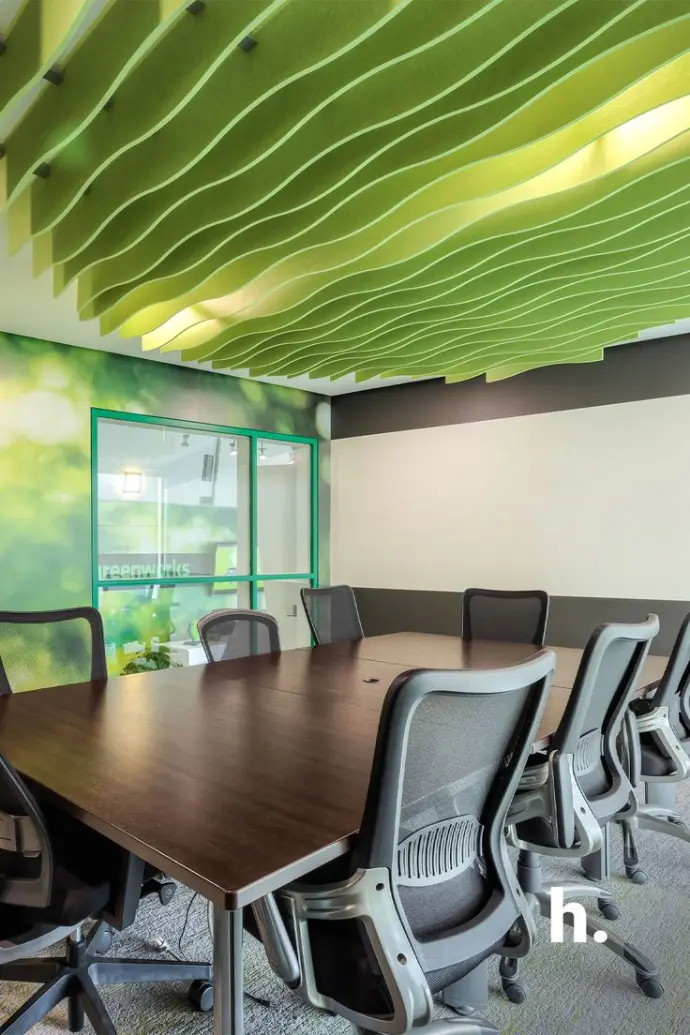
Meeting room with acoustic tiles

Meeting Rooms

Problem: Poor speech clarity in meetings and video calls.Recommended: 50 mm FabricMethod: T-grid drop-in or direct fix above the meeting table
Corridor ceiling with acoustic tiles

Corridors

Problem: Long corridors amplify footsteps and conversations.Recommended: 25 mm Fabric or 12 mm PETMethod: Continuous T-grid runs along the corridor length
Commercial space with acoustic tiles

Commercial Spaces

Problem: Retail and lobby zones with hard finishes amplify noise.Recommended: 50 mm Fabric or 24 mm PETMethod: Decorative ceiling fields with brand-aligned colours

— TECHNICAL SPECIFICATIONS —

Typical specifications

Material OptionsFabric (Camira or approved acoustic fabric) · PET acoustic felt
Standard Sizes600×600 mm · 600×1200 mm
Custom SizesAvailable on request — rectangles, hexagons, circles, branded shapes
Fabric Thickness25 mm or 50 mm
PET Thickness12 mm or 24 mm
InstallationT-grid drop-in · direct fix · replacement of existing mineral tiles
FunctionEcho reduction and reverberation control — not soundproofing
Customization60+ Fabric colors · multiple PET tones · patterns · branded zones
UseIndoor ceiling acoustic treatment
Fire PerformanceSubject to selected material build-up and project test reports

— TECHNICAL DOWNLOADS —

Technical Data & Requests

Each document is supplied to validated project enquiries. Send a quick request with your project name and we will email the relevant files.

Note: Yamamah Smart validates acoustic performance per project based on selected materials, thickness, ceiling coverage, and room geometry.

— FAQ —

Frequently Asked Questions

What are acoustic ceiling tiles used for?+
Acoustic ceiling tiles absorb sound reflections from the ceiling — reducing echo, controlling reverberation, and improving speech clarity inside the room. They are widely used in offices, schools, clinics, meeting rooms, corridors, and commercial spaces.
Do acoustic ceiling tiles block sound?+
No. Acoustic ceiling tiles absorb sound inside the room (acoustic treatment). They do not fully block sound transmission between rooms or floors. For sound blocking, Yamamah designs a full soundproofing system using MLV, insulation, and acoustic sealing.
What is the difference between Fabric and PET ceiling tiles?+
Fabric ceiling tiles offer a premium soft fabric finish in 25 or 50 mm thicknesses — best for offices, mosques, meeting rooms, and studios. PET ceiling tiles offer a modern felt look in 12 or 24 mm — best for schools, open offices, and decorative ceiling zones.
Can acoustic ceiling tiles replace existing T-grid tiles?+
Yes. Acoustic ceiling tiles are produced in standard 600×600 mm and 600×1200 mm sizes that drop into existing T-grid systems — replacing mineral fiber or gypsum tiles like-for-like.
Can they be fixed directly to gypsum ceilings?+
Yes. Direct-fix tiles can be glued or mechanically fastened to gypsum or concrete ceilings — useful when no T-grid exists or when a flush ceiling look is required.
What sizes are available?+
Standard sizes are 600×600 mm and 600×1200 mm. Custom rectangles, hexagons, circles, and bespoke shapes are available for decorative ceiling zones and branded fields.
What thickness should I choose?+
For Fabric tiles: 25 mm for decorative treatment and corridors; 50 mm for meeting rooms, mosques, and studios. For PET tiles: 12 mm for design-led applications; 24 mm for higher absorption requirements.
Are custom colors available?+
Yes. Fabric tiles are available in 60+ Camira colors across multiple collections. PET tiles are available in multiple in-stock tones with custom colors on project request.
Where are acoustic ceiling tiles best used?+
Indoor spaces with hard surfaces and echo problems — offices, classrooms, clinics, meeting rooms, corridors, retail, lobbies, restaurants, and hospitality interiors.
Does Yamamah supply and install in Saudi Arabia?+
Yes. Yamamah Smart Acoustic Solutions handles site survey, supply, installation, and post-installation acoustic verification across the Kingdom of Saudi Arabia.

Need a Ceiling Tile Layout for Your Project?

Send us your room dimensions, reflected ceiling plan, ceiling type, lighting/HVAC layout, photos, and acoustic problem. Yamamah will recommend the right tile material, size, thickness, layout, and fixing method.