
Best Sound Absorption Materials in Saudi Arabia – A Complete Guide by Yamamah Smart
In today’s fast-paced world, acoustic comfort has become an essential part of modern design — from corporate offices and luxury hotels to schools, restaurants, and residential spaces.
We’ve all experienced it: the echoing voices in a conference room, the deafening noise in a crowded restaurant, or the unclear dialogue in a home theater. These aren’t just minor annoyances — they are symptoms of poor room acoustics, directly affecting productivity, focus, and well-being.
At Yamamah Smart (YAMSIS), we specialize in designing and supplying the best sound absorption materials in Saudi Arabia — engineered to transform noisy environments into calm, clear, and comfortable spaces.
This guide will help you understand the science behind sound absorption, the different material types, and how to choose the right product for your project.
Understanding the Difference: Sound Absorption vs. Sound Blocking
Before choosing materials, it’s vital to distinguish between absorbing sound and blocking sound — two completely different goals in acoustics.
🔊 Sound Absorption – Improving Sound Inside a Room
Sound absorption materials work within a room to reduce echo and reverberation. They “soak up” excess sound energy, improving speech clarity and comfort.
These materials are used to enhance sound quality — not to prevent noise transfer between rooms.
Examples:
- Acoustic foam panels
- PET felt panels
- Fabric-wrapped fiberglass panels
- Wood-slatted acoustic systems
🚫 Sound Blocking – Preventing Sound Between Rooms
Sound blocking (or soundproofing) stops sound from traveling through walls or ceilings. It relies on dense and airtight materials like Mass Loaded Vinyl (MLV) or concrete layers.
This is known as an acoustic barrier system, and it complements — but does not replace — absorption materials.
✅ Key takeaway:
Use absorption materials to reduce echo inside a room.
Use barriers to stop sound from traveling between rooms.
How Sound Absorption Materials Work
Sound travels in waves. When these waves hit hard surfaces like concrete or glass, they bounce — creating echo.
Absorptive materials prevent this by converting sound energy into heat through friction.
Here’s the simple process:
- Sound enters the porous surface.
- Friction occurs as sound passes through air pockets and fibers.
- Energy transforms into heat — preventing reflection back into the space.
The performance of each material is measured by its Noise Reduction Coefficient (NRC):
- NRC 0.0 = fully reflective (like glass)
- NRC 1.0 = fully absorptive (ideal)
High-quality acoustic materials typically achieve NRC 0.80 or above, meaning they absorb 80% or more of incident sound.
Top Sound Absorption Materials by Yamamah Smart
1. Acoustic Foam Panels
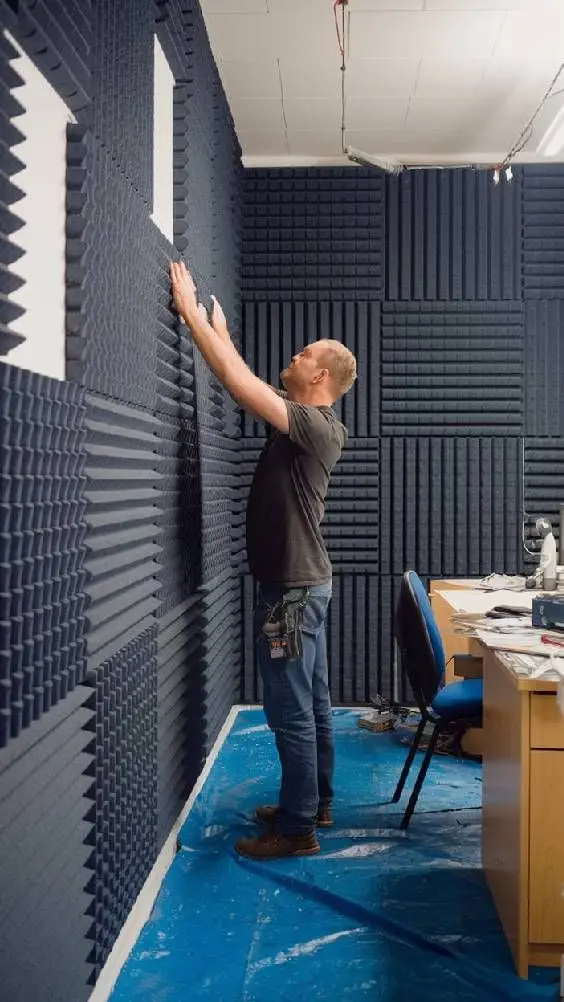
The most recognizable option, foam panels effectively absorb mid-to-high frequencies.
They are lightweight, affordable, and perfect for controlling flutter echo.
How It Works:
Made from open-cell polyurethane or melamine foam, allowing air (and sound) to pass through easily.
Best For:
Recording studios, gaming rooms, podcast setups, and home theaters.
Their wedge or pyramid shapes increase surface area and performance.
2. Fiberglass and Mineral Wool Panels (Fabric-Wrapped Panels)
The industry standard for professional acoustic environments.
These panels are known for their broadband absorption — handling both low and high frequencies.
How It Works:
Dense fiberglass or mineral wool cores are covered with acoustically transparent fabric, allowing sound to enter while protecting the fibers.
Best For:
Offices, restaurants, cinemas, lecture halls, and auditoriums.
They can be customized with colors, shapes, or branding to match interiors.
3. PET Felt Panels – Sustainable & Modern
A modern innovation rapidly growing in Saudi design projects.
PET felt is made from recycled plastic bottles, compressed into dense, durable acoustic sheets.
How It Works:
The porous polyester structure absorbs sound effectively while being rigid enough for wall and ceiling installations.
Best For:
Offices, schools, libraries, and public spaces.
Available in multiple colors, shapes, and thicknesses — with no fabric wrapping required.
PET felt panels from Yamamah Smart are eco-friendly, durable, and visually clean — ideal for Vision 2030 sustainable buildings.

4. Wood-Slatted & Perforated Acoustic Panels
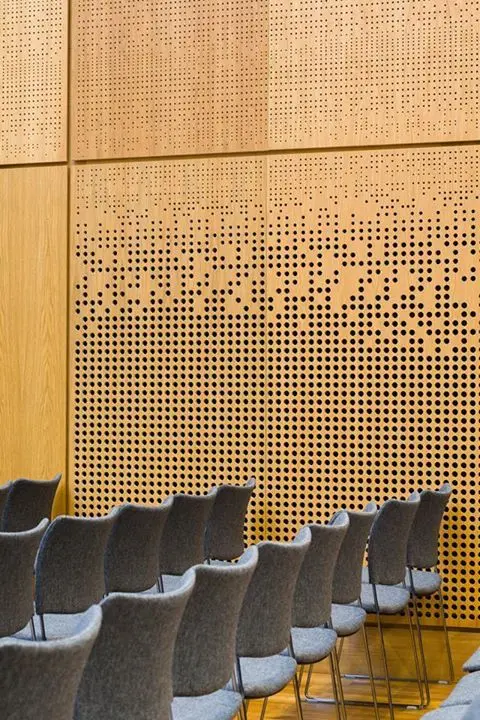
For projects where design and acoustics meet, wood acoustic panels offer a luxurious solution.
They combine the natural beauty of wood with high acoustic performance.
How It Works:
Sound waves travel through the gaps or perforations in the wood surface and are absorbed by a hidden acoustic layer (such as PET felt or mineral wool) behind it.
Best For:
Boardrooms, lobbies, hotels, and premium villas.
They also provide a level of sound diffusion, making sound more natural and balanced.
5. Ceiling Baffles & Acoustic Clouds
In open, high-ceiling spaces, walls alone may not be sufficient.
Ceiling acoustic systems absorb sound from above, making them ideal for large volumes.
How It Works:
Lightweight absorptive panels (fiberglass, PET, or wood wool) are suspended from the ceiling — vertically as baffles or horizontally as clouds.
Best For:
Atriums, gyms, cafeterias, and industrial-style offices.
They are highly efficient because sound is absorbed from all exposed surfaces.

Real-World Applications in Saudi Arabia
| Space Type | Problem | Recommended Material |
|---|---|---|
| Office Spaces | Echo and poor speech clarity | PET Felt Panels, Ceiling Clouds |
| Restaurants & Cafes | High background noise | Fabric Panels, Wood-Slatted Panels |
| Home Theaters | Unclear audio and reflections | Acoustic Foam, Fiberglass Panels |
| Schools & Lecture Halls | Poor intelligibility | PET Panels, Fabric-Wrapped Panels |
| Gyms & Halls | Loud reverberation | Ceiling Baffles, PET Felt Clouds |
Choosing the Right Material for Your Project
When selecting sound absorption materials, consider:
- Your goal: echo control, sound balance, or both.
- Room type and usage: office, restaurant, or home.
- Design preference: visible panel systems or hidden acoustic layers.
- Sustainability: choose eco-friendly options like PET felt or wood wool.
At Yamamah Smart, our acoustic engineers help you identify the ideal material combination based on NRC rating, aesthetic design, and budget.
Why Choose Yamamah Smart?
- 🇸🇦 Locally Engineered Solutions – designed for Saudi climate and architectural conditions.
- 🧩 Comprehensive Product Range – PET felt, wood-slatted, fiberglass, and foam systems.
- 🎨 Custom Design Options – colors, patterns, and branding integrations.
- ⚙️ Expert Installation – precise acoustic mounting and sealing techniques.
- ♻️ Sustainable Manufacturing – aligned with Vision 2030 environmental goals.
Yamamah Smart — transforming spaces across Saudi Arabia with engineered silence and aesthetic precision.
Conclusion
Choosing the best sound absorption materials is about more than just eliminating echo — it’s about creating balance.
Whether you’re designing a quiet office, a vibrant restaurant, or a luxurious cinema room, Yamamah Smart (YAMSIS) provides solutions that combine science, sustainability, and style.
From PET Felt Acoustic Panels to Wood-Slatted Systems, every product is built to help you achieve acoustic excellence — made for Saudi Arabia, built for performance.
Experience acoustic harmony. Contact Yamamah Smart today for a free consultation and discover how we can transform your sound environment.
Best Sound Absorption Materials in Saudi Arabia – A Complete Guide by Yamamah Smart